
How the Government Is Committed to Driving Development in Papua
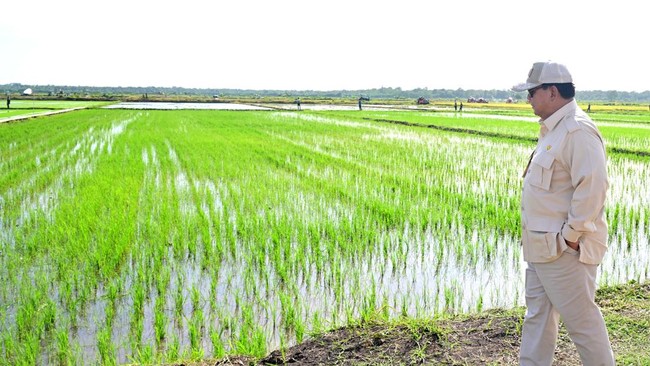
The government is committed to accelerating development in Papua through cooperation between the central government, regional administrations and the Executive Committee for the Acceleration of Special Autonomy Development in Papua.
During President Prabowo’s first two years in office, projects for communities in Papua have included school repairs, village bridge construction and stronger energy provision, as well as the establishment of Sekolah Rakyat and Merah Putih Village/Subdistrict Cooperatives.
To support this commitment, the government has frequently conducted working visits to Central Papua and Southwest Papua provinces. These visits follow President Prabowo Subianto’s direction to make faster development and more evenly distributed prosperity in Papua a national priority.
The visits are part of the government’s efforts to ensure accelerated development in Papua, particularly in infrastructure, public services and improving people’s welfare. They are also expected to strengthen cooperation between central and regional governments in promoting inclusive and sustainable development.
Velix Vernando Wanggai, head of the Executive Committee for the Acceleration of Special Autonomy Development in Papua, said President Prabowo was paying direct and integrated attention to the management of development in the region.
“The President has made a strong commitment to take direct charge of and manage Papua. This management will, of course, be part of a comprehensive, integrated agenda: Papua’s place in the global and national context, coordination of policies across ministries and with the private sector, and consolidation at provincial and regency level,” Velix said recently.
Velix added that his committee would oversee eight major priorities under the Papua-focused Asta Cita framework, covering political, economic, infrastructure and governance development. He said the newly established body, whose members come from diverse backgrounds, would also address social and cultural issues, including sport, gender equality and the creative economy, as part of Papua’s development.
“The state must be present for our brothers and sisters on the coast, in the mountains, inland and in the swamps, so that everyone feels the state’s presence,” he said.
Meanwhile, the government has deployed 1,200 members of the 2026 Patriot Expedition Team (TEP) to several transmigration areas in Papua. They have been tasked with helping communities raise productivity and incomes, develop local businesses, improve access to markets and investment, and create new jobs.
The Patrots, comprising academics, researchers and experts from various universities, are expected to do more than conduct research and mapping. They are tasked with providing solutions to community problems, applying appropriate technology, turning local potential into higher-value products, and connecting businesses with partners, buyers and investors.
Of the 1,476 members of TEP 2026, about 1,200, organised into roughly 200 teams, have been assigned to Papua. The large-scale deployment reflects the government’s stated commitment to more evenly distributed development and improved welfare, particularly in eastern Indonesia.
Source: jawawa.id (https://jawawa.id/newsitem/how-the-government-is-committed-to-driving-development-in-papua-1795686681)
Originally published by CNBC Indonesia (https://www.cnbcindonesia.com/news/20261126155523-4-788798/begini-komitmen-pemerintah-dorong-pembangunan-hingga-ke-papua), translated from Indonesian