
How super El Nino will put farmers, families and livelihoods under pressure, from Bali to Bangkok
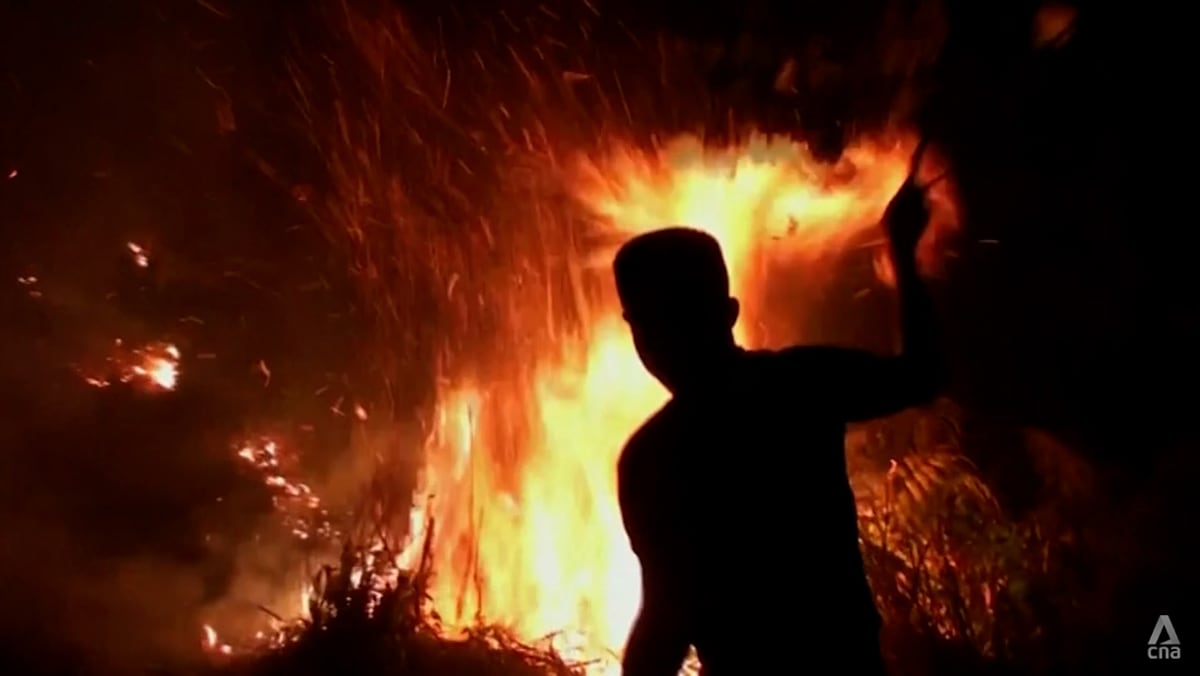
How super El Nino will put farmers, families and livelihoods under pressure, from Bali to Bangkok
The chance of a “very strong” El Nino from next month to December is forecast to be 98 per cent now. CNA’s Insight looks at how living costs could rise and how ready the region is for the disruptions ahead.
BALI: It is known as Indonesia’s green gold. That is one way to describe seaweed in a country that is the world’s top tropical seaweed producer.
But as its seaweed farmers have recently seen, this green gold can turn white — because of the heat.
Wayan Suwarbawa, 54, was preparing to harvest his seaweed in July when a week of intense heat left much of his crop bleached or detached from its ropes.
In places, seaweed that should have weighed about 650g was down to 25g or 50g. The farmer on Nusa Lembongan, Bali, estimated his losses at nearly 10 million rupiah (US$570). His damaged crop could not be reused for seedlings either.
“We’d never experienced a heat phenomenon like the one we had (in July), with strong gusts from the east,” he said. “As farmers, we fear the impact of the easterly winds.”
The heat comes as El Nino develops across the Pacific, bringing drier conditions to Southeast Asia.
The climate phenomenon recurs naturally every two to seven years, typically lasting around nine to 12 months, when trade winds weaken and cause warm surface water and rainfall to shift towards the central and eastern Pacific.
While its effects are already being felt, with farms in Indonesia hit by drought and reservoir levels in Vietnam dropping, it may only just be getting started. What follows in the next few months could be more severe.
This year’s event may develop into a “super” El Nino, where the warming in the Pacific is both intense and unusually widespread. Some experts have even dubbed it a “Godzilla” El Nino.
Last Thursday, the Climate Prediction Center of the United States’ National Oceanic and Atmospheric Administration said there was a 98 per cent chance of a “very strong” El Nino from next month to December.
It also forecast a 75 per cent chance — up from its previous forecast of 69 per cent — of the most severe El Nino since 1950 during those months.
There have been three other super El Nino events in living memory, in 1982-83, 1997-98 and 2015-16. The current one is unfolding against the backdrop of a warmer global climate than before, which could worsen its impact, researchers warn.
If conditions intensify, the consequences may extend to disruptions in daily life across Southeast Asia, including less obvious risks to health and livelihoods. CNA’s Insight examines the possibilities and asks how prepared the region is.
WATCH: A ‘super’ El Nino is coming for Southeast Asia. What happens next? (45:19)
THE SQUEEZE ON WATER, FOOD, ELECTRICITY
About 100km northwest of Bangkok, in Suphan Buri, farmer Chuan Juntar has been growing rice on 1.6ha of land for more than 30 years.
Each harvest depends on water pumped from his own reservoir, so a prolonged dry spell triggered by El Nino would mean his next planting is off.
“I don’t know what else I’d do if I couldn’t farm,” he said. “Just stay home, grow a few vegetables, that’s about it.”
Thailand is one of the world’s largest exporters of rice and sugar. And although it is the rainy season now, House Committee on Land, Natural Resources and Environment chairman Poonsak Chanchampee is concerned about the dry spell ahead.
“It won’t just affect us this year. Farmers may plant rice, sugarcane or other crops as usual, but then suddenly there’s no water to sustain them,” he said.
In Indonesia, about 30,400ha of rice fields had been hit by drought by July 10, according to the country’s agriculture ministry.
Its palm oil output, meanwhile, could fall by nearly 2 million metric tonnes next year owing to dry weather and high fertiliser costs.
If a prolonged drought weakens harvests across major food producers, then tighter food supplies would push up consumer prices in Southeast Asia.
For Cherry Lim, a preschool principal and mother in Kuala Lumpur, that would add to other costs already rising with the heat.
Her preschool has been running its air-conditioners for longer, which has increased its electricity bills by as much as 50 per cent compared with earlier this year.
At the supermarket, food has already got more expensive. “We’d want our children to eat healthy meals with fresh fruits and vegetables, so we may have to cut back on other expenses instead,” she said.
Even as demand for cooling increases, El Nino could hurt renewable power generation in Southeast Asia. It can weaken the monsoon winds that drive wind farms, while drought threatens hydropower output.
In Vietnam, hydropower makes up about 30 per cent of energy production.
During the last super El Nino, water resources in Vietnam’s river systems declined by as much as 60 per cent in some regions, said Pham Thi Thanh Nga, the director of the Institute of Meteorology, Hydrology, Environment and Marine Sciences.
Some hydropower plants had to halt generation when river flow and reservoir levels fell too low.
At state-owned Garment 10 Corporation, where most of its orders are for export, deputy general manager Ha Manh said a power shortage would force production to be scaled back and affect delivery schedules.
The power strain could extend to regional energy supply chains. Laos, an electricity exporter, is a major part of the current network and supplies Thailand, Vietnam and Singapore, among others.
But if its hydropower generation is reduced, less electricity could be supplied to the region, highlighted Lawrence Loh, the director of the Centre for Governance and Sustainability at the National University of Singapore (NUS) Business School.
Besides the problem of energy intermittency, higher energy prices could feed into production costs and, eventually, the prices of manufactured goods, he said.
FROM TOURISM TO REPRODUCTIVE HEALTH
Besides food, water and energy, El Nino could affect travel and publi
Source: jawawa.id (https://jawawa.id/newsitem/how-super-el-nino-will-put-farmers-families-and-livelihoods-under-pressure-from-bali-to-bangkok-1789599038)
Originally published by CNA (https://www.channelnewsasia.com/cna-insider/super-el-nino-southeast-asia-heat-livelihoods-climate-phenomenon-6388436)