
How South Koreans Beat the Heat Without Air Conditioning in the Old Days
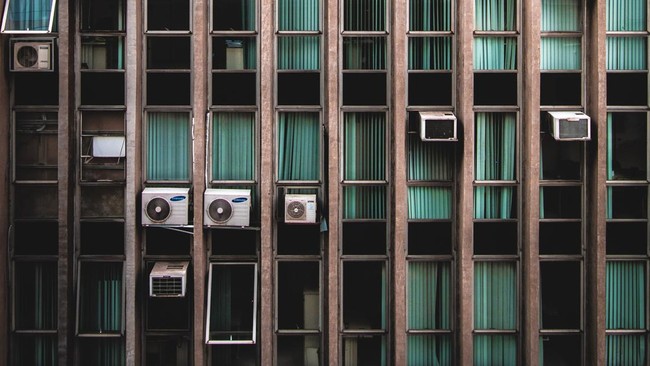
South Korea has recently been hit by a heatwave with temperatures exceeding 30 degrees Celsius, adding to the list of countries experiencing extreme summer weather due to global warming.
South Korean President Lee Jae-myung has ordered all ministries and local governments to deploy personnel and resources to the maximum extent. The order was issued in response to the extreme heatwave affecting South Korea.
The instruction remains in effect until the hot weather subsides. In Seoul, temperatures are expected to peak at around 39 degrees Celsius on Thursday (6/8/2026).
“Extreme heat on a scale we have never experienced continues to occur day after day,” Lee Jae-myung said during a heatwave response meeting on Thursday, as quoted by Channel News Asia (CNA).
“The heatwave conditions that we used to only see in foreign news have now become our reality,” he said.
The heatwave hitting South Korea has killed more than 20 people. If the forecast temperature of 39 degrees Celsius in Seoul materialises, it will approach the capital’s record high of 39.6 degrees Celsius recorded in August 2018, when the country experienced a historic heatwave.
The Korea Meteorological Administration (KMA) reported that several regions experienced tropical nights, with temperatures barely dropping below 30 degrees Celsius throughout the night. These conditions have led many residents to seek relief from the heat in rivers, shopping centres, and various air-conditioned facilities.
The scorching temperatures in South Korea have also caused air conditioner sales to rise sharply due to increased demand.
Samsung Electronics reported that its domestic air conditioner sales rose 50% in the first quarter of 2025 compared with the same period last year. Meanwhile, LG Electronics recorded a domestic sales increase of up to 60% over the same period, amid a hotter-than-expected summer.
This increase in air conditioner sales occurred even though the government estimates that around 98% of households among South Korea’s total population of 51 million already own an air conditioner.
Long before the increasingly widespread use of air conditioning, Koreans in the pre-modern era avoided the summer heat with scheduled holidays, marathon reading sessions, and village festivals where farmers washed their hoes and paused their work for a while, according to historical records.
The Academy of Korean Studies released records on Thursday describing how people in the Silla (57 BC–935 AD), Goryeo (918–1392), and Joseon (1392–1910) eras took steps to rest their bodies and minds during the hottest months of the year.
Although there was no concept of annual paid leave, officials enjoyed institutional holidays, scholars turned to books and socialising, and farmers celebrated communal days off.
According to the institute, Goryeo officials were granted “chilga”, a term for holidays falling on the 1st, 8th, 15th, and 23rd of each lunar month, or roughly every seven days. They could also take leave to recover from illness, care for parents, or visit family graves.
During the Joseon Dynasty, people were granted leave for weddings, funerals, ancestral rites, and family duties. King Sejong (1397–1450) introduced “sagadokseo”, a long-leave programme that allowed civil officials to leave office work and devote themselves to reading and writing.
For students, summer was not only about relaxing but also about studying.
Journals such as Nam Bun’s “Haeju Ilnok” describe the habit of waking at dawn to recite Confucian texts and read poetry even on the hottest days, regarding reading as a way to calm the mind and endure the weather.
However, they did not simply remain at their desks. Records show scholars joined village elders in “homissisi”, or “hoe-washing” festivities, where farmers washed their hoes in the local river. The celebration involved sharing food and drink to mark the season’s final weeding, sometimes lasting several days.
After the final weeding, villagers cleaned the mud from their hoes and hung them up to symbolise a pause or the end of that season’s hard work.
To relax after the labour involved in tending the rice paddies, villagers spent the day or several days resting together by the riverbank or under the shade of trees, sharing food and alcoholic drinks, playing music, and dancing.
This celebration, also known as “putgut” in some southeastern Gyeongsang regions, gave farmers the opportunity to appreciate one another’s hard work and rest together while awaiting the autumn harvest.
Source: jawawa.id (https://jawawa.id/newsitem/how-south-koreans-beat-the-heat-without-air-conditioning-in-the-old-days-1786276238)
Originally published by CNBC Indonesia (https://www.cnbcindonesia.com/research/20260809123929-128-757717/begini-cara-korsel-atasi-panas-tanpa-ac-di-jaman-dulu), translated from Indonesian