
How Significant is the Impact of Rupiah Weakness on the Stock Market? Analysts' Views
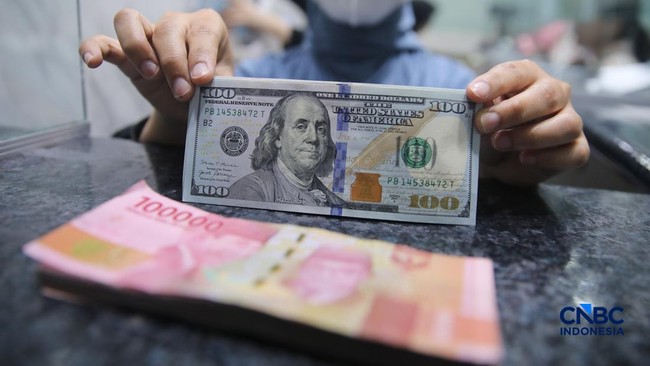
Jakarta, CNBC Indonesia - The rupiah exchange rate strengthened against the US dollar on Wednesday (6/5/2026) trading. The Garuda currency rose 0.03% to Rp17,405 per US dollar at 11:27 WIB.
According to Refinitiv data, the rupiah started the day’s trading in the green with a 0.34% appreciation to Rp17,350/US.Thisstrengtheningcameaftertherupiahclosedweakerby0.26 in the previous session.
Meanwhile, the US dollar index or DXY, which measures the greenback’s strength against six major world currencies, was observed weakening. As of 09:00 WIB, DXY fell 0.21% to 98.234.
Doo Financial Futures analyst Lukman Leong stated that although the relationship between the rupiah and the stock market is complex and not always linear, capital outflows do contribute to the rupiah’s weakening.
“Because to some extent, foreign funds exiting the capital market contribute to the rupiah’s depreciation. From the perspective of foreign investors, the rupiah’s weakening makes Indonesian stocks, which have already fallen, even cheaper in dollars,” he said when contacted by CNBC Indonesia on Wednesday (6/5/2026).
According to him, investors cannot base their investment decisions solely on the rupiah’s weakening. On the other hand, emitters with dollar revenues will certainly become more attractive, and vice versa.
“Currently, many stocks are oversold and attractive; domestic investors can support the IHSG,” he added.
He revealed that investor attention is currently focused on the prospects of market status from MSCI and FTSE as well as rebalancing. “And of course, if there is good news from them, it could strongly support the IHSG,” he further stated.
Meanwhile, MNC Sekuritas analyst Herditya said that the weakening of the Garuda currency against the US dollar is an effect of conflicts in the Middle East and also domestic fiscal risks, where investors still prefer the dollar as a relatively safe-haven currency.
On the other hand, with fiscal risks, Indonesia’s rating outlook was also downgraded from stable to negative, affecting investor decisions and causing outflows in the capital market.
“Investors can also be more selective in their investments; with the rupiah exchange rate weakening like this, sectors/emitters that tend to import and have dollar debt will be directly impacted,” he explained.