
How Resilient Is Your Finances If You Experience an Accident?
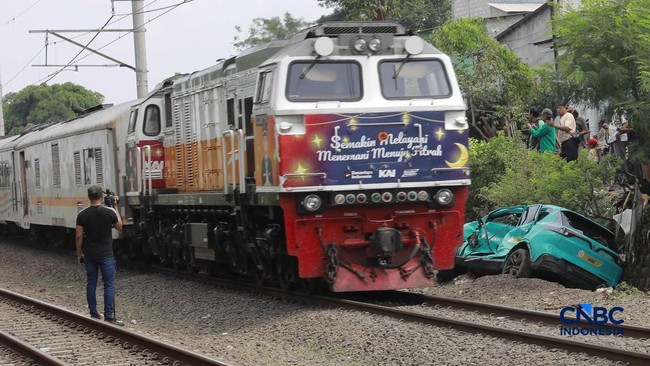
The collision incident between the KA Argo Bromo Anggrek and KRL Commuter Line at Bekasi Timur Station on 27 April 2026 serves as a reminder that risks can arrive suddenly without preparation. Not only is the physical aspect affected, but finances are also impacted.
The accident that occurred on that Monday evening resulted in 16 fatalities and 91 injuries. As the proverb goes, “good fortune cannot be grasped, misfortune cannot be avoided”—disasters can strike at any time and to anyone.
More than just numbers, this accident tragedy raises an important question: to what extent are we prepared to face financial risks as a consequence of such unexpected events?
This incident demonstrates that financial protection is no longer an option but a basic necessity. Activities we consider routine and safe—commuting to work, using public transport—still harbour significant risks.
Many victims in this incident were daily commuters. People who that morning only intended to go to work and return home as usual. But in a matter of seconds, their lives (and their families’) changed completely.
This is where the concept of “My Money” becomes relevant: how personal financial decisions can protect us from unexpected events.
In the case of the KRL accident that occurred on public transport, PT Jasa Raharja has assured that it will provide compensation to the heirs of fatal victims amounting to Rp50 million. In addition, there is supplementary compensation of Rp40 million from Jasaraharja Putera.
Meanwhile, for injured victims, Jasa Raharja will cover treatment costs up to a maximum of Rp20 million, as well as additional coverage from Jasaraharja Putera up to Rp30 million.
However, these compensation amounts may be far from sufficient considering the substantial ongoing living expenses for the heirs. For injured victims, especially those with permanent disabilities, their employment prospects may also be threatened.
This is where the gap emerges between basic protection and the real needs of society. Moreover, in scenarios outside public transport—for example, private vehicle accidents—the financial burden can become far more complex, involving among other things personal medical costs, asset damage, and liability to third parties.
In other words, the risks we face daily are not only about safety but also about financial resilience after the event.
Relying solely on limited protection is insufficient. A more comprehensive and personal protection strategy is needed, capable of anticipating various worst-case scenarios.
So, what types of insurance products are actually relevant and crucial to possess in order to be better prepared for risks like this?
Personal Accident Insurance
This insurance serves as instant protection against sudden risks. Accidents like train collisions are examples of low probability, high impact risks. Unpredictable, but once they occur, the impact is significant.
Personal accident insurance provides benefits including compensation for death or permanent disability, treatment costs due to accidents, and daily hospitalisation allowance.
In the Bekasi Timur case, victims suffering serious injuries requiring days of hospitalisation will face substantial medical costs. Without protection, the burden falls directly on the family.
Health Insurance
This insurance acts as a saviour for escalating medical costs. Data shows dozens of victims were rushed to hospitals after the incident. Health insurance is crucial because ICU and surgery costs can reach tens to hundreds of millions, post-trauma rehabilitation takes a long time, and not all costs are fully covered by the public system.
Coordinating benefits with BPJS is helpful, but without supplementary insurance, many costs still must be borne personally.
Life Insurance
This product serves as protection for the family left behind or the heirs. The fatal victims in this tragedy are not just statistics—they are the breadwinners of families.
Life insurance functions to replace lost income, ensure children’s education costs, and maintain family financial stability.
In many mass accident cases, victims’ families often face double shock: losing a family member as well as the source of income.
Travel Insurance
This product is highly relevant for people with high daily mobility. Many people do not realise that daily commutes also carry high risks. Travel insurance (domestic travel insurance) can cover, among other things, accidents during travel, transport delays or disruptions, and emergency evacuation.
For regular KRL or long-distance train users, this becomes additional protection that is often overlooked. The KA Argo Bromo and KRL accident at Bekasi Timur is a real example that risks do not wait for our preparedness.
From an economic and financial perspective, protection through insurance is not merely a financial product—but an instrument of social stability.
Without adequate protection, a single incident can destroy a family’s financial condition, drive sudden poverty, and burden the health and social systems. Conversely, with the right protection, the impact of tragedies can be minimised.
The question is no longer “do we need insurance,” but “is the protection we have today sufficient?”