
How QRIS and Sport Tourism Drive Urban Economies
Tourism does not always begin with a person’s decision to go on holiday. There are times when individuals visit a city to participate in a running race, accompany family members competing, or attend sporting activities with their communities.
However, once they arrive in the destination city, their needs expand to include consumption, transport, accommodation, shopping for local products, and visiting various landmarks. It is at this point that sports intersect with the tourism economy.
This concept is known as sport tourism. Sports serve as the initial reason for travel, while the economic benefits spread far beyond the competition arena. Participants and visitors create demand across various sectors, allowing sporting activities to become part of a strategy to increase visitor numbers and expand regional economic activity.
For a city, this approach is compelling because the source of visitors no longer relies solely on conventional tourism patterns. A calendar of running races and various recreational sporting activities can create new reasons for people from outside the region to visit. The larger the number of visitors and the longer their length of stay, the greater the opportunities for hotels, restaurants, local transport, trade, MSMEs, and various other services to reap economic benefits.
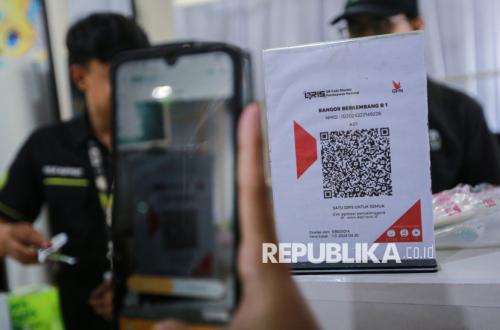
Tasikmalaya provides an interesting illustration of this opportunity through the hosting of QRIS UTHM Tasikmalaya in mid-2026. This event, which represents a synergy between Bank Indonesia via the Tasikmalaya BI Representative Office, Siliwangi University, and the Tasikmalaya City Government, serves as a use case for how sporting events meet local economic activity and payment digitalisation.
Participation was significant. QRIS UTHHM Tasikmalaya saw 3,078 running registrants and recorded 30,534 transactions during the event. Of that total, there were 24,507 QRIS Experience transactions and 2,949 QRIS MSME transactions. These activities demonstrate that a sporting event can generate both human flow and transaction flow almost simultaneously.
The direct impact is also becoming identifiable. Registration revenue reached IDR 656.25 million, while the turnover for MSME tenants reached IDR 982.34 million. From these two components alone, measurable direct economic activity reached approximately IDR 1.64 billion.
This figure does not yet include the total expenditure of participants and visitors on accommodation, restaurants, transport, shopping centres, or various other services.
This highlights the importance of viewing sport tourism not merely as the organisation of a competition. A race can serve as an entry point for participants to experience a city. The cuisine tasted, the local products purchased, the places visited, and the interactions with the community all become part of the travel experience.
When these experiences are positive, the opportunity for future visits does not end when the competition concludes, as participants may return with their families or communities. Consequently, the impact can expand into a broader visitor economy.
Source: jawawa.id (https://jawawa.id/newsitem/how-qris-and-sport-tourism-drive-urban-economies-1789560043)
Originally published by Republika (https://analisis.republika.co.id/berita/tlgf93430/ketika-qris-dan-sport-tourism-menggerakkan-ekonomi-kota), translated from Indonesian