
How Putin Repeatedly Reshaped His Image
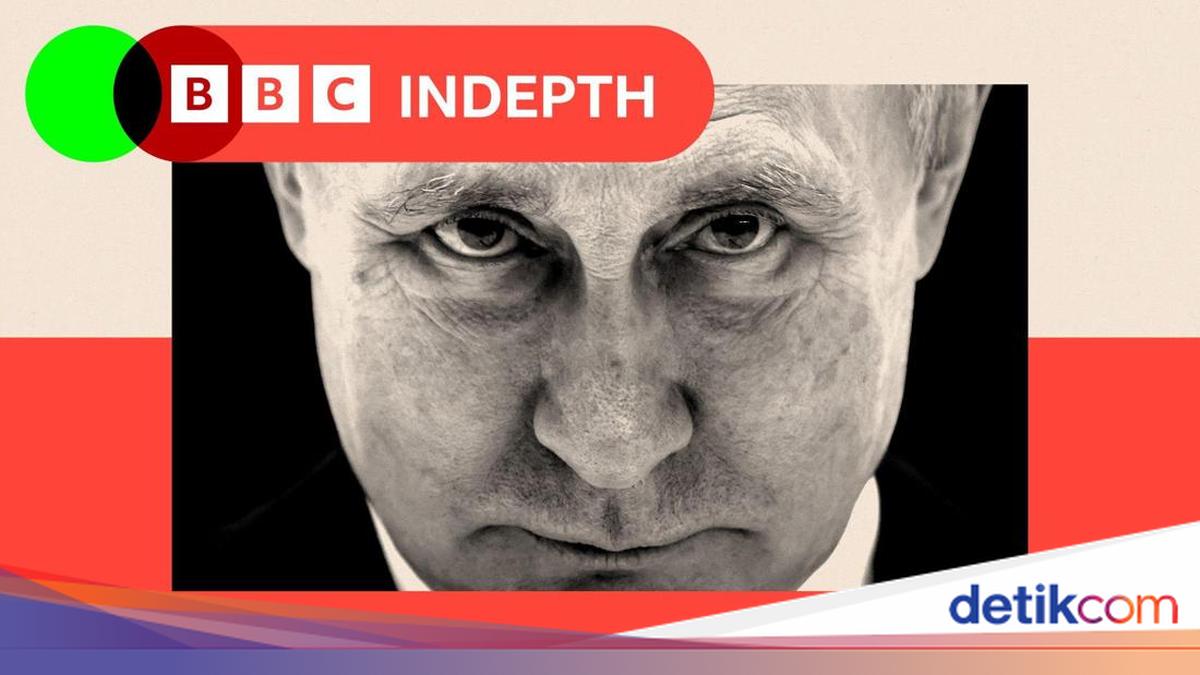
Throughout his tenure as Russian President, Vladimir Putin has always been aware of the power of visual imagery. The first time I interviewed him in 2001, an aide suddenly approached just before the live broadcast began and swiftly removed the small glasses of water on the table in front of us. ‘Why did you do that?’ I asked. ‘We don’t want people to think it’s vodka,’ he replied. ‘Besides, we can’t risk the glass spilling during a live broadcast. Television is a nuclear bomb in terms of publicity.’ ‘Everyone in Russia, but especially Putin, realises that television is the key to consolidating power,’ said author and political analyst Peter Pomerantsev. Over the years, Putin has transformed Russia from a fragile democracy into a largely authoritarian state centred on himself as president. He has also undergone a major personal transformation. Early photographs show him as a small, quiet figure who appeared awkward in front of the camera. So how did a calm and reserved child, and a humble bureaucrat, transform into a president so enthusiastic about being in the public spotlight? How did TV shape his image? His great interest in the power of imagery emerged long before he came to power. Like most young people growing up in the 1960s and 1970s, Putin was part of the television generation. His role models were the spy agents in popular Soviet series and films. By his own admission, the powerful, taciturn double agents fighting the enemies of the Soviet state inspired him to pursue a career in the KGB, the Soviet Union’s intelligence agency. During his time as a KGB agent and later as a diligent bureaucrat, he tended to avoid the limelight. However, in 1999, when he was suddenly appointed acting president and elected president a few months later, he and his public relations team demonstrated a high awareness of the importance of visual imagery in shaping his presidential persona. Part of that image-building process involved discarding things considered unfavourable. For this reason, Putin was often portrayed as barely consuming alcohol. At the annual meeting with foreign policy experts at the Valdai Discussion Club, for instance, he chose to drink tea with honey while guests were served high-quality wine. On occasions when he did drink, his aides tried to conceal it. I once met a local museum guard who recounted sitting with the president to enjoy Russian pancakes brushed with vodka for extra potency. ‘But don’t tell anyone,’ he pleaded. ‘They are very strict about that. I could get into big trouble.’ Another part of the strategy was to emphasise that he was completely different from his predecessor, Boris Yeltsin, who often appeared in public drunk—something that disappointed and embarrassed many Russians. Putin donned a pilot’s helmet to fly a jet fighter. His judo skills were also showcased. All of this was intended to convey the message that he was a tough, healthy, and active figure—not a frail drunkard. Perhaps most famously, a series of photographs from 2007 showed him bare-chested, riding a horse like a Russian version of the Marlboro Man, fishing in a river, or displaying his muscles while swimming a powerful butterfly stroke. Was it all real? Or was there an element of deliberate humour behind the image? Pomerantsev believes those managing his PR knew exactly what they were doing. ‘For one audience, it looks completely over the top, but it’s packaged with irony so it feels ’cool’. Meanwhile, for another audience, the message is that Russia must be led by a traditional, tough man.’ He added: ‘Putin is playing a very, very traditional Soviet leadership role, but he’s doing it in the era of reality shows, MTV, and sugar daddies.’ ‘Putin is a trendsetter,’ said Fiona Hill, a Russia expert and advisor to US presidents. ‘He shaped the image of the first populist president, the first strongman to be idolised in the 21st century.’ Clearly, Putin was sending different messages to different audiences. To the outside world, the message was that Russia was not weak, but a force to be reckoned with—a bear with teeth and claws, as he once described it. A number of other spectacular stunts seemed even more peculiar, perhaps reflecting a schoolboy from Leningrad finally living out his childhood fantasies: diving to ‘discover’ artefacts that had been deliberately placed at the bottom of the Black Sea; flying a motorised hang glider flanked by rare cranes; or petting a Siberian tiger cub. Putin himself stated that these actions were aimed at raising awareness of the environment and science. But did he realise that these stunts were bordering on self-parody? Or have his aides now become too afraid to tell him? Or perhaps he simply no longer cares what others think?