
How Plain Cigarette Packaging Could Devastate the Industry, Mass Layoffs Looming
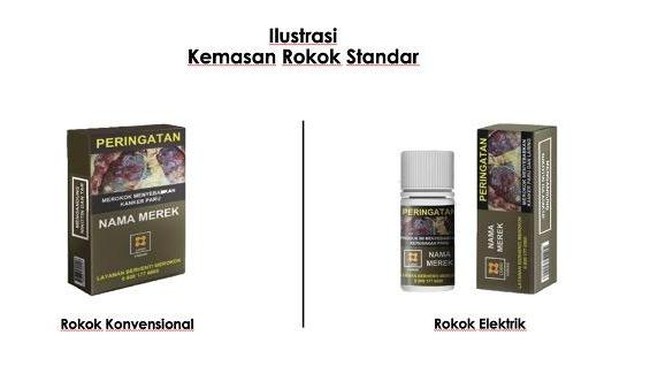
Colour often speaks faster than words. The eye first catches the colour, shape, and design of packaging. In a matter of seconds, a product is recognised. In a matter of seconds, a purchasing decision can also be formed. There was a time when a cigarette pack was sufficiently recognised by its colour. Without reading any text, consumers already knew the brand they were looking at. Packaging evolved from a product protector into a communication tool that conveys the identity, quality, and character of a brand. On shop shelves filled with hundreds of choices, packaging becomes the first differentiator. However, that visual language is gradually being restricted. This function is now at the centre of a debate. The Ministry of Health is drafting a Minister of Health Regulation on the Inclusion of Health Warnings and Information on Tobacco Products and Electronic Cigarettes. One of the substances receiving attention is the standardisation of packaging, including the regulation of packaging shape and the use of Pantone 448C colour on tobacco product packaging. In public consultation materials presented by the Ministry of Health in May 2026, the government assessed that attractive packaging remains a factor that can attract the attention of children and adolescents. The proposal places Indonesia on a path similar to several countries that have previously implemented standardised tobacco product packaging, such as Australia, the United Kingdom, France, Canada, Singapore, Thailand, and Turkey. The emerging debate no longer revolves around the dangers of cigarettes. That part has become a consensus in the health world. The discussion has moved to another question: how much influence does packaging have on consumer behaviour? Some parties see the move as a necessary public health instrument to reduce cigarette consumption, especially among younger age groups. On the other hand, questions arise regarding the policy’s effectiveness, implications for brand rights, and its impact on the economic chain that has grown around the tobacco industry. This debate is actually nothing new. Australia implemented plain packaging in 2012. It was followed by the United Kingdom, France, Ireland, Norway, Canada, Singapore, the Netherlands, Denmark, Thailand, Turkey, Saudi Arabia, and several other countries. Citing the Tobacco Plain Packaging: Global Status 2021 Update report published by the World Health Organization (WHO), plain packaging is defined as restrictions on the use of logos, colours, brand imagery, or promotional information on tobacco product packaging. Brand names are still permitted but must be displayed in a specified size, colour, and font. The policy’s objective is quite clear. WHO states that plain packaging is designed to reduce the appeal of tobacco products, eliminate the function of packaging as a promotional medium, prevent the impression that one product is safer than another, and increase the effectiveness of health warnings on cigarette packs. In Indonesia, the discussion on plain packaging is still in its early stages. However, the direction of the debate is beginning to show. A consensus on health risks was formed long ago. What is now being debated is whether the elimination of visual identity on packaging is an effective, proportional, and feasible instrument to implement in the Indonesian context. To understand why packaging has become an object of regulation, it is necessary to look at how marketing science views packaging itself. Citing research by Behzad Mohebbi in the International Journal of Organizational Leadership, packaging has evolved into one of the most important marketing instruments in the modern economy. The research cites various studies showing that about 70% of brand purchasing decisions occur in-store when consumers are directly faced with products on the sales shelf. In such situations, packaging performs many functions simultaneously. It serves as a product identity, an information medium, a marketing communication tool, a reinforcer of brand image, and a tool that helps a product stand out amidst competition. The same research explains that visual design has a major influence on how consumers perceive a product. Colour, typography, illustrations, and packaging shape form perceptions even before consumers touch or use the product. In marketing literature, colour holds a very important position. Mohebbi cites studies estimating that 62% to 90% of a consumer’s initial evaluation of a product is influenced by colour. Colour helps attract attention, facilitates brand recognition, and forms certain associations in the consumer’s mind. For companies, this condition has great economic value. Certain colours can be directly associated with certain brands. Consumers recognise products even before reading the text on the packaging. In a competitive market, the ability to be recognised in seconds often becomes a highly valuable advantage. WHO views tobacco product packaging as part of promotional activity. In the implementation guidelines for the WHO Framework Convention on Tobacco Control, packaging is cited as an important element in tobacco product advertising and promotion. Logos, colours, shapes, images, and other design elements are considered to be used to attract consumers and build brand identity. This viewpoint differs from the marketing perspective. In marketing science, packaging is a product differentiation tool. From a public health perspective, packaging is a promotional channel that has the potential to influence consumption decisions. This difference in viewpoint is what subsequently gave birth to the plain packaging policy.