
How North Maluku Can Achieve Protein Self-Sufficiency: Moving Beyond Dependence on Ships
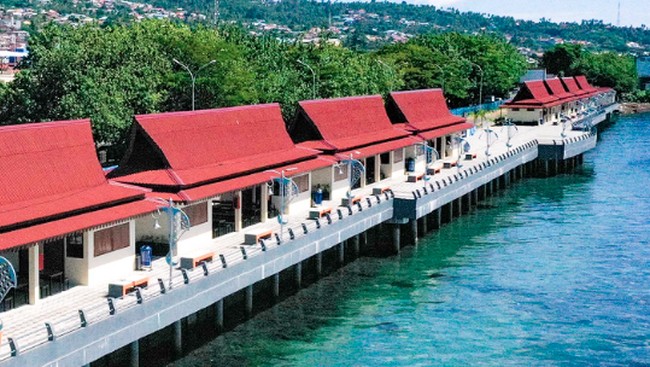
The title above is not a call to cut off sea routes, but a reflection on the logistical reality that has long shaped food security in North Maluku. For years, cargo ships carrying eggs and meat from Surabaya and Makassar have been both a “lifeline” and a reminder that this resource-rich region has yet to achieve sovereignty over its own protein supply.
But this dependence is not an unchangeable fate. North Maluku has all the prerequisites to make a major leap forward and become a model for other provinces in eastern Indonesia that still depend on supplies from Java. This optimism is not an empty dream, but a real opportunity waiting to be realised.
The latest data show that stunting prevalence stands at 28.4 per cent in Maluku and 23.2 per cent in North Maluku, both well above the national average, which has fallen to 19.8 per cent. Stunting reflects insufficient intake of animal protein during the first 1,000 days of life. When eggs and chicken have to travel by sea for days, consumer prices rise sharply and poor families’ access to protein is cut off.
The high cost of dependence
In North Maluku, around 80 per cent of egg demand is still met by supplies from outside the region. Local egg production meets only about 3 per cent of residents’ needs. This gap leads to unusually high prices. Eggs in Ternate sell for around Rp2,000 to Rp2,500 each, while broiler chicken costs Rp44,500 to Rp50,000 per kilogram—far more than in producing regions.
The main causes are sea freight costs, port handling and the risk of spoilage during transit. This dependence not only strains household budgets but also exacerbates nutritional inequality.
Modernisation and energy systems
North Maluku has an opportunity to turn the situation around. The provincial government is targeting egg self-sufficiency by 2026, with prices stabilised at around Rp1,500 each. But self-sufficiency will not be achieved simply by increasing the number of chickens. The root problems are high feed prices and the inefficiency of conventional farming. Modernising the livestock ecosystem is key.
North Maluku needs a leap towards an integrated agricultural system, or agri-park, that connects the entire value chain in one area. Imagine an integrated complex with a feed mill capable of producing 40 tonnes per hour across two pelletising lines, alongside storage silos with a capacity of 4 × 5,000 tonnes and a grain dryer capable of processing 750 tonnes a day.
The complex would also have a modern hatchery with a capacity of 70,600 hatching eggs, brooder facilities, and large-scale broiler and layer farms equipped with automated H-type battery-cage systems.
Further down the value chain, produce would not be sold only in its raw form. The ecosystem would include an abattoir capable of processing 5,000 birds an hour, cold-storage facilities, an egg-processing plant and a rendering plant that turns poultry offcuts and feathers into nutritious meat-and-bone meal for reuse as animal feed. Livestock manure would also be fermented for 30 days and processed into organic fertiliser in pellet and mash forms.
On the energy front, this modern system would prioritise efficiency and sustainability. Closed-house poultry sheds would have automated ventilation and temperature controls to reduce electricity consumption, supported by a wastewater treatment plant with a capacity of 1,120 tonnes a day.
Grain drying and processing would use integrated heating systems with effective insulation to minimise heat loss. Smart-control systems would also monitor temperature, humidity and machinery in real time to prevent energy waste and production failures.
Large-scale production potential
With sound technical planning, this ecosystem could produce 30,000 tonnes of chicken a year—equivalent to 60,000 birds a day at an average weight of 2kg—and 150 million eggs a year, or around 9,000 tonnes. Supporting this capacity would require 500,000 laying hens and 1.8 million broilers at different stages of growth.
These figures are not utopian. Similar designs and operating models have been implemented successfully in various countries, including Indonesia’s eastern regions. Comparable projects have helped underpin national food security in Egypt through the strategic “Egypt Future” project, with silo capacity of 500,000 tonnes, and in Zimbabwe, where strategic storage facilities span 14 locations.
Downstream mechanisms: KDKMP and MBG
At the downstream end, Merah Putih Village/Urban Ward Cooperatives (KDKMP) could help maximise the uptake of local production. In North Maluku, KDKMP could supply chicken and eggs to Nutrition Fulfilment Service Units (SPPG) running the Free Nutritious Meals (MBG) programme.
With supplies from modern local farms, SPPG units would no longer need to bring in ingredients from Java or Sulawesi. This would lower production costs by cutting inter-island transport expenses and provide schoolchildren with a more stable supply of chicken and eggs for MBG meals.
KDKMP would not merely distribute the produce, but also guarantee its quality and continuity of supply.
Policy recommendations
First, the North Maluku provincial government should make self-sufficiency in eggs and chicken a priority programme with measurable targets. Second, integrating the feed value chain should be a central focus, linking local maize production directly to a regional-scale feed mill.
Third, local governments should build partnerships with providers of integrated technology solutions capable of designing, building and operating livestock and feed-mill facilities on a turnkey basis. Fourth, KDKMP should be formally appointed as a downstream partner for SPPG to ensure that the MBG programme uses affordable local ingredients.
Fifth, and most crucially, the central government should provide adequate budgetary support. Additional funding for a pilot integrated ecosystem in North Maluku would be justified and consistent with the President’s policy of making food sovereignty and food security a priority.
Sixth, financing for this strategic project could involve Danantara, the sovereign wealth fund focused on long-term, impact-oriented investment. With the right financing structure, the project would not simply be a burden on the state budget, but an investment opportunity with economic and social returns.
An investment in the minds of Maluku’s children
Building an integrated livestock and feed-mill ecosystem would require substantial upfront investment. But this should be viewed not as an expense, but as a strategic long-term investment. If the ecosystem is established, the cost incurred today could be repaid over the next five to 20 years.
Imagine Maluku and North Maluku 20 years from now: a new generation born and raised without ever knowing stunting. Schoolchildren in remote island communities would receive sufficient animal protein every day—not from imported leftovers at inflated prices, but from modern farms on their own land. With adequate nutrition, their brains could develop to their full potential, helping them become an intelligent, resilient generation ready to build their region.
Ultimately, food sovereignty is no less important than any aspect of national defence. As the nation’s founders once reminded us, food availability is key to sovereignty. When food is plentiful, people prosper.
When food is secure, the country is secure. Protein self-sufficiency is not a utopia, but a policy choice that must be made now, before another generation loses the opportunity to grow to its full potential.