
How Many Javan Rhinos Are Left? A Look at Their Conservation Status
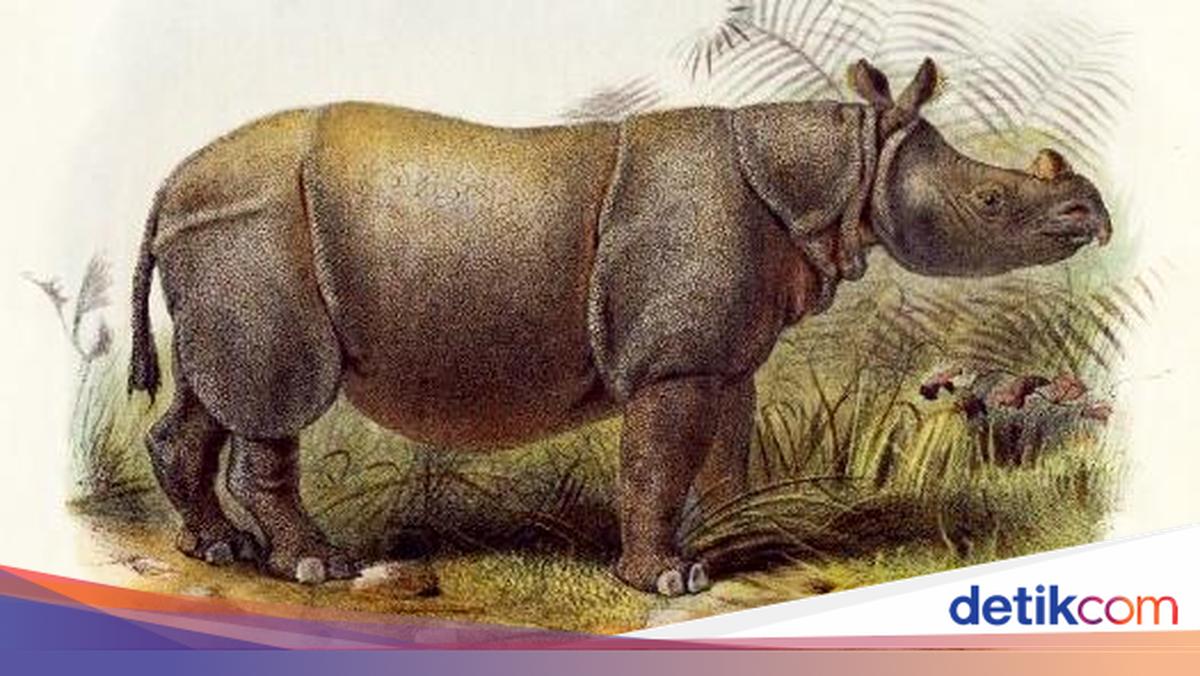
The Javan rhino has come under public scrutiny after a plan to move the animals from Ujung Kulon to Alas Purwo went viral. Hashim Djojohadikusumo, the President’s Special Envoy for Climate and Energy, said the proposed translocation was linked to the risk of natural disasters.
“At Ujung Kulon, there is a Javan rhino sanctuary. There is a new problem with Mount Anak Krakatau. If an earthquake or volcanic eruption causes a tsunami, our Javan rhinos could become extinct,” Hashim said at a COP31 media briefing in Antalya, Türkiye, on Thursday (12 November 2026), according to detikFinance.
News of the proposed relocation has prompted a range of public responses, particularly because the Javan rhino has long been known as a critically endangered animal. So how many remain?
According to the International Rhino Foundation, there are five rhino species worldwide: the white rhino, black rhino, greater one-horned or Indian rhino, Javan rhino and Sumatran rhino.
The Javan rhino was once widespread across South-east Asia. But relentless hunting brought Rhinoceros sondaicus, its scientific name, close to extinction.
Since the last Javan rhino in Vietnam died in 2011, the species has survived only in Indonesia, specifically in one national park: Ujung Kulon.
According to information posted by the Indonesian Rhino Foundation (YABI) on its Instagram account, @badak.indonesia, only 80–100 are left. YABI posted the figure to mark World Rhino Day on 22 September 2026.
Ujung Kulon National Park has conducted intensive monitoring since 1967, when the Javan rhino population was estimated at just 25. The number rose to 76 in 2022 and then to 87–100 by 2025.
Javan rhino conservation status
A check of the International Union for Conservation of Nature (IUCN) Red List on Monday (16 November 2026) found that the Javan rhino is classified as Critically Endangered (CR). The classification is based on an assessment conducted on 28 May 2019.
The IUCN Red List says the Javan rhino was classified as Endangered (EN) in 1986. Its status worsened to Critically Endangered in 1996 and has remained unchanged since.
The IUCN Red List divides animals into nine categories: Not Evaluated (NE), Data Deficient (DD), Least Concern (LC), Near Threatened (NT), Vulnerable (VU), Endangered (EN), Critically Endangered (CR), Extinct in the Wild (EW) and Extinct (EX).
The Javan rhino is among the protected species listed in Indonesian Environment and Forestry Ministerial Regulation No. P.20/MENLHK/SETJEN/KUM.1/6/2018. The Sumatran rhino (Dicerorhinus sumatrensis) is also included.
The relocation of Musofa
Moving a Javan rhino is not a simple undertaking. Every detail, from the relocation method to the suitability of its new habitat, requires careful planning.
According to the official Ujung Kulon National Park website, a Javan rhino named Musofa was relocated in 2025 to a designated area called the Javan Rhino Study and Conservation Area (JRSCA). However, Musofa died after the move.
Musofa entered a pit trap on 3 November 2025 and was successfully moved to the JRSCA on 5 November. Although his condition was initially good, his health deteriorated on 7 November. He died later that day despite emergency treatment.
A necropsy by the pathology team at IPB University’s School of Veterinary Medicine and Biomedicine found that Musofa died from a chronic illness that had long affected his stomach, intestines and brain. A fight was also identified as a contributing factor.
The incident offered an important lesson for Javan rhino conservation. Success cannot be measured by whether a relocation is completed: habitat readiness, intensive monitoring and medical care also need to be considered.
Is Alas Purwo suitable for Javan rhinos?
The IUCN Red List says Javan rhinos live in lowland tropical rainforests, particularly near water. Before becoming rare, they also inhabited mixed forests, grasslands and higher-altitude areas.
Little is known about the species’ preferred habitat because so few rhinos remain. In addition to vegetation and elevation, proximity to water and mineral salts, as well as the availability of suitable wallowing areas, are thought to be important.
So is Alas Purwo suitable for Javan rhinos? The Ministry of Forestry says this has yet to be determined.
“The proposal still requires scientific studies and a comprehensive assessment to establish whether the area is suitable as a habitat capable of supporting the safety and continued survival of the Javan rhino,” the official Ujung Kulon National Park Instagram account, @btn_ujung_kulon, said.
Source: jawawa.id (https://jawawa.id/newsitem/how-many-javan-rhinos-are-left-a-look-at-their-conservation-status-1794876642)
Originally published by detikJogja (https://www.detik.com/jogja/berita/d-8754817/badak-jawa-sisa-berapa-ekor-sekarang-cek-status-konservasinya), translated from Indonesian