
How Many Electric Vehicles Can Be Charged at Toll Road Charging Stations During the Mudik Period?
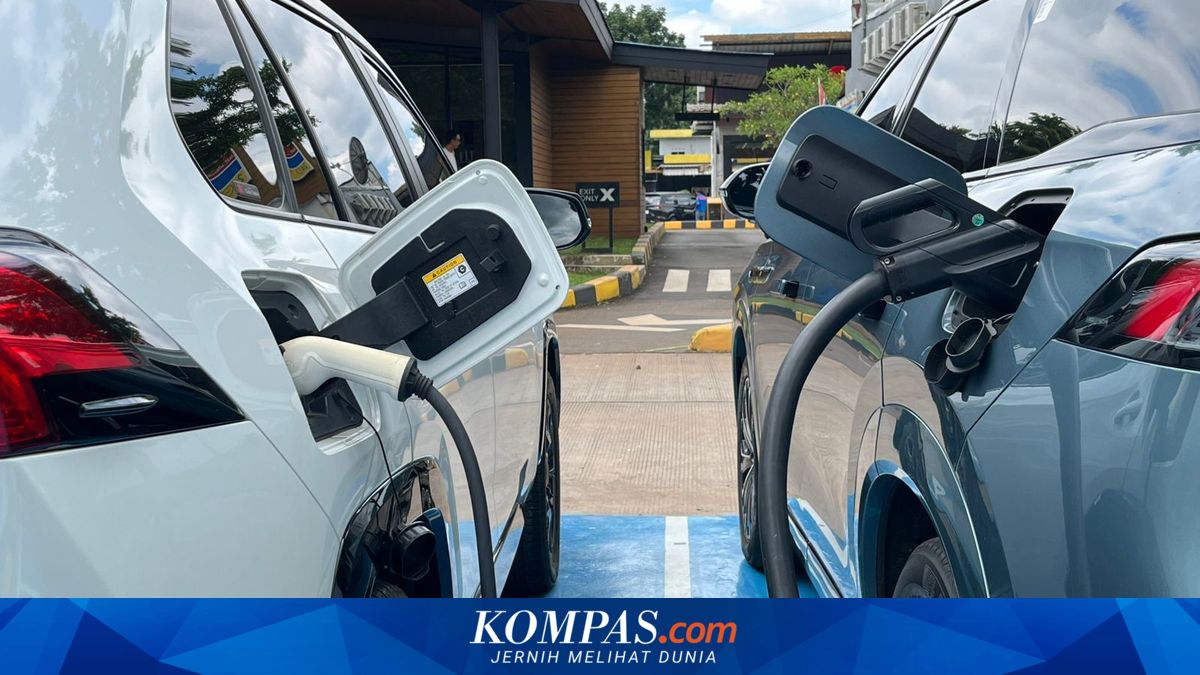
JAKARTA — Indonesia’s electric vehicle population continues to grow. Battery-based vehicles are no longer used solely for daily urban mobility, but increasingly for long-distance travel, including during Eid holiday travel on motorways.
This infrastructure is now available at various locations, particularly at rest areas along the Trans-Java and Trans-Sumatra toll roads. Based on available infrastructure data, at least 72 toll rest areas have been equipped with electric vehicle charging stations (SPKLU), distributed across the Trans-Java and Trans-Sumatra toll road networks.
Specifically on the Trans-Java Toll Road, the toll operator has prepared approximately 155 charging units across 40 rest area locations to support electric vehicle mobility during the holiday period. “To support electric vehicle users during the 2026 Eid holiday exodus, the Trans-Java Toll Road currently has 155 charging units distributed across 40 rest area locations,” said Ria Marlinda Paallo, Vice President Corporate Secretary & Legal at PT Jasamarga Transjawa Tol, speaking to Kompas.com on Wednesday (11 March 2026).
Data on charging station usage demonstrates a significant upward trend during periods of high mobility. PT PLN (Persero) recorded electricity consumption at charging stations during the December 2025 and January 2026 holiday period at 5,619 MWh, representing a 479 per cent increase compared to the same period in the previous year. In terms of frequency, charging sessions numbered 234,136 instances, an increase of 485 per cent compared to the previous period.
A simple simulation can theoretically calculate the capacity of charging stations along toll roads. Assuming the average charging time for one electric vehicle is approximately one hour to obtain sufficient power for continued travel, one charging unit with two hoses can theoretically serve two electric vehicles per hour. This means that within a 24-hour period, a single charging unit could theoretically service up to 48 electric vehicles.