
How Many Civil Servants Does the State Actually Need?
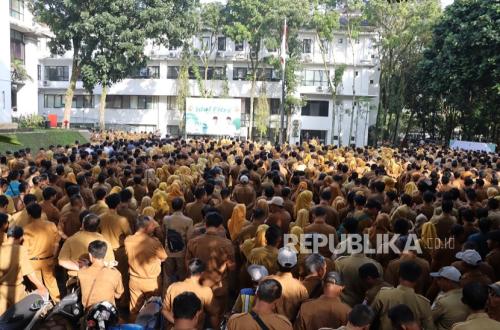
Every time government personnel expenditure increases, the reaction is almost predictable: the state budget is too high for apparatus, the national or regional budgets are exhausted by salaries, and the bureaucracy is too bloated. Such criticism is important as an alarm. The state should indeed not build a bureaucracy larger than its needs. However, recent figures suggest we need to ask deeper questions.
The number of civil servants managed nationally reached approximately 6.7 million people by June 2026 (BKN, 2026a). At the regional level, estimated personnel expenditure is projected to rise from Rp439.6 trillion in 2024 to Rp455.8 trillion in 2025 (Ministry of Finance, 2026a). Meanwhile, as of 31 March 2026, central government personnel expenditure reached Rp97.1 trillion, an increase of 22.2 per cent compared to the same period the previous year. This increase was influenced by the appointment of new civil servants as well as the payment of religious holiday allowances (THR) and various benefits (Ministry of Finance, 2026b).
These figures are significant. However, the magnitude of these numbers does not, in itself, prove that the state has too many employees. The more fundamental question is: how many civil servants does the state actually need to perform its duties? This simple question can change how we perceive personnel expenditure.
Employees are not merely a budget burden. Imagine a hospital without doctors and nurses, a school without teachers, a service office without officers, a policy-making institution without analysts, or a digital government system without people to design, operate, and secure it. Buildings and computers may be available, but services do not run on their own.
Ultimately, bureaucracy works through people. In government organisations where the primary products are services, policies, and administrative tasks, employees are not merely costs to be minimised. They represent the capacity to produce public services. Therefore, the issue is not whether employees should be paid—they certainly must. The question is: is the state paying for people who are actually needed for the work that must be done?
Imagine two local governments, each spending Rp1 trillion on personnel expenditure. The first region truly requires that number of employees based on service workload, regional characteristics, population size, occupation, and service standards. Competencies are appropriate, productivity is measurable, technology is utilised, and services run well. The second region spends the same amount, but some of its employees do not have an adequate workload. Tasks overlap, competencies do not match positions, or manual processes are maintained even though technology is available. Can both be judged the same simply because the nominal expenditure is identical? Certainly not.
This illustration is hypothetical. It is not intended to describe two specific regions, but rather to demonstrate the limitations of assessing bureaucratic efficiency solely through nominal personnel expenditure. Rp1 trillion can fund an organisational capacity that is truly needed, but it can also fund capacity that is not fully utilised. Therefore, expenditure figures are an entry point for questioning, not the final verdict.
We already possess the necessary instruments. Law Number 20 of 2023 concerning Civil Servants places the management of civil servants within a professional framework based on a merit system. At the operational level, Minister of PANRB Regulation Number 1 of 2020 provides guidelines for Job Analysis (Anjab) and Workload Analysis (ABK). Through these instruments, the government has a way to map jobs and calculate staffing needs based on the work that must be performed (Ministry of PANRB, 2020a).
Consequently, the debate regarding personnel expenditure should not stop at the question, “How many trillions for salaries?” The next question is far more important: Does the Job Analysis accurately reflect the work actually being done? Does the Workload Analysis produce realistic requirements? Are the number, competence, and distribution of employees in line with those needs? And equally important: is that need recalculated when organisations and technology change?
Job Analysis and Workload Analysis should not be documents prepared once to meet formation requirements and then archived. Their preparation lies with each individual government agency. In implementation, the Ministry of PANRB coordinates with the BKN and the Ministry of Home Affairs, while the results of Anjab, ABK, and job mapping become vital components in organising civil servant needs (Ministry of PANRB, 2020b). Thus, accountability is multi-layered. Agencies must ensure that work and staffing needs remain relevant, while national civil servant management requires connectivity with the Ministry of PANRB and the BKN.
Digitalisation must change how we calculate civil servant needs. A process that once required ten people may now require fewer because parts of the work have been automated. However, digitalisation does not always mean the number of employees must decrease. Digital transformation also changes business processes and creates new competency needs in data management, electronic systems, service integration, information security, and various new roles that may not have been dominant previously. This direction aligns with the Electronic-Based Government System policy and the acceleration of national digital transformation through Presidential Regulations (Perpres) Number 95 of 2018, Number 132 of 2022, and Number 82 of 2023.
Therefore, the correct question is not “How many people can be reduced after digitalisation?”, but “After the work process changes, how many people and what kind of competencies are now required?”