
How Maggots are Transforming a Village
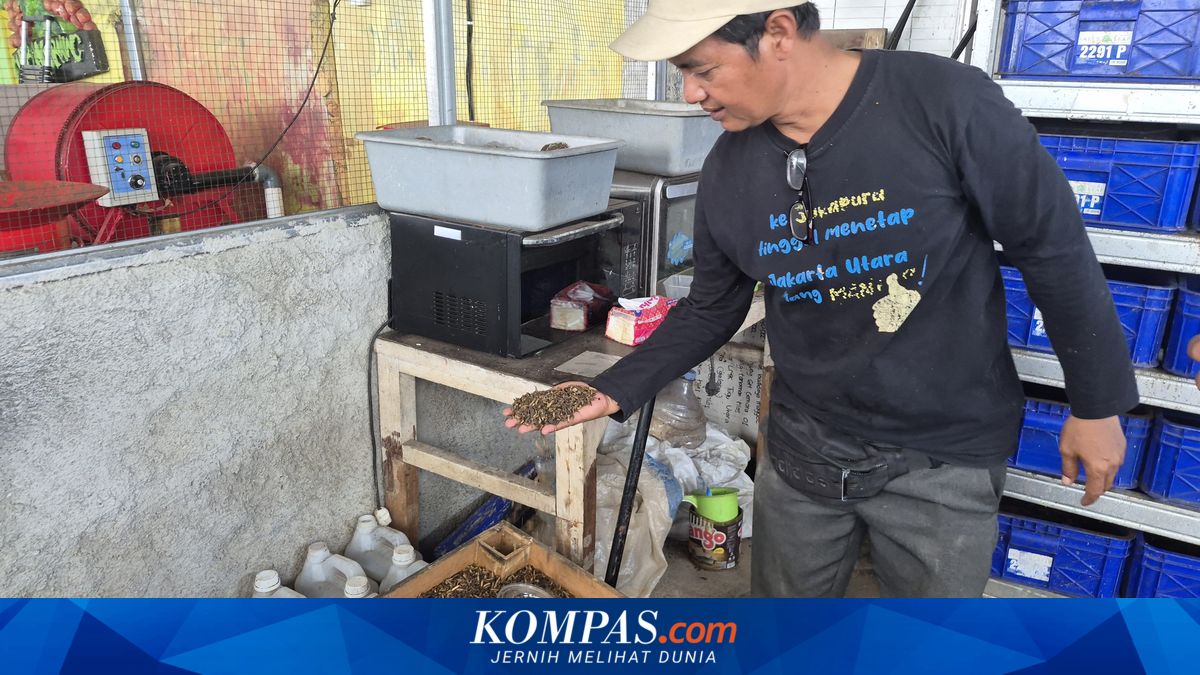
JAKARTA, KOMPAS.com - In a corner of the densely populated RW 01 Tugu Utara, North Jakarta, a small change is gradually transforming the face of the village.
It is not a new building or a large infrastructure project. This change comes from a tiny creature called maggot, the larva of the Black Soldier Fly (BSF), which every day devours food waste, rotten vegetables, and household waste.
In the past, the smell of organic waste could often be smelled from the corners of the environment. Now, that smell is starting to disappear.
At the Cemara Waste Bank, maggots are the main “workers” helping residents reduce the accumulation of organic waste by around 100 kilograms per day.
For residents, maggots are more than just larvae. They have become a solution.
In this place, waste is no longer seen as something to be thrown away.
Every food scrap that enters the processing facility becomes “food” for the maggots. In a short time, the pile of organic waste is broken down and drastically reduced.
The result is not only a cleaner environment.
The remaining residue, known as casgot, can be directly used as organic fertiliser.
In other words, almost nothing is wasted.
Although managed at the community level, the supply of waste processed at the Cemara Waste Bank comes from many places.
Not only from local residents’ homes, but they also receive organic waste from markets, restaurants, schools, and even government programmes.
“We collect waste from various sources, such as the Koja Market, restaurants, schools, and the Nutrition Fulfillment Service Unit (SPPG),” said Dani.