
How Long Does It Take to Change Your DTSEN Decile? Here Are the 10 Tiers and How to Check
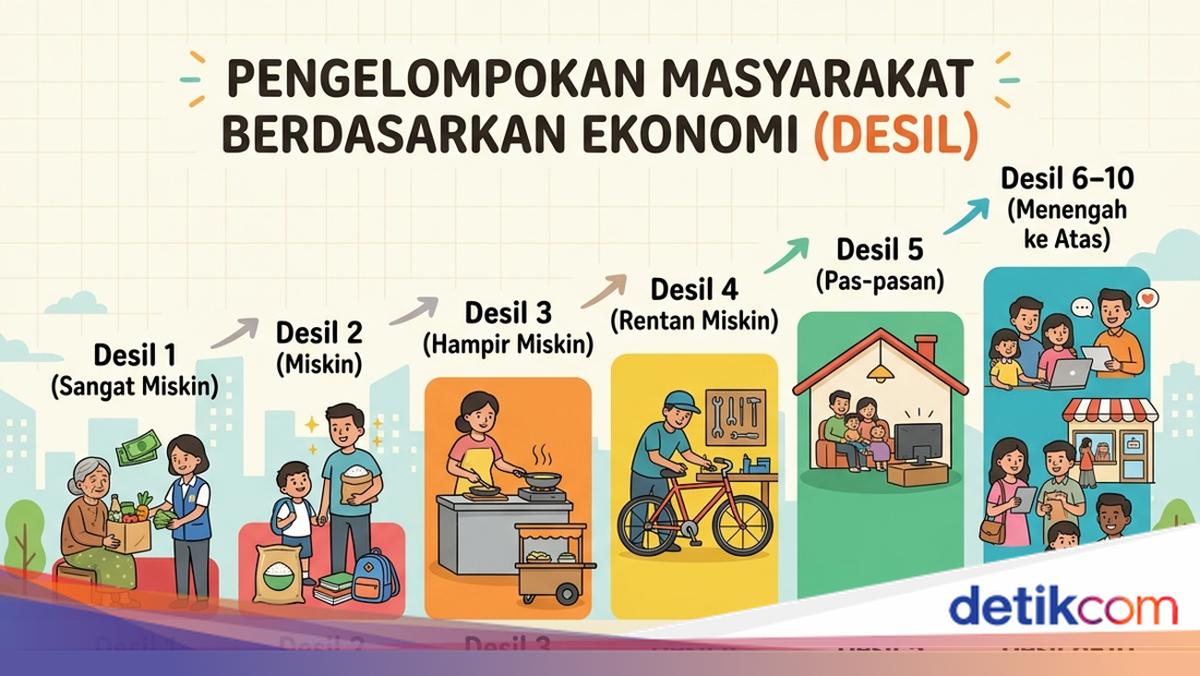
The Data Tunggal Sosial Ekonomi Nasional (DTSEN) is a system used by the government to group citizens based on their level of welfare. This classification is crucial because it serves as a benchmark for distributing social assistance (bansos). For instance, the Program Keluarga Harapan (PKH) is prioritised for those in deciles 1 to 4, while the Sembako programme targets deciles 1 to 5. Deciles 6 to 10 are not prioritised for receiving bansos.
According to the Ministry of Social Affairs (Kemensos), the decile is determined by various factors, including education, occupation, housing conditions, electrical power capacity, and asset ownership, not just salary.
There are ten decile tiers in total:
Decile 1: Very Poor
Decile 2: Poor
Decile 3: Near Poor
Decile 4: Lower Middle
Decile 5: Stable Lower Middle
Decile 6-10: Middle to Very Wealthy
Citizens can check their decile via the Kemensos Cek Bansos website (cek.bansos.kemensos.go.id) or the Cek Bansos mobile application. To check on the website, users must enter their 16-digit National Identity Number (NIK) and a captcha code before pressing ‘Cari Data’. The results will display a table containing the name, decile, and disbursement status of various social assistance programmes. On the mobile app, users simply enter their NIK under the ‘Cek Bansos’ menu to view their decile.
If the assigned decile is deemed inaccurate, a change can be requested. Through the app, users must create an account using their Family Card number, NIK, name, phone number, email, and a selfie holding their KTP. After submitting a request via the ‘Profil’ menu, a social assistant will conduct a field verification, followed by data validation by Kemensos. Alternatively, citizens can visit their village, sub-district, or social service office with photocopies of their Family Card and KTP. An officer will submit the change proposal through the Social Welfare Information System (SIKS-NG), which then undergoes verification by the social service and Kemensos.
In both cases, the final step involves the Badan Pusat Statistik (BPS) re-ranking the data. Kemensos has stated that BPS currently updates the ranking every three months, so the entire process to change a decile takes approximately three months. It should be noted that the change request is not always successful and may be rejected if conditions do not match the criteria.
A citizen’s decile may also change automatically without a formal request. The DTSEN system is integrated with various institutions, including banks and BPJS, and undergoes regular data updates. Consequently, if a citizen’s data changes in one of these integrated systems, their DTSEN decile may be updated automatically.