
How long can volcanic ash persist after an eruption?
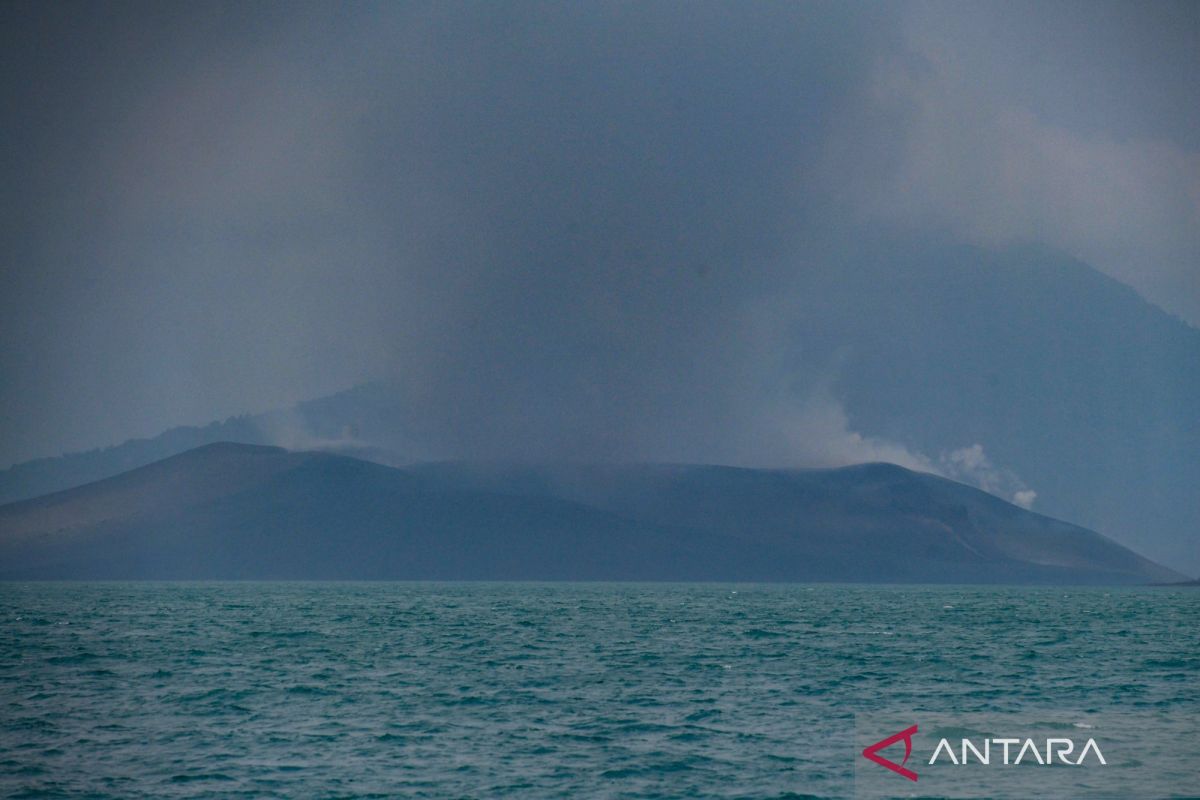
Jakarta (ANTARA) - The eruption of Mount Anak Krakatau has once again drawn attention after its volcanic activity in early September 2026 produced an ash column that spread across several regions. Volcanic ash was detected as far as Banten, Jakarta, and West Java due to wind currents. The impact has been widespread, ranging from flight disruptions to affecting community activities in various areas. The Geological Agency continues to monitor the developing activity of Mount Anak Krakatau.
This situation has led many to wonder: once the eruption ceases and the ash stops falling, how long does volcanic ash actually persist in the environment?
The answer cannot be determined in just a few days. Volcanic ash can remain in the environment for days, weeks, or even longer, depending on regional conditions and the volume of ashfall.
Volcanic ash consists of very small particles formed from fragments of rock, minerals, and other volcanic materials during an eruption. Due to their lightweight nature, some particles can be carried far by the wind before eventually settling.
Once it settles on the ground, roads, roofs, vehicles, or household furniture, the ash does not automatically disappear when eruptive activity ends.
Wind and human activities, such as passing vehicles, can cause settled ash to become airborne again. The International Volcanic Health Hazard Network (IVHHN) explains that dry conditions make ash easier to resuspend via wind or traffic. While rain can help settle the ash, the cleaning process for large amounts still requires significant time.
There is no uniform timeframe for all regions. Thin layers of ash on open surfaces may diminish naturally through wind and rain. However, ash accumulating in building corners, drains, yards, roofs, or other surfaces can persist much longer.
According to the U.S. Geological Survey (USGS), the process of cleaning volcanic ash can last from weeks to months, particularly when the affected area is vast and the ash deposits are substantial. The duration of this process is also influenced by the availability of equipment and the total area requiring cleaning.
This means that even if the sky appears normal a few days after an eruption, it does not mean all volcanic ash has vanished from the environment.
Wind can cause ash to become airborne again
One reason volcanic ash can persist is a process known as remobilisation. Simply put, ash that has previously settled can be lifted back into the air.
Very fine ash is more susceptible to this process. For instance, vehicles travelling on roads still covered in ash can cause particles to become airborne again. Strong winds can also transport ash from one location to another. The USGS notes that wind can redistribute ash back into areas that had previously been cleaned.
Therefore, residents in affected areas should not assume conditions are entirely safe just because rain has fallen or the ash no longer appears thick.
While rain can help clean ash from certain surfaces, heavy rainfall can also wash ash into drainage systems, causing it to accumulate in low-lying areas.
Wet ash can then harden as it dries. This condition can actually make the cleaning process more difficult. The USGS notes that while rain can help clean roofs, it also carries the potential to clog drains and cause ash deposits to harden.
Thus, rain does not mean volcanic ash disappears instantly. While some is washed away, other parts may simply move and settle elsewhere.
The risks do not automatically end when the eruption stops. The USGS notes that the impacts of volcanic activity can last for months to years after an eruption ends, depending on the type of material and the resulting impact. Consequently, monitoring of volcanic and environmental conditions remains essential.
Regarding volcanic ash, one critical factor to watch is the possibility of particles re-entering the air. The public should continue to use appropriate masks when cleaning ash deposits, especially if the ash remains easily airborne.
When can the environment return to normal?
There is no single benchmark applicable to all areas. Regions with thin ash layers that receive prompt rainfall may return to a relatively clean state more quickly. Conversely, areas receiving thick deposits may require weeks or months for thorough cleaning.
In the case of the Mount Anak Krakatau eruption, wind direction is also a vital factor. Ash can spread far from the eruption source and then become airborne again during dry conditions or due to vehicular activity.
Therefore, following an eruption, the public should continue to follow information from the Geological Agency/PVMBG, local governments, and relevant authorities. One should not be too quick to assume the environment is free of ash simply because the eruption has ceased.
Ultimately, the duration that volcanic ash persists is determined not only by when the volcano stops erupting, but also by what happens afterwards. Wind, rain, ash thickness, surface conditions, and human activity all play a role in determining how long this material remains in the environment.