
How is artificial rain made? Here's how weather modification works
Jakarta (ANTARA) - The National Disaster Management Agency (BNPB) has prepared and deployed a Weather Modification Operation (OMC) to help dissipate volcanic ash from the eruption of Mount Anak Krakatau, which has spread to a number of regions, including Jakarta, Banten and Lampung.
BNPB Head Suharyanto said the operation is being carried out to help bring volcanic ash material down from the atmosphere. Aircraft for the OMC have also been prepared at Pondok Cabe. In addition to cloud seeding, BNPB has readied a water mist method should rain cloud growth prove insufficient.
These efforts come amid fairly widespread impacts from the eruption. The Geological Agency of the Ministry of Energy and Mineral Resources has recorded that ash from Anak Krakatau has spread to several provinces, whilst the volcano’s activity remains at Level III, or Alert. On Monday (7/9), the Geological Agency declared that the continuous eruptive episode had ended, but volcanic activity continues to be monitored because seismicity remains high.
The use of OMC in this situation has once again brought the term “artificial rain” into public discussion. So how exactly is artificial rain made, and how does weather modification work?
The term artificial rain is in fact quite popularly used to describe weather modification activities. However, put simply, this technique does not mean that humans can create rain from completely clear skies.
The Meteorology, Climatology and Geophysics Agency (BMKG) explains that weather modification does not create rain from scratch. Operations are carried out by making use of clouds and atmospheric processes that are naturally available. Intervention is made to influence the physical processes inside clouds so that rain can fall more quickly, or its intensity can be managed according to the operation’s objectives.
So, if there are no clouds that meet the meteorological conditions, cloud seeding cannot simply produce rain.
One of the best-known techniques in OMC is cloud seeding.
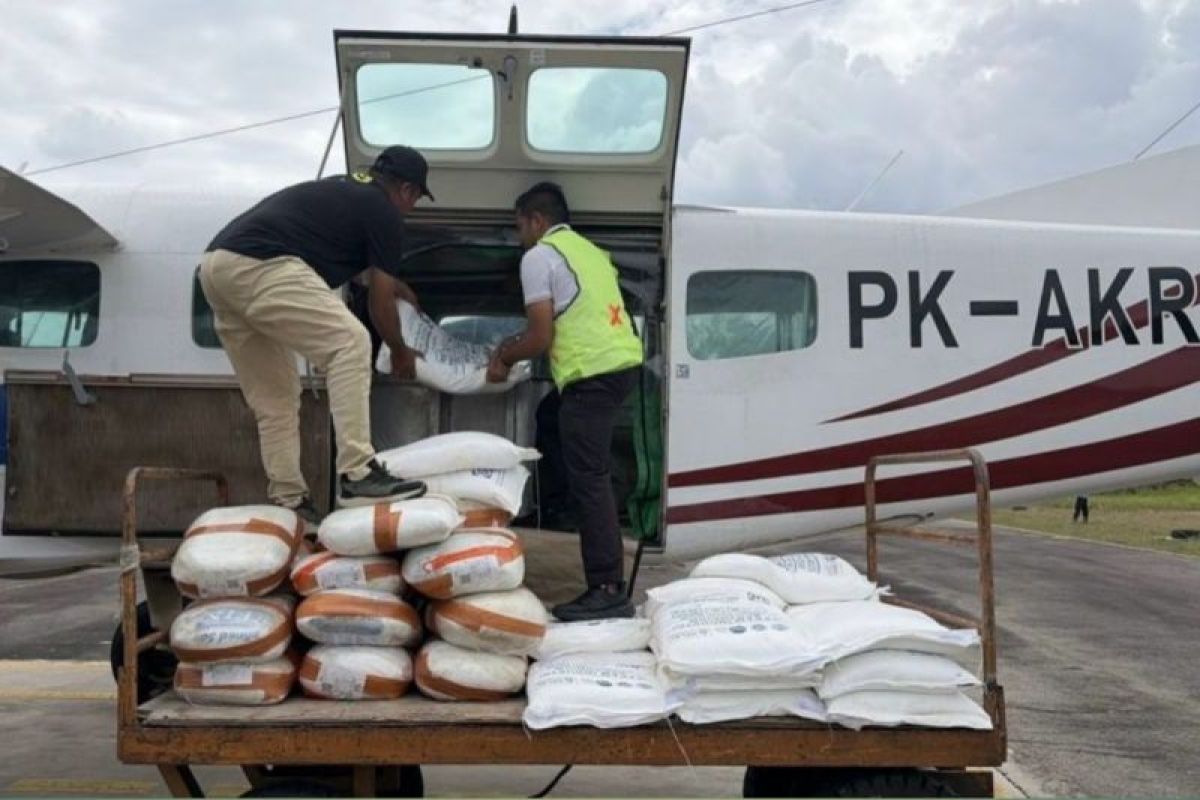
In this method, seeding materials consisting of sodium chloride (NaCl) or fine salt, urea, silver iodide, and solid carbon dioxide are carried by aircraft towards clouds deemed to have the potential to produce rain. These materials are then released into or around the clouds according to the operational strategy and atmospheric conditions.
The aim is to help the process of forming and growing water droplets or ice inside clouds. When these droplets grow and become heavy enough, water can fall to the surface as rain.
Thus, the aircraft is not a “rain-making machine”. The aircraft serves as a means of carrying and dispersing seeding materials at locations determined on the basis of weather analysis.
Why can’t all clouds be seeded?
This is one of the important parts of understanding how artificial rain works.
Not all clouds have characteristics suitable for seeding. The OMC team needs to examine various meteorological parameters, such as cloud type and development, humidity, wind, temperature, and other atmospheric conditions.
For this reason, carrying out OMC requires continuous weather data support and monitoring.
If atmospheric conditions are unfavourable, aircraft cannot simply scatter seeding material and expect rain to fall immediately. Indeed, the choice of timing and location is a crucial part of determining the operation’s success.
In the case of the Mount Anak Krakatau eruption, the aim of the OMC is not to stop the eruption. The operation is being carried out to help dissolve volcanic ash still present in the atmosphere.
When cloud conditions permit, seeding can be carried out to increase the chance of rain. The resulting rainfall is then expected to help carry ash particles from the atmosphere down to the surface.
BNPB describes this step as one of the efforts to address the impact of volcanic ash dispersal. The implementation of the OMC still takes into account weather conditions as well as aviation safety and security aspects, as a number of airports had previously been affected by the ash dispersal.
What if there are no rain clouds?
This is one of the challenges in carrying out OMC, particularly when atmospheric conditions are dry.
In handling the impact of Anak Krakatau’s ash, BNPB has prepared the water mist method as an alternative when rain cloud growth is insufficient. This method is intended to help break down ash particles in affected areas, particularly Jakarta, Banten and Lampung.
This means weather modification is not always identical to cloud seeding to produce rain. The techniques used can be adjusted according to conditions on the ground and the mitigation objectives.
Amid various disaster threats, from forest and land fires to volcanic ash dispersal, weather modification is one technology that can be used to help reduce disaster impacts. However, its success still depends on one thing that cannot be ignored: the state of nature itself.