
How Indonesia's Role Changed in South Korea KF-21 Jet Project
How Indonesia’s Role Changed in South Korea KF-21 Jet Project
Reporter
August 28, 2026 | 11:40 am
TEMPO.CO, Jakarta - South Korea has assured that the revised cooperation framework for the KF-21 Boramae, or IF-X fighter jet project, will not hinder its defense partnership with Indonesia. Both countries remain in discussions regarding the continuation of the partnership following the completion of the aircraft’s joint development phase.
Uhm Taeho, Political Section Chief and Counselor at the South Korean Embassy in Indonesia, noted that both sides will determine the structure of their next phase of collaboration. “I wouldn’t call it a change because we haven’t announced anything yet,” Taeho said during the Indonesian Next Generation Journalist Network on Korea (IKJN) workshop in Jakarta on Wednesday, August 26, 2026.
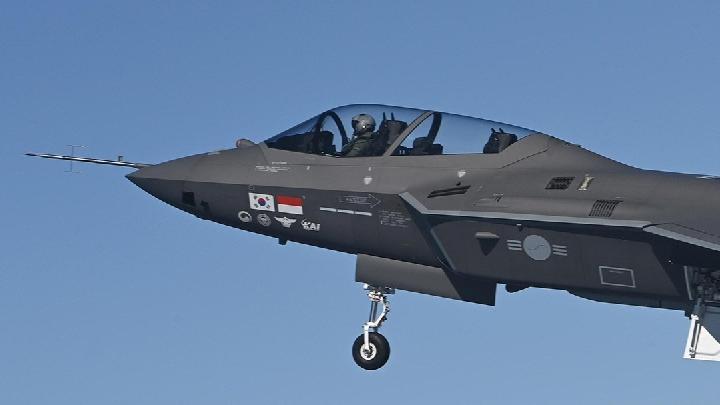
Indonesia’s status in the KF-21 Boramae fighter jet project has shifted from co-developer to buyer. As a co-developer, Indonesia had previously been directly involved across the entire aircraft development process. Under the original KF-21 framework, Indonesian engineers were dispatched to the Korea Aerospace Industries (KAI) facility in Sacheon to participate in preliminary design work, prototype production, test flights, and fleet certification.
According to Taeho, the KF-21 collaboration is a major initiative influenced by shifting domestic and international economic conditions in both nations. Consequently, Indonesia and South Korea will evaluate the appropriate methods, scope, and timeline for the next phase of cooperation.
These discussions engage the defense and foreign affairs ministries of both countries. “I hope we can reach a conclusion soon,” Taeho added during the event, which was organized by the Foreign Policy Community of Indonesia (FPCI) in collaboration with the Korea Foundation.
He cited the completion of the KF-21 development phase in July 2026 as a major milestone for bilateral defense relations. Although the flagship defense equipment project faced challenges, both sides ultimately resolved them through mutual agreements. Instead of hindering future collaboration, Taeho assured that the experience gained in overcoming these challenges will serve as an asset in building deeper trust.
Speaking at the same event, Vahd Nabyl Achmad, Head of the Asia Pacific and Africa Regional Policy Strategy Center at the Indonesian Ministry of Foreign Affairs, acknowledged that national priorities may change over time. Nevertheless, both parties remain committed to fulfilling the vision of the KF-21 partnership. “We finally achieved the ultimate goal,” Nabyl said.
Initiated in 2015, the joint development of the KF-21/IF-X emerged as one of the strategic defense industry projects between Indonesia and South Korea. Overall development costs reportedly reached 8.8 trillion won, equivalent to approximately Rp113.2 trillion at an exchange rate of Rp12.87 per won. Through joint development and shared financial contributions, Indonesia gained technology transfer benefits and enhanced human resource capacity within its defense sector.
However, the project faced friction over reduced Indonesian financial contributions and alleged leaks of sensitive data involving Indonesian technicians. Following renegotiations, both parties decided to press forward until the development phase reached completion.
Khairul Fahmi, principal defense analyst at the Institute for Security and Strategic Studies, believes that Indonesia’s decade-long experience in the KF-21 Boramae program remains valuable for its defense industry. “The focus should be on how much the program has achieved in technology mastery and industrial capacity enhancement,” he noted.
Defense cooperation is among the key areas covered in the Joint Statement on the Establishment of a Special Comprehensive Strategic Partnership between the Republic of Korea and the Republic of Indonesia. The strategic framework was finalized by Indonesian President Prabowo Subianto and South Korean President Lee Jae Myung in April 2026. Both leaders reaffirmed their commitment to cooperation in IF-X production and the progress of broader defense industry partnerships.
Read: Why South Korea Is Keen to Invest in Indonesia’s 100 GW Solar Power
Click here to get the latest news updates from Tempo on Google News
Source: jawawa.id (https://jawawa.id/newsitem/how-indonesias-role-changed-in-south-korea-kf-21-jet-project-1787982613)
Originally published by Tempo (English) (https://en.tempo.co/read/2118460/how-indonesias-role-changed-in-south-korea-kf-21-jet-project)