
How Indonesia's 'Peeing in the Sea' Natural Resource Export Under-Invoicing Scheme Works
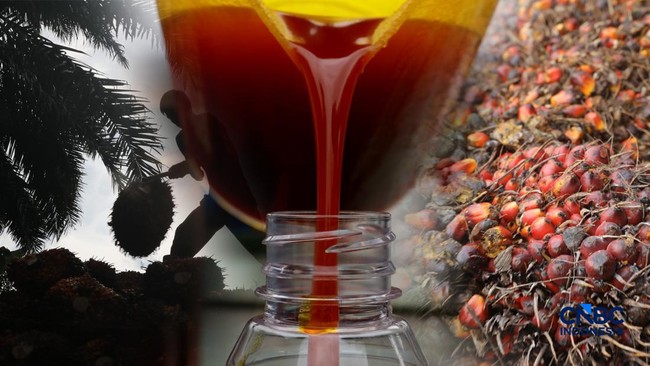
Jakarta, CNBC Indonesia – President Prabowo Subianto has highlighted manipulation practices in Indonesia’s natural resource exports, including under-invoicing and transfer pricing.
He made the remarks during his speech at the 19th Joint Session of the Indonesian House of Representatives on Wednesday, 20 May 2026.
Prabowo stated that the failure of export profits to remain within the country is a major economic issue, with under-invoicing, under-accounting, transfer pricing, and smuggling creating loopholes that prevent optimal state revenue.
“Over the past 34 years, what has occurred is known as under-invoicing. Under-invoicing is fraud. Entrepreneurs do not report the true value of what they sell. Many set up overseas companies,” he said.
During his presentation, cumulative under-invoicing in exports from 1991 to 2024 was estimated at $90.8 billion, equivalent to approximately Rp16.144 trillion (assuming an exchange rate of Rp17,780 per US dollar), according to UN Comtrade 2025 data processed by NEXT Indonesia Institute.
How does the scheme operate?
Tungkot Sipayung, Executive Director of the Palm Oil Agribusiness Strategic Policy Institute (PASPI), explained that misinvoicing – including under- or over-invoicing of quantity, quality, or price, as well as transfer pricing – constitutes smuggling offences in trade.
“Traditional smuggling is referred to in Indonesia as ‘kencing di laut’ [peeing in the sea],” he told CNBC Indonesia, quoted on Tuesday, 26 May 2026.
“These smuggling practices are easier and more sophisticated when there are affiliated companies within the same group in both exporting and importing countries,” he added.
According to Tungkot, the practice has been ongoing for a long time, not just in palm oil exports but also other goods, including imports.
“It is actually easy to detect. Using objective statistics from UN Comtrade and ITC, discrepancies between export and import data can be identified,” he said.
“Zero misinvoicing would occur if export statistics from country A to B match import statistics from B to A, or differ by no more than 10% in value due to freight and insurance costs. A discrepancy exceeding 10% suggests misinvoicing,” Tungkot explained.
For Indonesia, he said, government investigations indicate significant misinvoicing.
“Misinvoicing harms both exporting and importing nations through lost export and import taxes, as well as corporate income tax,” he said.
“For Indonesia, besides misinvoicing, there is also the issue of export earnings (DHE) not entering our economic system but being parked abroad,” he added.
Tungkot explained that the continuous exclusion of DHE from the domestic economy impacts the domestic economy.
“Such effects include persistent rupiah depreciation, relatively high and permanent domestic interest rates, absence of multiplier effects in creating economic growth, job opportunities, income increases, lower production than potential, saving-investment gaps, fiscal gaps, and more,” he said.
“According to the President, this is one reason why Indonesia’s economic growth has struggled to exceed 5%,” he added.
DHE, he added, should be a source of rupiah strengthening.
“If it does not enter Indonesia, there is no or reduced demand for the rupiah. Meanwhile, when we import, we sell rupiah to buy dollars, increasing rupiah supply,” he explained.
“Weak demand for the rupiah combined with increased supply to buy dollars inevitably leads to sustained depreciation,” Tungkot concluded.
Single-Channel Export Requirement
Based on this situation, President Prabowo has mandated that Indonesia’s natural resource exports – palm oil, coal, and ferroalloy – must go through a single channel: the state-owned export enterprise, PT Danantara Sumberdaya Indonesia (PT DSI), newly established.
This ensures that all exports of Indonesia’s resources can be tracked for destination, price, and value generated.
The government is currently drafting implementing regulations for this policy. Trade Minister Budi Santoso stated that a Trade Ministerial Regulation (Permendag) is being finalised, with full implementation set for 1 January 2027 and a transition period starting 1 June 2026.
“For this step to succeed, the government must be consistent. And the President must carefully select capable individuals for strategic positions to achieve significant success,” Tungkot said.