
How Indonesia Aims to Chase 6% Growth in the Era of High Interest Rates by 2027
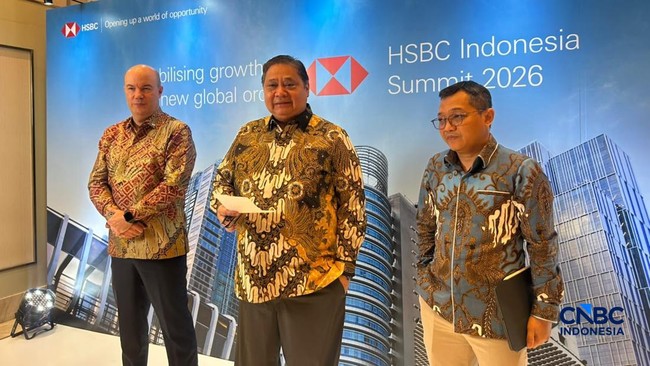
The Indonesian government has confirmed that its target of 6% economic growth, as stipulated in the 2027 State Budget Law, remains achievable despite significant global economic pressures, such as the era of high central bank interest rates in many developed nations remaining ‘higher for longer’.
This period of high interest rates is a consequence of global inflationary pressures driven by prolonged conflicts in various regions, such as the Middle East. These conflicts have caused disruptions in energy prices, logistics, trade, and investment.
Coordinating Minister for Economic Affairs Airlangga Hartarto stated that to achieve this increasingly ambitious growth target, at least three conditions must be met: investment growth that exceeds GDP growth, higher productivity per worker, and higher value-added exports supported by efficient logistics.
“For 2027, we maintain our target of 6% growth with inflation at 2.5%,” said Airlangga, as quoted from a written statement on Tuesday (29/09/2026).
To reach this target, and even aim for 8% by 2029, Airlangga noted that the government will optimise its policy mix. This includes using fiscal policy as a catalyst, monetary policy to maintain stability while encouraging bank financing, and the role of Danantara alongside the private sector to accelerate investment.
Strengthening growth engines is directed towards the electric vehicle sector, digitalisation, semiconductors, Artificial Intelligence (AI), agriculture, and energy.
To support these targets, the Government has prepared four main strategies through deregulation and debottlenecking based on Presidential Decree Number 4 of 2026, strengthening investment and financing, increasing labour productivity and skills through internship programmes for 150,000 participants and 220,000 vocational graduates, and expanding market access and economic diplomacy through 25 implemented trade agreements and 13 others currently under negotiation.
Airlangga explained that energy resilience and digital transformation are two vital foundations for strengthening the national economy. On the digital front, QRIS is already used by 61 million users and 44 million merchants, while Indonesia’s digital economy value is approaching USD 100 billion. The development of the digital ecosystem is also aimed at building integrated value chains, ranging from data centres, AI, and semiconductors to digital talent development.
“Indonesia requires approximately 9 million digital workers by 2030, or about 600,000 professionals every year, while the Nongsa region is targeted to create more than 8,000 jobs in the technology sector,” he said.
Regarding investment, he emphasised that the government has strengthened the ease of doing business through regulatory simplification and improved service certainty, including the implementation of Service Level Agreements (SLA) to encourage more efficient risk-based approval and licensing processes.
Debottlenecking efforts are also being strengthened through the Deregulation Task Force under government coordination, which has so far resolved 135 out of 177 complaints regarding various regulatory and investment obstacles.
Furthermore, the Government continues to develop Special Economic Zones (SEZ) as new hubs for investment and economic growth. To date, there are 25 SEZs covering nearly 24,000 hectares, encompassing the industrial, tourism, health, education, technology, digital, and service sectors. SEZ development is also directed towards strengthening digital talent, including the education SEZ in Malang, which hosts King’s College and will soon open the India Institute of Management Bangalore.
The Government also continues to strengthen labour-intensive industries and open global market access. The textile and footwear industries contribute approximately 4 million jobs with an export value of around USD 12 billion.
In terms of international trade, Indonesia continues to ensure its strategic position through the G20 and the OECD accession process, which has reached nearly 80%, while also pursuing CPTPP membership. These steps are complemented by the implementation of various trade agreements to expand market access and increase the competitiveness of national products.
“Numbers alone do not create prosperity; the most important thing is to transform investment, technology, and reform into jobs, productivity, and a better life for our people,” said Airlangga.
Previously, the Governor of Bank Indonesia, Destry Damayanti, revealed that the world is currently entering a ‘higher for longer’ era of high interest rates.
According to her, this condition is not favourable for developing economies, including Indonesia. This is because it causes investor capital to flow towards developed nations, such as the United States, to maintain investment yields and to invest in the technology sector.
“This will affect Indonesia’s balance of payments performance, including our exchange rate stability. In conclusion, globally we will face the ‘higher for longer’ phenomenon,” stated Destry during a working meeting with Commission XI of the House of Representatives (DPR RI) in Jakarta on Monday (28/09/2026).