
How Hajj Funds Are Managed: The Process Explained
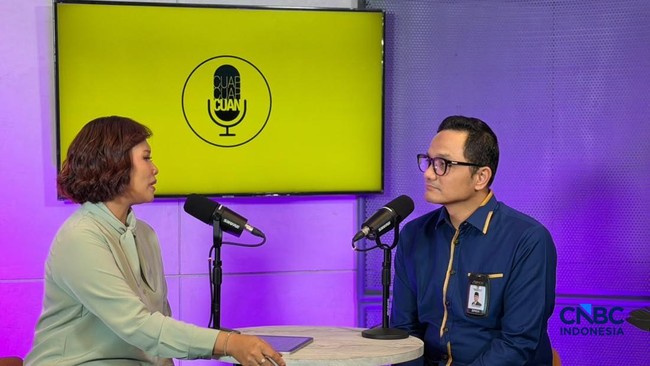
Jakarta, CNBC Indonesia — Deposits made by prospective Hajj pilgrims are not simply held until departure. The Hajj Fund Management Agency (BPKH) manages the funds and seeks to increase their value through a range of Sharia-compliant investment instruments, generating returns that can help fund the Hajj pilgrimage.
BPKH head Fadlul Imansyah said the process begins when a prospective pilgrim pays an initial deposit of Rp25 million through a Hajj Pilgrimage Cost (BPIH) Deposit Recipient Bank (BPS). Once the bank registers the pilgrim through the Integrated Hajj Management System (Siskohat) and obtains a queue number, the funds are transferred to BPKH.
BPKH collects funds from 30 deposit recipient banks, including Islamic banks and Islamic banking units. The funds are then placed in a range of investment instruments, taking into account their economic value, market conditions and the requirements of Hajj fund management.
One instrument used by BPKH is Government Sharia Securities (SBSN). It also places funds in deposits at Islamic banks. Deposits are used when purchasing SBSN is considered insufficiently economical or when their prices do not meet BPKH’s assessment.
“If, for example, it is not yet economically viable to buy SBSN, or the SBSN price is not quite right in our view, we put the funds in deposits first,” Fadlul said on CNBC Indonesia’s Cuap-Cuap Cuan podcast.
Fadlul said BPKH distinguishes between pilgrims’ initial deposits and the returns generated from investments. The Rp25 million initial deposit is the pilgrim’s principal and must be protected against losses. Investment returns, meanwhile, constitute the benefits that can be used to support the cost of the Hajj.
In setting its investment strategy, BPKH also considers the pilgrims’ current waiting period of around 26 years. This allows it to align investment maturities with expected departure dates. One approach is to hold assets to maturity, buying them and retaining them until they fall due.
Fadlul said the strategy is intended to limit the impact of asset price fluctuations caused by changes in interest rates during the investment period.
BPKH also takes account of the foreign currencies needed to pay for the Hajj. Around 80% of the costs are denominated in foreign currencies, while most deposits from regular pilgrims are received in rupiah. Foreign currency is therefore purchased in line with portfolio requirements and payment obligations, including those for special Hajj pilgrims.
Alongside SBSN and deposits, BPKH also invests in gold. Its allocation remains relatively small, however, because the gold market is considered sufficiently deep to absorb large transactions, both when buying and when selling.
Fadlul said all fund management must comply with Sharia principles and be conducted accountably. To enable the public to monitor its work, BPKH publishes annual financial statements, audited by Indonesia’s Audit Board (BPK), on its official website.
“Our website contains everything; every year we upload financial statements audited by the BPK,” Fadlul said.
BPKH also shares information on managed funds, investment returns and the distribution of investment benefits through social media. Fadlul said Sharia principles, integrity and accountability are the foundations for managing funds entrusted by pilgrims.