
How Gesit Central Waste Bank Turns Rubbish into Income for Jakarta Residents
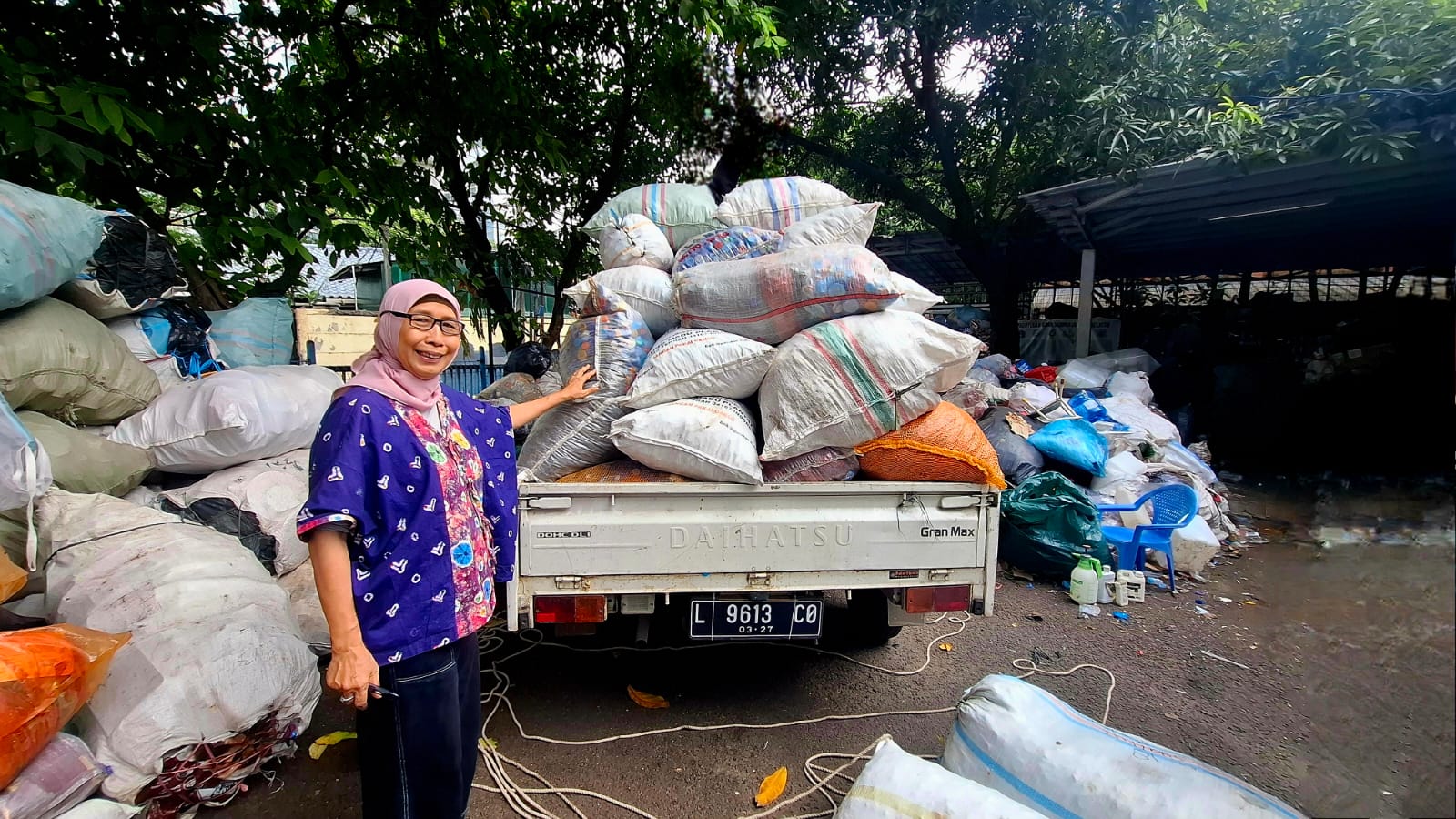
A pile of rubbish, often overlooked, can actually become a source of income for the community. Through the Gesit Central Waste Bank (BSI Gesit) in Menteng Pulo, South Jakarta, residents have the opportunity to earn money from waste management. Various types of sorted inorganic waste, such as plastic cups and bottles, paper, and cardboard, are deposited by residents and waste bank units (BSU) to BSI Gesit for sale to the recycling industry. This activity not only helps protect the environment but also provides additional income for households.
BSI Gesit Director Sri Endarwati said that at least 150 BSUs routinely deposit waste to BSI Gesit every month. In addition, members of the public can also come directly to become individual customers. The birth of BSI Gesit stemmed from the concerns of waste bank activists in South Jakarta who faced similar problems, including difficulty finding buyers, price differences, and limited access to the recycling industry.
“Initially, there was a South Jakarta waste bank association. We met fellow waste bank activists. It turned out there were many problems in each area,” said Endarwati when met at BSI Gesit, Menteng Pulo, South Jakarta, on Friday (12/6). According to her, a lack of knowledge about waste bank management often left activists confused about determining the best place to sell. “Because we were also laymen at first. There’s no school for waste banks. It sells here, it doesn’t sell there. The price is high here, it’s low there,” she said.
From these discussions, the idea emerged to form a central waste bank that could act as a link between unit waste banks and the recycling industry. Through this system, waste from various areas is collected first before being sold in large quantities to processors. “So, everything is gathered, then we sell it. Finally, this central waste bank was formed in 2014,” said the 59-year-old woman. In this scheme, BSU administrators continue to carry out activities in their respective areas. Meanwhile, BSI Gesit acts as an aggregator that sells waste to off-takers to be taken to the recycling industry. This pattern makes the distribution chain clearer and the selling value received by the community more optimal.
Interestingly, Endarwati does not have a background in the environmental field. Before actively managing the waste bank, she worked as an assistant to a traditional Javanese bridal makeup artist. “Actually, my background is very different. I used to be a bridal makeup assistant. My boss was a traditional Javanese bridal makeup artist,” she said. Along the way, BSI Gesit received support from various parties. One of them is through the corporate social responsibility (CSR) programme of PT Bank Rakyat Indonesia (Persero) Tbk (BRI) Peduli “Yok Kita GAS” which has been running since 2021. Endarwati explained that BRI’s support is mostly in the form of providing operational facilities, such as waste scales and transport vehicles. “We welcome every programme held by BRI,” she said. She added that BRI also helped open accounts for BSUs so that payment transactions can be made cashlessly.
BSI Gesit also cooperates with PT Permodalan Nasional Madani (PNM), a subsidiary of BRI. Through the PNM Mekaar programme with the Kelompok Membina dan Mengelola Sampah (KEMBANGS) activity, BSI Gesit acts as the central waste bank that collects and manages waste from PNM-assisted groups. “So, BSI Gesit is made the central waste bank. We will later collect from PNM’s BSUs,” said Endarwati. According to her, PNM Mekaar groups, which mostly consist of micro, small, and medium enterprise (MSME) actors, also produce waste that can be sorted and has economic value. “The sorted waste is collected, then a weighing time is scheduled. After that, it is picked up by BSI Gesit,” she explained.
The cooperation is considered to have brought positive impacts. In one weighing activity, the total waste collected reached almost 200 kilogrammes, consisting of paper, plastic, cardboard, and used cooking oil. “This is certainly positive for us. BSI Gesit is made the central waste bank for PNM Mekaar,” she said. Behind these various achievements, the biggest challenge faced by BSI Gesit is changing people’s behaviour so they are willing to sort waste from home. “The challenge is convincing and making people aware to sort waste,” said Endarwati.
This challenge is increasingly relevant as the DKI Jakarta Provincial Government will officially stop the practice of open dumping, which is unprocessed waste disposal at Bantargebang, starting August 2026. Organic waste is expected to be managed at the community level, while inorganic waste must be reused through recycling mechanisms. “So, one way to solve this is how? Namely, maximising the function of waste banks,” she stressed. In its operations, BSI Gesit receives waste deliveries from BSUs and individual customers. Regular weighing takes place Monday to Friday, while Saturday is reserved for BSUs that can only conduct weighing on weekends. The recording process is done through customer savings books managed by each BSU. “We then transfer to the BSU, and the BSU will later enter it into the savings book,” explained Endarwati. Currently, BSI Gesit still sells waste through vendors before it finally reaches the recycling factory. According to Endarwati, there are about nine vendors cooperating according to the type of material handled. However, there is a plan from the Ministry of Environment to connect central waste banks directly with processing factories.
Source: jawawa.id (https://jawawa.id/newsitem/how-gesit-central-waste-bank-turns-rubbish-into-income-for-jakarta-residents-1781592622)
Originally published by Media Indonesia (https://mediaindonesia.com/ekonomi/900972/di-tangan-bank-sampah-induk-gesit-sampah-disulap-jadi-sumber-cuan-warga), translated from Indonesian