
How Freeport Is Recovering Its Mine After Last Year's Landslide Incident
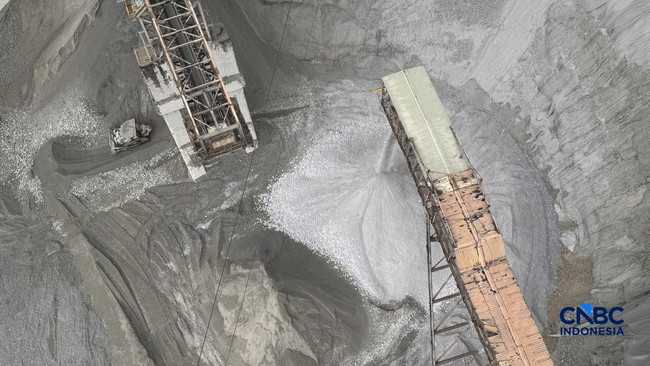
PT Freeport Indonesia (PTFI) is accelerating the operational recovery of its Grasberg Block Caving (GBC) underground mine following a wet material landslide incident in September 2025. The company is implementing innovations and constructing massive drainage infrastructure to secure the work area while gradually restoring production capacity.
PTFI President Director Tony Wenas explained that recovery efforts include the technical removal of 800,000 tonnes of wet mud material and the construction of a water drainage system to prevent similar incidents from occurring.
“Thank God, we have reached 84% of the material removal and repairs have been carried out, and now we are ramping up production,” Tony said in Tembagapura, Central Papua.
The main mitigation measures include the construction of a 300-metre-high drainage drift connecting the underground mine to the bottom of the open pit. The system functions to channel accumulated water, which was the primary cause of the wet material sliding into the underground production area.
“The plan is to build around 12 to 14 drifts. Four are already functioning, and we will continue until the number is sufficient,” he explained.
In addition to the drainage channels, the company is also building two 1.5-kilometre-long tunnels encircling the underground ore reserves. The facilities are designed with a 5x6 metre diameter to ensure mud and wet material water can be channelled directly to the main drainage outlet.
“The tunnel will be completed at the end of 2027, and the sling will also be around the same time, hanging the sling with a hanging pump because people cannot work in the area below. It is already a danger zone,” he added.
Work in the high-risk area is being carried out by installing a 3-kilometre steel cable system (sling) in the open pit to suspend pumps that extract wet material. Through this combination of technologies, management is optimistic that full operational recovery can be achieved according to target by the end of 2027.
“These three programmes are what we are currently planning,” he stressed.
The company is targeting underground mine production to reach 100% of normal production by the end of 2027. By the end of 2026, the company’s production target is 65% of normal levels. The company is working hard to modify equipment to accelerate operational normalisation in the GBC area.
“Going forward, production capacity is expected to increase to 75% in the first half of 2027 and gradually approach full capacity by the end of 2027,” he said during the 81st Independence Day ceremony in Tembagapura, Central Papua.
By the end of the second half of 2026, PTFI is targeting production capacity of 800 million pounds of copper and 700,000 ounces of gold.
According to him, the GBC mine recovery process is quite challenging because the company must move around 800,000 tonnes of wet mud material that buried a number of infrastructure and heavy equipment in the underground mine area.
“This recovery phase continues. There are some equipment modifications because the ore turned out to be wetter than we previously estimated. So the equipment needs to be modified slightly, but it is now ongoing, all according to the 65% target this year,” he said.