
How Free Nutritious Meals are changing children's lives in Papua
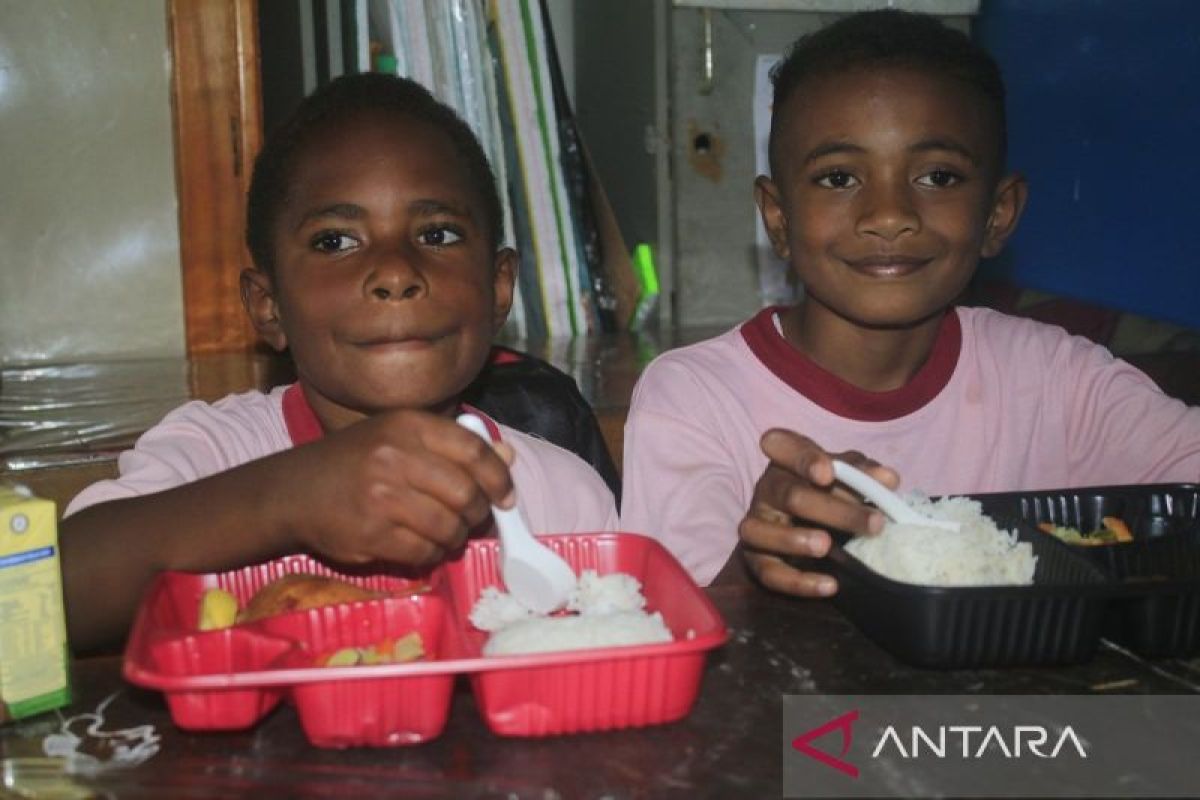
The Prabowo administration is aiming to fulfill its promise of reaching 83 million people nationwide through MBG by the end of 2026,Wamena (ANTARA) - For many children living deep inland in Indonesia’s relatively young province of Highland Papua, the journey to school begins with little more than the basic sources of carbohydrates: cassava, sweet potatoes, and taro.
Those are considered fortunate mornings, as there are days when children leave home without breakfast at all.
The alarming eating pattern has taken a toll on their concentration in the classroom, leaving some struggling to keep pace with peers from outside Papua.
Against this backdrop, the Indonesian government launched the Free Nutritious Meals (MBG) program in early 2025 to meet the nutritional needs of children across the archipelago.
The administration of President Prabowo Subianto has promoted MBG as a flagship initiative, aiming to improve human resource quality through better nutritional intake while creating new economic opportunities as Indonesia works toward its Golden Indonesia 2045 vision.
Under the MBG program, the state assumes responsibility for providing the younger generation with balanced meals, supplying not only carbohydrates but also animal- and plant-based proteins, vitamins, and fiber essential for growth.
The initiative rests on the idea of empowering local businesses and communities in the supply chain, ensuring every portion of MBG contains safe, nutritious ingredients while making use of produce available in each region.
To meet carbohydrate needs, the program uses rice, corn, tubers, or sago. For animal protein, MBG kitchens source fish, chicken, eggs, and beef from local farmers, while vegetables and fruits add essential nutrients and fiber to the menus.
In Highland Papua, Deputy Governor Ones Pahabol has been appointed to spearhead efforts to accelerate and expand program implementation by the Executive Committee for the Acceleration of Special Autonomy Development ibasin Papua.
He is among the program’s staunch supporters, describing MBG as a cornerstone for Highland Papua to build a better future by improving the diets of children scattered across the province’s eight regions: Jayawijaya, Lanny Jaya, Tolikara, Nduga, Yahukimo, Mamberamo Tengah, Pegunungan Bintang, and Yalimo.
Pahabol believes that progress in Highland Papua requires a succession of capable leaders over the long term, hinging on nutritional intervention at an early age. He is convinced that MBG can help children grow into healthy and capable talents equipped with the competencies needed to contribute to the province’s future.
He added that the feeding initiative should go hand in hand with ongoing efforts to ensure equitable access to quality schooling, from kindergarten through higher education.
Related news: Papua launches dashboard to strengthen free meal program
From policy to kitchens
Another chapter in the MBG saga unfolded in late July 2026, when Sudaryono succeeded Nanik Deyang as head of the National Nutrition Agency (BGN), signaling a new direction in the program’s priorities.
Sudaryono said the program would place greater emphasis on implementation in frontier, outermost, and disadvantaged regions through accelerated expansion and development of MBG kitchens, officially called nutrition fulfillment service units (SPPGs).
“We are prioritizing Papua, East Nusa Tenggara, Nias, Maluku, North Maluku, and other remote regions because their residents are in great need of MBG,” he said on Aug. 6 in Jakarta.
Of nearly 30,000 SPPGs across Indonesia, 13 units are up and running in Highland Papua, with five located in the capital, Jayawijaya District. Each MBG kitchen in the province serves between 3,500 and 7,000 beneficiaries.
BGN Regional Coordinator for Highland Papua Wahyu Adi Pratama said program implementation has followed agency guidelines, covering not only schoolchildren but also pregnant women, breastfeeding mothers, and toddlers.
Extending MBG to mothers and under-five children is considered a strategic move to curb childhood stunting, a form of chronic malnutrition that hinders growth. This approach is particularly urgent in hard-to-reach regions like Highland Papua.
Exercising its oversight function for MBG, the House of Representatives (DPR) has sent parliamentarians to regions nationwide both to articulate the program’s objectives and keep implementation in check.
Yan Permenas Mandenas, a legislator on Commission XIII, was among those assigned to the field. He traveled from Jakarta to Highland Papua to see the MBG program firsthand.
During his visit, he toured several schools in Jayawijaya, listening to teachers and students and learning how the meals were becoming part of their daily routines.
The lawmaker also inspected cooking and distribution processes at a local SPPG. After the inspection, he confirmed the kitchen had conformed with food safety and quality standards set by the BGN.
Velix Wanggai, chair of the Executive Committee for the Acceleration of Special Autonomy Development in Papua, shared the DPR member’s mission.
He visited Highland Papua to ensure the province’s eight regions were well covered by the nutrition initiative, coordinating with Deputy Governor Pahabol and local MBG stakeholders.
In his view, the program is key for Highland Papua to accelerate human resource development and eventually contribute to realizing the Golden Indonesia 2045 vision.
Related news: Indonesian VP pushes MBG expansion in remote areas
A Tolikara story
Indonesia kicked off MBG in 2025, on Jan. 6, to be precise. While it has emerged as an ambitious nationwide program, its arrival in Highland Papua was preceded by more than a decade by a similar initiative run by the Tolikara district government.
Children in Tolikara have started their school days with nutritious meals since 2013 through a program called Sarasehans, an acronym for Sarapan Sehat untuk Anak Sekolah, or Healthy Breakfast for Schoolchildren.
The program con