
How Dutch Colonial Policy Introduced the 'Haji' Title in Indonesia
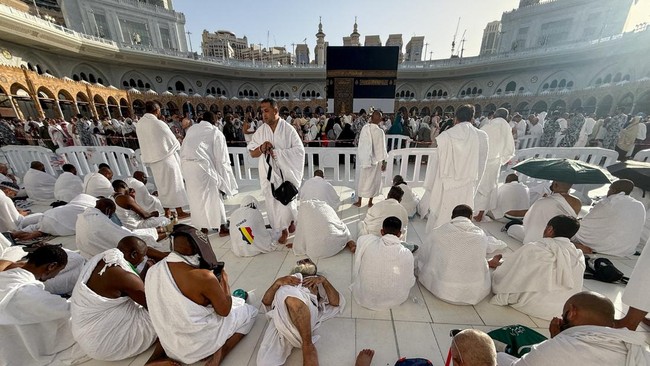
In Indonesia, individuals who have completed the Hajj pilgrimage are often given the title ‘Haji’ for men and ‘Hajah’ for women. It is common to address them as ‘Haji’ or ‘Hajah’ after their pilgrimage.
However, few realise this title is not part of Islamic law or official Saudi Arabian regulations. The practice is a legacy of the Dutch colonial era.
History records that two centuries ago, the Hajj pilgrimage was viewed not only through business, religious, or spiritual lenses, but also politically.
Because Indonesian pilgrims often ‘caused trouble’ upon returning from the Holy Land. To the Dutch East India Company, pilgrims would learn new ideas in the Holy Land, which they then spread upon returning home, potentially inciting grassroots uprisings against the Dutch colonial government.
Aqib Suminto, in Politics of Islam in the Dutch East Indies (1986), notes that this perspective first emerged during Governor-General Herman Willem Daendels’ tenure in the 1810s. Daendels, who built the Anyer-Panarukan Great Road, believed returning pilgrims frequently incited rebellion. Consequently, he required them to obtain Hajj passports as identifiers.
The same mindset was evident during British colonial rule under Governor-General Thomas Stamford Raffles. In his 1817 History of Java, Raffles openly criticised those undertaking the Hajj, claiming Javanese pilgrims were ‘pretending to be pious’ and used their perceived sanctity to incite resistance among communities.
However, as Dien Madjid writes in Pilgrimage in the Colonial Era (2008), political Hajj policies were fully implemented in 1859 through specific regulations. These required returning pilgrims to undergo a series of examinations; those who passed had to include the ‘Haji’ title in their names and wear traditional Hajj attire—ihram robes and white turbans.
The rationale behind this policy stemmed from Dutch colonial fears and trauma. The 19th century saw numerous uprisings led by returning pilgrims, including the major Java War (1825-1830). Thus, the government viewed them with suspicion, using the ‘Haji’ title to easily monitor them.
If an uprising occurred, authorities would immediately arrest those with the ‘Haji’ title in the area. This was more efficient than searching for the instigators.
Because, in the Dutch mindset, uprisings were always led by Hajj pilgrims.
This is the origin of the ‘Haji’ title in Indonesia. Post-regulation, colonial authorities maintained strict oversight. In the 20th century, as Islamic teachings spread from Mecca to Indonesia, returning pilgrims remained under close surveillance.
Regrettably, post-independence decolonisation did not erase this politically charged address. Consequently, the term has been passed down through generations.