
How Dry Ice Works to Combat Haze from Forest and Land Fires
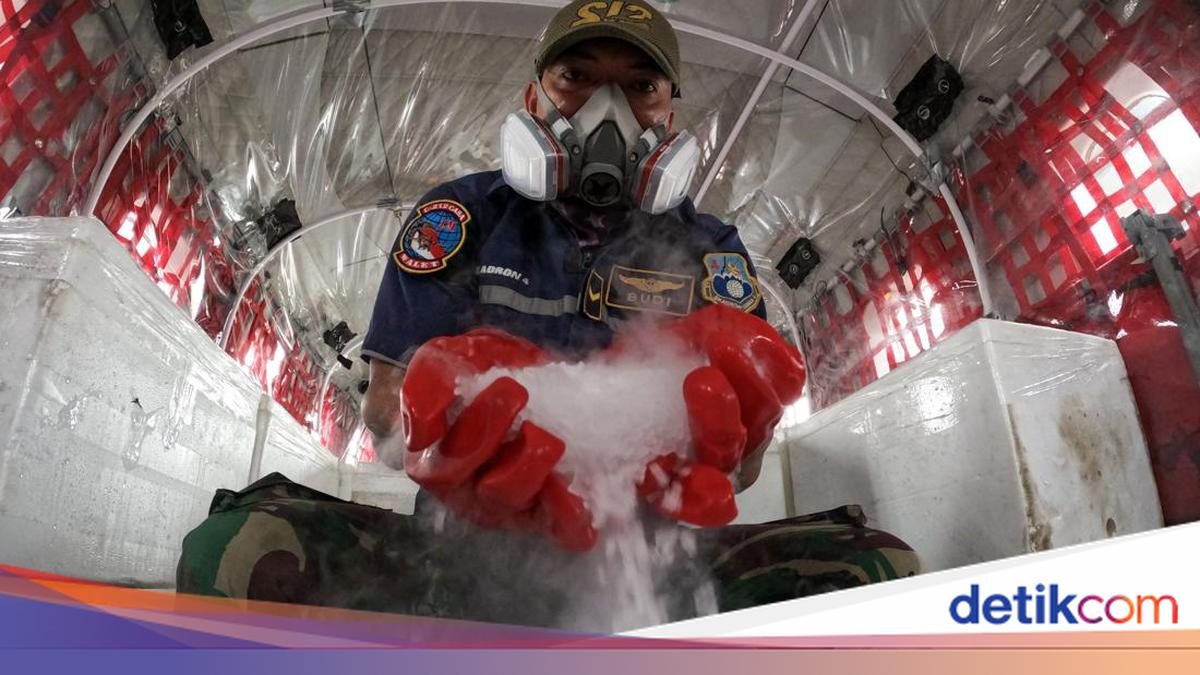
The government, together with the National Disaster Mitigation Agency (BNPB), the Meteorology, Climatology and Geophysics Agency (BMKG), the National Research and Innovation Agency (BRIN), the Ministry of Forestry and the Ministry of Defence, is using dry-ice seeding in weather-modification operations (OMC). The effort is intended to help disperse haze caused by forest and land fires in Sumatra and Kalimantan.
Dry-ice seeding is one tactical measure to address atmospheric conditions that hinder the spread of smoke. How does the method work, and what indicators are used to measure its success?
How dry ice works
BMKG head Teuku Faisal Fathani explained that dry-ice seeding is intended to address atmospheric conditions that trap smoke from forest and land fires close to the surface. In certain conditions, dense smoke can be held at an altitude of 6,000–7,000 feet, or even higher.
BMKG Deputy for Weather Modification Tri Handoko Seto said this can be caused by an inversion layer, which inhibits vertical air movement. To address it, dry ice is dispersed by aircraft above the layer. As the dry ice sublimates, it causes cooling that helps alter atmospheric stability and restore convective airflows.
“This allows smoke to rise vertically and disperse into the atmosphere. The process also increases the likelihood of cloud formation, which can then be targeted for seeding as part of OMC,” Seto said, according to the BMKG on Tuesday (20 October 2026).
Seto stressed that dry-ice seeding differs from cloud seeding to trigger rainfall. In this operation, the BMKG targets the inversion layer trapping the smoke and intervenes in an isothermal layer to alter air stability in the upper atmosphere. The method is an alternative when skies are relatively dry and there are few suitable clouds for seeding.
Indicators of success
The BMKG assesses the success of dry-ice intervention using several indicators, particularly increased visibility and reduced concentrations of PM2.5 pollutant particles. These parameters are used to evaluate changes in atmospheric conditions and air quality in affected areas, including locations around airports.
Seto said monitoring over several days had indicated improvements in some areas, including Palembang. The BMKG is continuing to monitor conditions and analyse data to establish the operation’s effects.
“After several days of operations, dry-ice intervention has shown indications of a fairly positive impact. Visibility in affected areas has gradually improved, as happened in Palembang a few days ago. This is important for supporting the operations of task-force aircraft, including water-bombing helicopters and patrol aircraft, while also helping civil aviation return to more normal operations in line with flight-safety conditions,” he said.
Improved visibility can help aerial efforts to tackle forest and land fires. If safety standards are met, helicopters and aircraft can carry out firefighting and patrol missions more effectively. However, the effectiveness of dry-ice intervention still depends on atmospheric conditions and the development of fires on the ground.
Source: jawawa.id (https://jawawa.id/newsitem/how-dry-ice-works-to-combat-haze-from-forest-and-land-fires-1792558403)
Originally published by detikcom (https://news.detik.com/berita/d-8716871/bagaimana-cara-kerja-dry-ice-untuk-atasi-kabut-asap-karhutla), translated from Indonesian