
How Drone Technology is Liberating Iran's Axis of Resistance
When the United States and Israel waged war against Iran in late February, both countries hoped to topple the Islamic Republic and its so-called ‘Axis of Resistance’ in the Middle East. This movement includes Iranian-backed paramilitary groups, including Hezbollah in Lebanon, the Houthis in Yemen, and Shia militias in Iraq. They are united by a common mission: to expel the US from the region.
The assumption in Washington and Tel Aviv was that ‘by killing leaders, destroying weapons facilities and supply routes, foreign actors could trigger the collapse of the regime and Iran’s entire network of proxies in the Middle East,’ said Peter Salisbury of the US think tank Century International, the lead author of a recent report titled ‘Beyond the Axis’.
All of these targets were hit by US-Israeli airstrikes. Despite this, Iran was still able to launch deadly attacks on US military facilities in the Gulf and blockade the Strait of Hormuz. Meanwhile, Tehran’s allies in Lebanon and Yemen doubled their attacks on Israel and commercial shipping in the Red Sea.
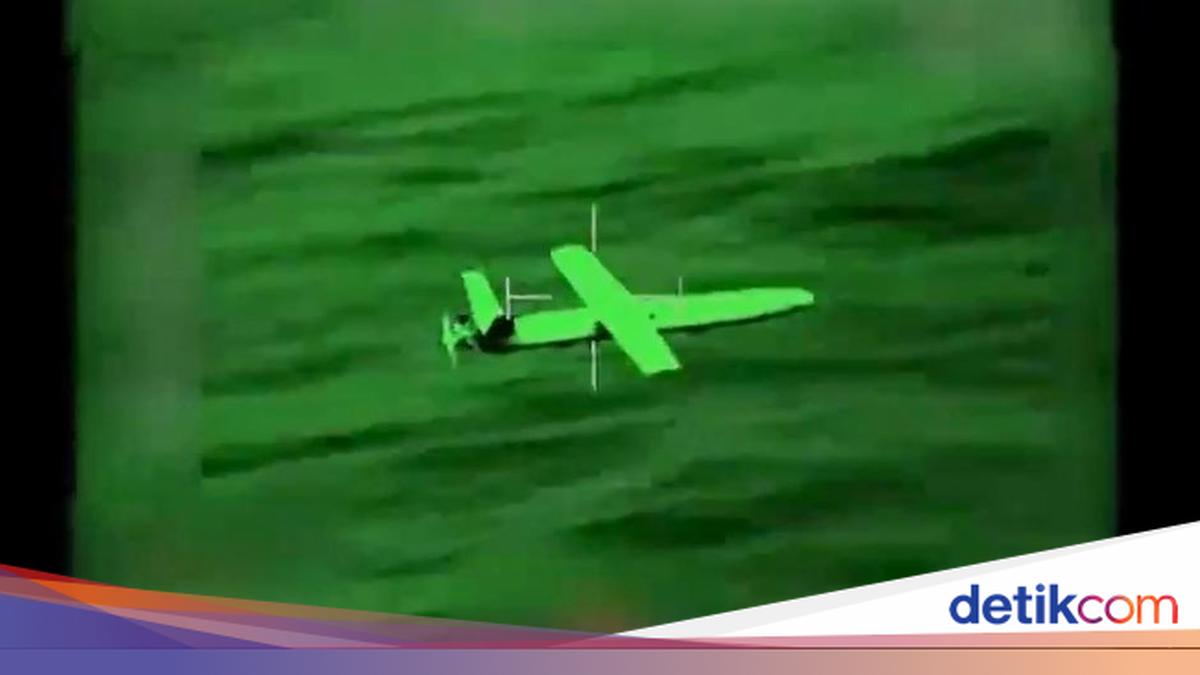
According to Wolf-Christian Paes, a visiting researcher at the International Institute for Strategic Studies (IISS) and a contributor to the report, the term ‘proxy’ is misleading because it implies a command relationship fully controlled by Tehran. ‘The best example is the use of drone technology,’ Paes told DW. A few years ago, Iran still had to send complete drone systems and training to its allies. Now, he says, these armed groups can produce drones themselves based on Iranian designs, while most of the components originate from other countries.
The two-year study notes that groups can now purchase engines for Shahed-136 drones directly from Chinese manufacturers in large quantities. ‘Dual-use technology has always been difficult to control. Without a clear smuggling hub, tracking the supply chain is like finding a needle in a haystack,’ Paes said, adding that China, Russia, and Oman have so far made no significant effort to monitor the sale of these components.
The report also records a dramatic surge in the use of drones in armed conflicts worldwide. The number of incidents jumped from around 140 cases in 2016 to approximately 58,000 cases in 2025—an increase of about 41,000 percent.
Neil Quilliam, a researcher for the Middle East and North Africa programme at Chatham House, said the ability of Iranian-backed groups to independently produce and operate drones is also affecting their relationship with Tehran. He cited the Houthis in Yemen as the clearest example. ‘They now have a degree of operational autonomy that would have been difficult to imagine a decade ago,’ Quilliam told DW. While Iran and Hezbollah helped build the foundation of the Houthi missile and drone programme, years of war and isolation forced the group to develop its own production capabilities.
During the Gaza war of 2023-2025, the Houthis attacked Israel and international shipping in the Red Sea using missiles and drones in support of Palestinians in Gaza. When the Iran war broke out in February to April 2026, the group launched attacks again. The report also reveals that since at least 2022, senior Houthi figures in Sanaa have built networks along the African coast of the Red Sea and the Gulf of Aden. Houthi smuggling networks now operate in Somalia, Djibouti, Eritrea, and Sudan.
For a long time, Hezbollah was Iran’s strongest proxy in the Middle East, largely due to its position bordering Israel. The day after Hamas attacked Israel on 7 October 2023, Hezbollah opened a second front in northern Israel, a move that later escalated into war in Lebanon. ‘Israel’s efforts to cripple Hezbollah’s leadership and military infrastructure have made Iranian assistance crucial to the group’s recovery,’ Quilliam said. A ceasefire reached in November 2024 ended in early March 2026 after Hezbollah attacked Israel with drones and missiles in response to the killing of Iran’s Supreme Leader Ali Khamenei by Israel. Hezbollah also declared its allegiance to Khamenei. In peace talks between Washington and Tehran, the situation in Lebanon is now one of the main issues. ‘Hezbollah’s participation alongside Iran in the latest conflict, coupled with Tehran’s insistence that Lebanon be included in any ceasefire agreement, shows how close the relationship is,’ Quilliam said.
Regarding Hamas and armed groups in Iraq, Quilliam noted that Israel’s prolonged military operations in Gaza have narrowed Iran’s access to Hamas. However, this does not signify a permanent reduction in Iranian influence. ‘Relationships, training networks, and technical expertise built over decades do not simply disappear,’ he said. The case of Hamas demonstrates that military cooperation can endure even when political influence temporarily wanes. In Iraq, armed groups close to Iran face a different challenge, needing to balance domestic Iraqi interests with their ties to Tehran. While the ability to produce drones independently makes these groups more autonomous in projecting power and expanding influence, Quilliam argues the biggest challenge is for Iran itself. ‘Tehran now has to coordinate an increasing number of powerful actors whose interests are not always aligned.’ Despite this, Iran maintains its influence through political relationships, military training, intelligence sharing, and coordination.