
How does a total solar eclipse occur? Here's the scientific explanation
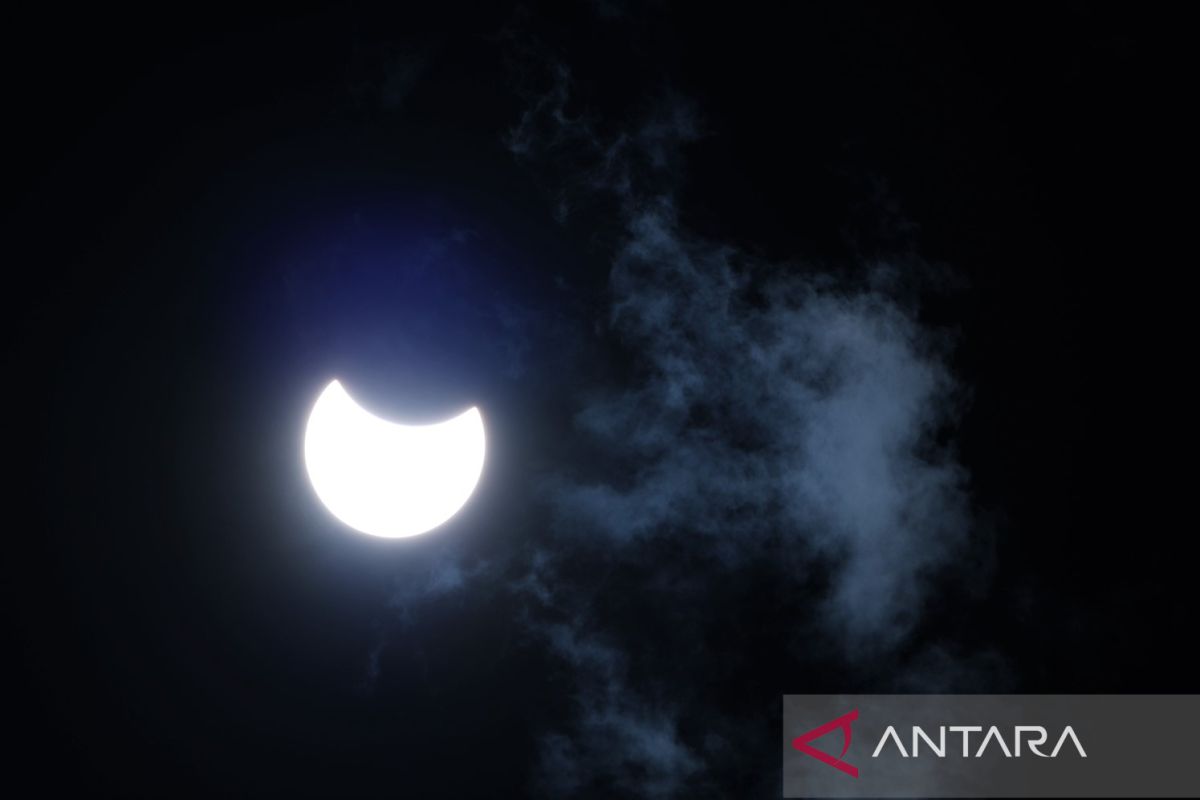
A total solar eclipse is one of the most anticipated astronomical phenomena because it only occurs at specific times and in specific regions. On Wednesday, 12 August 2026, people in several countries will have the opportunity to witness this rare event when the Moon temporarily covers the entire disc of the Sun.
A total solar eclipse occurs when the Moon moves directly between the Earth and the Sun, completely blocking the Sun’s light from the perspective of an observer on Earth. According to NASA, this causes the Moon’s shadow to fall onto the Earth’s surface. People located precisely in the path of the core shadow, known as the umbra, can witness a total solar eclipse, while those in surrounding areas only see a partial eclipse or none at all. During totality, the daytime sky can darken to resemble twilight or night for several minutes, and the air temperature may drop slightly as the Sun’s light is fully obscured.
A solar eclipse only happens during the new moon phase, when the Moon is on the same side of the Earth as the Sun. However, not every new moon produces an eclipse. This is because the Moon’s orbit is tilted by about five degrees relative to the Earth’s orbital plane around the Sun, known as the ecliptic. Most of the time, the Moon passes slightly above or below the Sun. An eclipse can only occur when a new moon crosses the ecliptic during a period called an eclipse season, which happens roughly twice a year, providing opportunities for both solar and lunar eclipses. When the three celestial bodies are perfectly aligned, the Moon blocks the Sun’s light and casts a shadow onto the Earth’s surface.
It might seem impossible for the Moon to cover the Sun given their vastly different sizes. NASA explains that the Sun’s diameter is about 400 times larger than the Moon’s. However, the Sun is also about 400 times farther away from Earth than the Moon. This near-identical ratio of size to distance makes the Sun and Moon appear almost the same size in the sky, allowing the Moon to completely cover the Sun’s disc for a few minutes. This is often referred to as a ‘cosmic coincidence’ and creates one of the most spectacular sights observable from Earth.
During an eclipse, the Moon casts two main types of shadows. The umbra is the dark, inner shadow where the Sun’s light is completely blocked, leading to a total eclipse for observers within this path. The penumbra is the fainter, outer shadow where only a portion of the Sun is obscured, resulting in a partial eclipse. The path of the umbra on the Earth’s surface is relatively narrow, typically less than 80 kilometres wide, whereas the penumbral shadow can span thousands of kilometres. As the Earth rotates and the Moon orbits, these shadows move across the surface, creating a path known as the path of totality.
A total solar eclipse unfolds in distinct phases. It begins with the first contact, when the edge of the Moon starts to cover the Sun, making it appear as a crescent. Just before totality, Baily’s Beads may appear as small points of light shining through valleys on the Moon’s edge. This is quickly followed by the diamond ring effect, where a single bright spot of light remains, resembling a diamond on a thin ring. During the totality phase, the Sun’s disc is completely covered, the sky darkens, bright stars become visible, and the Sun’s outer atmosphere, the corona, appears as a pearly white halo. The eclipse ends as the Moon moves away, with the diamond ring and Baily’s Beads reappearing before the Sun shines fully again.
According to data from NASA and the European Space Agency (ESA), the path of totality for the 12 August 2026 eclipse will cross several regions in the northern hemisphere, including the eastern and northern coasts of Greenland, Iceland, northern Russia, the Atlantic Ocean, Spain, and a small part of Portugal. In Spain, the path of totality is expected to pass through regions such as Galicia, Asturias, Castile and León, Aragon, and the Balearic Islands. Meanwhile, other countries like the United Kingdom, France, Germany, Italy, the Scandinavian nations, Morocco, Algeria, and the northeastern United States, including New York and Boston, are expected to witness only a partial solar eclipse.