
How Deadly Are the Many Mines in the Strait of Hormuz?
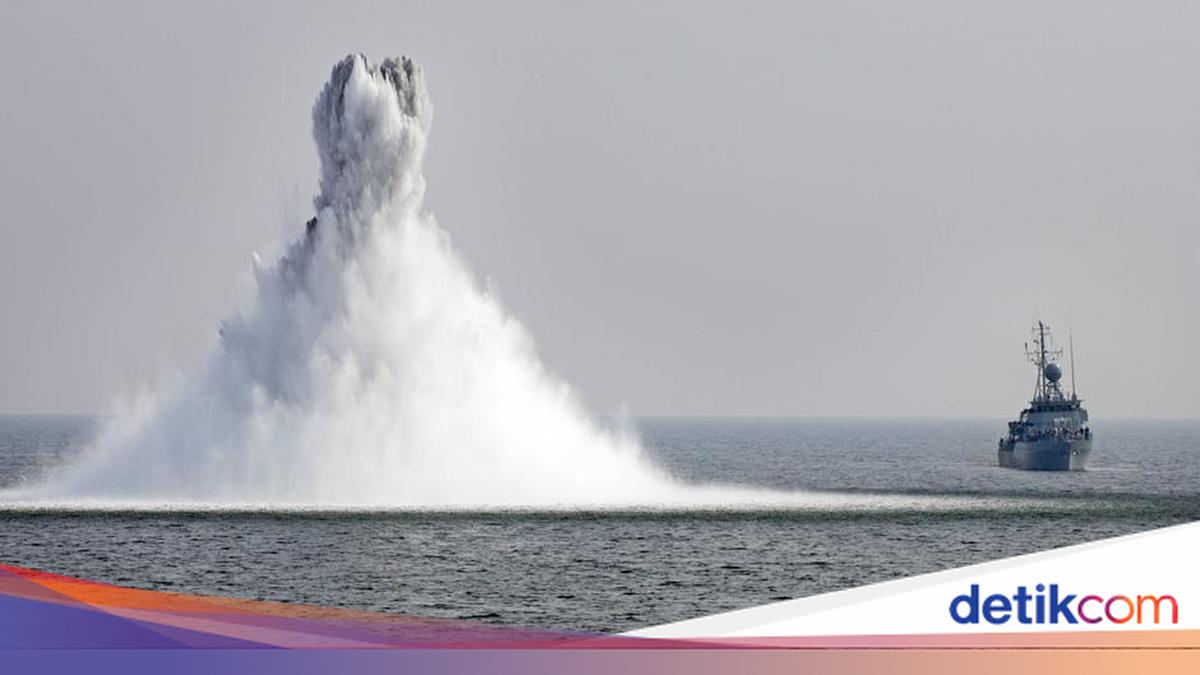
Heads of state and government in Europe have welcomed the proposed peace agreement between the United States and Iran. Germany, France, Britain, and Italy have opened the possibility of lifting sanctions against Iran, while stressing the urgency of reopening the Strait of Hormuz. In a joint statement, the four countries said they are “committed to playing our role […] including through a fully defensive and independent mission to provide security for commercial shipping and conduct mine-clearing operations.”
However, even if the Strait of Hormuz is reopened to shipping, the Persian Gulf and its surrounding areas will remain a dangerous zone for merchant vessels. In early April, Iran’s Revolutionary Guard stated that Tehran had placed mines in the strait.
“We are not even sure if there really are mines [in the Strait of Hormuz],” said Johannes Peters, an underwater warfare expert from the Institute for Security Policy at Kiel University. “But the underlying threat alone is enough [to deter shipping]. For now, no party in the war zone can really go and check.”
Naval mines are relatively cheap underwater explosive devices designed to detonate when triggered by a nearby vessel. Based on their placement, there are three main types: drifting mines that float freely on or near the surface; moored mines that float below the surface and are tethered to the seabed; and bottom mines that rest on the sea floor. Throughout World War II, moored mines equipped with switch horns that exploded upon physical contact with a ship were the standard British mine. This type was copied from a German mine developed in World War I and captured by Britain. “Modern mines are very different from that,” Peters told DW.
Trigger mechanisms on newer devices no longer require direct contact, but can instead be activated by specific magnetic effects, underwater sound waves, or pressure changes caused by a passing ship. To programme a mine to target a specific class of vessel, “submarines can help determine the acoustic profile of enemy ships,” Peters explained. “Friendly ships can then continue to pass through the mined area without issue.”
The process of clearing mines, which consists of mine hunting and mine sweeping, can take a long time. During mine hunting, suspicious objects must first be located, then experts determine whether the object truly poses a threat. If it is dangerous, specialists can lift the mine, disarm it, or trigger it via a controlled underwater explosion. Peters compared the process to “an underwater bomb disposal service.”
However, recent developments offer the chance to clear mines without risking human lives. “If possible, we use drones to search for objects, then identify and destroy them,” Mykola, a Ukrainian soldier, told DW earlier this year. He is part of a Ukrainian task force clearing naval mines in the Black Sea that were laid by Russia as part of its war of aggression.
The German Navy is also using drones to detect naval mines. “We mostly use autonomous systems to comb the seabed,” said Frigate Captain Andreas from the German Navy’s 3rd Minesweeper Squadron. For security reasons, DW was only permitted to publish his first name. “In the past, ships equipped with sonar had to pass directly over the suspected area to detect mines,” Andreas said. “Autonomous systems mean those 40 lives no longer have to face the risk directly.”
This technology also significantly reduces the need for human personnel, as drones independently transmit recordings from the seabed to a control centre for analysis. However, humans are still required to review the footage to distinguish between harmless debris and deadly mines, and to decide how to handle any explosives found. Andreas noted that using drones to scan the seabed has made the navy more efficient overall. Nevertheless, it takes decades, or even longer, to clear a sea area of mines after a war ends. Ukrainian minesweeper Artyom, working in the Black Sea, confirmed this assessment based on his own experience. “We are still finding mines from World War II, and even some from World War I,” he said. “That shows how much work we still have to do for years to come.”
The battery capacity of the drones currently used by the German Navy limits how long the devices can operate in open waters. For the time being, drones must be launched relatively close to the area being inspected. “You always have to be quite close,” Andreas explained. “That would be difficult in a sensitive area like the Strait of Hormuz. [Iranian] weaponry has a long range, and we have to protect the people working for us.” Several companies are now developing drones capable of operating for longer periods. One of them is Euroatlas in Bremen, northern Germany. The company states that its Greyshark underwater drone can currently travel at a speed of 10 knots (18.5 kilometres per hour or 11.5 miles per hour).
Source: jawawa.id (https://jawawa.id/newsitem/how-deadly-are-the-many-mines-in-the-strait-of-hormuz-1781675704)
Originally published by detikcom (https://news.detik.com/dw/d-8535193/banyak-ranjau-di-selat-hormuz-seberapa-mematikan-dampaknya), translated from Indonesian