
How DBS Assesses ICE Asset Risks Amidst EV Transition
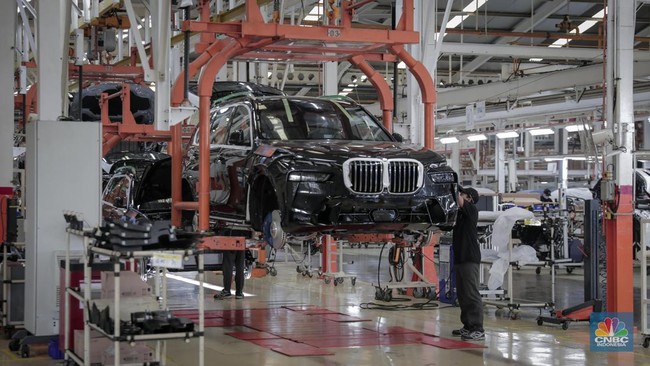
DBS Indonesia has explained the approach used by the company to assess financing risks for automotive companies that still maintain significant investments in internal combustion engine (ICE) technology, amidst the industry’s shift towards electric vehicles (EV).
Ello Hanson, Executive Director, Head of Large Corporates & ESG Lead Institutional Banking Group at Bank DBS Indonesia, stated that DBS maintains a mapping of vehicle components based on their usage, categorising them as exclusive to ICE, exclusive to EV, or components used in both types of drivetrains.
“Our focus is on everything used in both ICE and EV, such as tyre components, electrical components, air conditioning, audio, and braking; these are components that will continue to be used, whether the car is ICE or EV,” explained Hanson.
He emphasised that companies solely concentrated on the ICE segment are not automatically considered to have no prospects, although DBS will apply extra caution in financing that segment. According to him, the ICE market remains large and is expected to persist for a long time as mass consumption patterns have not yet fully transitioned to EVs.
“We are in mass consumption. ICE and EV will continue to coexist for a long time,” he said. He added that, moving forward, the ICE market is likely to undergo consolidation, where strong players will survive.
Rather than merely restricting financing, DBS is said to be encouraging companies still focused on ICE to begin adapting, utilising the results of component mapping and the company’s resetter-type strategy as a basis for determining the direction of future financing.