
How Close Can Canada Get to the European Union?
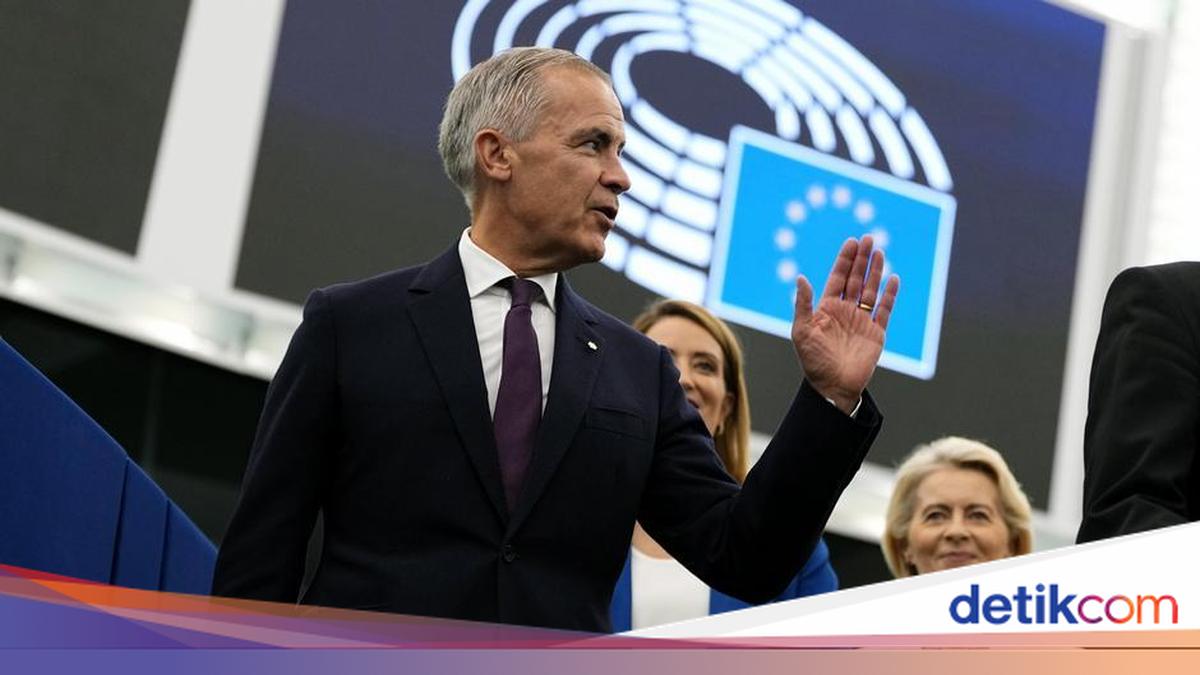
Before departing for Europe, Canadian Prime Minister Mark Carney provided an outline of his visit’s objectives, stating his intention to build a ‘unique alliance’ with the European Union (EU). The Wall Street Journal also reported that Canada is considering becoming an ‘associate member’ of the EU, without pursuing full membership status.
In her annual State of the European Union speech on Wednesday (16/9), European Commission President Ursula von der Leyen hinted at her openness to expanding this partnership. “We believe that power does not belong to the strongest, wealthiest, or loudest, but to all of us,” von der Leyen said before members of the European Parliament and Carney in Strasbourg, France. “That democratic nations have the freedom to choose whom they work with.”
According to von der Leyen, the EU-Canada partnership could span various fields, ranging from advanced manufacturing, technology, defence production, the Arctic, energy, critical minerals, batteries, artificial intelligence (AI), quantum computing, and cybersecurity to economic security.
Carney is expected to present his vision for the future relationship between the EU and Canada in a speech to the European Parliament on Thursday (1s/9).
What form of cooperation might emerge between the EU and Canada?
EU member states possess close economic integration through a single market, as well as shared trade and customs policies. In building relationships with non-EU nations, the bloc has several options. These range from free trade agreements that eliminate tariffs and trade barriers to association agreements that may include political elements. There are also broader economic arrangements, such as participation in the European single market, as seen with Iceland, Liechtenstein, and Norway.
The EU has negotiated association agreements with Turkey, Israel, and Ukraine. The objectives of each agreement differ and are not always a preliminary step towards full membership.
Patrick Leblont, an international economic relations expert from the University of Ottawa, assesses that it is unlikely Canada will adopt European laws or join the EU single market or customs union. Membership in a customs union would require Canada to implement a common external tariff.
Leblond suggests that Carney is likely more interested in forming a type of alliance that deepens cooperation in economic security and defence issues.
Closer defence cooperation?
“We, in one way or another, have taken the US security umbrella for granted on both sides. We have underinvested in the military,” Leblond told DW.
He added that the focus is now on pooling strengths, for example, in military equipment production and the development of new technologies.
Anand Sundar, a security analyst from the European Council on Foreign Relations, also sees great potential for Europe-Canada cooperation in defence. According to Sundar, approximately 70% of Canada’s defence budget is spent on purchasing US-made equipment.
Carney wants to change this situation, according to Sundar. He believes it would be beneficial for Canadians if the country participated in European defence projects to derive “more benefit from every dollar spent.”
Canada has joined the EU’s Security Action for Europe (SAFE) programme. This programme provides loans of up to €150 billion (approximately Rp3.06 quadrillion) to EU member states for the joint procurement of military equipment. To qualify for funding, no more than 35% of component costs can originate from countries outside the EU, the European Economic Area, or Ukraine.
However, because Canada joins the SAFE programme by paying a fee, Canadian companies may benefit from more relaxed procurement rules.
Nevertheless, Canadian companies still face significant hurdles in producing and purchasing weaponry through partnerships with European firms, Sundar told DW. He noted that the big question is how far the EU is willing to relax its own regulations. Such a decision could also impact other non-EU nations, such as the UK or Norway.
“An underestimated defence power”
“However, the greatest attraction for the European Union is actually the fact that Canada is a defence power that has been overlooked,” said Sundar.
The expert noted that Canada spends more on its defence budget than the combined budgets of the 14 EU member states with the smallest defence spending.
Canada currently allocates around 2% of its Gross Domestic Product (GDP) to defence, according to Sundar, and this figure is expected to rise in the coming years. Like other NATO members, Canada has committed to allocating a total of 5% of GDP to defence by 2035. Of this, 3.5% will be used for military equipment and 1.5% for other defence-related areas.
Protecting critical infrastructure
The EU and Canada will also discuss potential cooperation in developing critical infrastructure, such as the joint operation of space satellites or the maintenance of fibre-optic cables in the North Atlantic, according to Leblond.
The goal is to reduce dependence on the US and its companies. Additionally, Canada possesses oil and gas reserves that could help meet part of the EU’s energy needs.
Trade relations between the two parties are governed by the EU-Canada Comprehensive Economic and Trade Agreement (CETA), which provisionally entered into force in September 2017. The agreement eliminates almost all tariffs between the EU and Canada, while ensuring mutual market access for industrial goods, agricultural products, and services. It even allows European companies to participate in public procurement tenders in Canada.