
How Climate Change and Food Crises Could Spark Future Conflicts
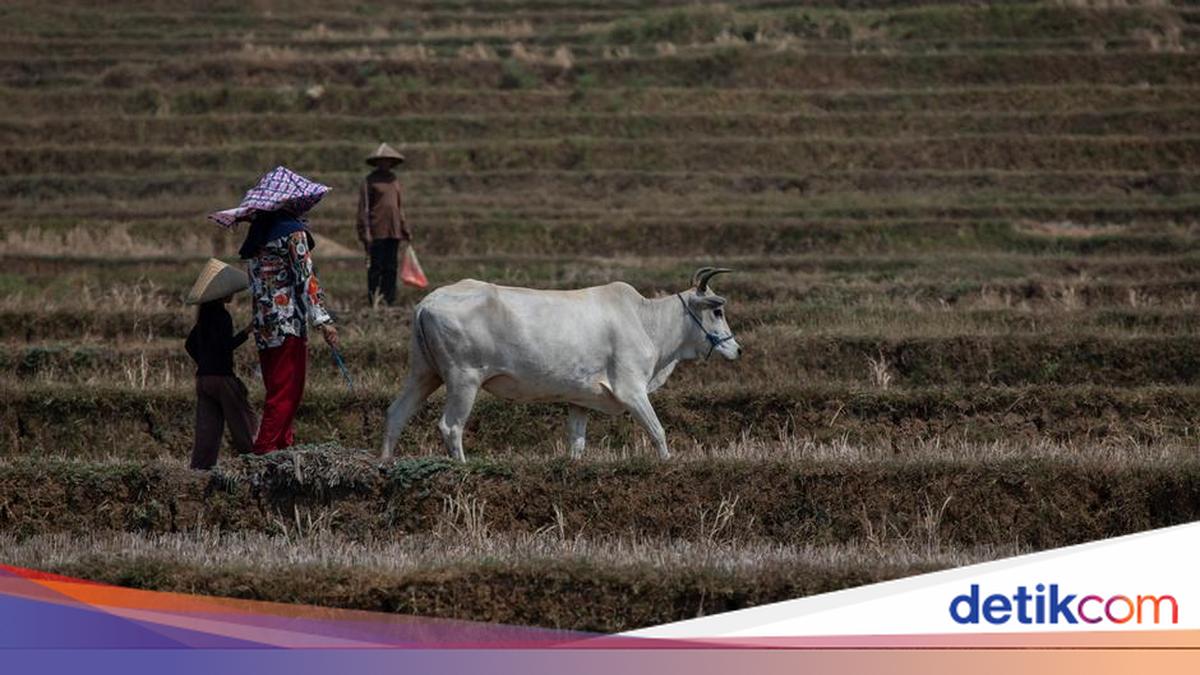
The world’s food system is under growing pressure, and new research identifies a number of areas that could experience conflict as a result.
Severe drought and extreme weather are damaging harvests across the globe. The developing El Niño phenomenon even threatens to worsen food shortages for millions of people next year. At the same time, war and geopolitical tensions are disrupting food supply chains and agricultural inputs.
The war in Ukraine has repeatedly shaken global grain markets, whilst the impact of the Iran war on the Strait of Hormuz has pushed up fuel and fertiliser prices, raising costs for farmers worldwide.
Experts have long warned that rising food insecurity can trigger instability. When people can no longer feed their families, they will compete for land, water and other resources, or be forced to migrate. In already fragile countries, such pressures can fuel social unrest and even armed conflict.
New research now reveals the regions facing the greatest risk. The Climate-Driven Agricultural Decline Index (CADI), developed by Laura Mayoral, Hannes Mueller and colleagues, maps how climate change is altering agricultural productivity across the world.
“The largest losses occur in the tropics,” said Mueller, a researcher at the Institute for Economic Analysis and the Barcelona School of Economics.
Climate change has already reduced food production in many parts of the world. Hundreds of millions of people live in regions where harvests are smaller than 30 years ago. Mueller cited Australia, Argentina, Moldova, Nigeria, Romania, the United States and Sudan as countries already feeling the effects of declining agricultural productivity.
“North Africa is another region we need to pay far more attention to. Looking at the map, the situation is dire. Truly dire,” he said.
Climate change is only part of the problem. War, trade disruptions, export bans and rising fertiliser costs could worsen food insecurity further.
Over the next 25 years, nearly half the world’s population could live in regions where farmland produces less food.
Winners, losers, and new conflicts
These pressures can weaken governance, drive migration and make it easier for armed groups to recruit new members. In already unstable societies, such factors can push them towards crisis.
However, the CADI research reveals a surprising finding. Increases in agricultural productivity also appear to raise the risk of violence. Mueller said the core of the problem is not scarcity per se, but change itself. Climate crises and other shocks do not simply make some regions poorer; they also create new opportunities, altering the value of land and resources.
In some places, previously unproductive land becomes more fertile and more valuable. This attracts investors and generates competition over ownership and access.
Sudan, for instance, is projected to produce more food as the climate changes, but whilst some regions may become more productive, others may suffer losses, creating winners and losers within the same country and raising the risk of conflict.
This lurking instability, Mueller said, also applies to regions where productivity has not yet changed. “If we know that your land will become more productive, perhaps I want to seize it from you today. That is precisely where negotiations break down and where we will face violence,” he said.
Even in stable, wealthy regions, the climate crisis is creating future problems. Changing conditions for viticulture in Europe, for example, have already affected local farmers. Major sparkling wine producers have begun buying land in mountainous areas.
“That land is not productive now, but they already know where the vineyards of the future will be,” said Mueller. “Large agricultural companies are buying up land. This is happening all over the world. Local populations are being displaced as big producers move in, land prices rise, and disputes begin over something that is still 20 or 30 years away.”
One of the most striking findings from the CADI team is that agricultural change is more likely to end in conflict in non-democratic countries. When climate shocks, food insecurity and resource competition strike democracies, they tend to have institutions that force competing interests to negotiate rather than fight.
“Democracy may seem frustrating and laborious. Nothing moves as fast as people would like, but it is an extraordinary thing because it makes people talk to one another,” said Mueller. “There is a platform for negotiation. There are institutions that help people negotiate. That ongoing process of seeking solutions is the essence of what prevents conflict.”
South Asia as a warning sign
“We are not paying enough attention to threats to our sources of livelihood,” said Abdullah Fahimi of the German Council on Foreign Relations (DGAP). “These threats can trigger major crises and displace millions of people. The regions we must watch most closely are South Asia and the Sahel, where climate vulnerability and rapid population growth mean the number of people affected could skyrocket.”
Fahimi said South Asia stands out because it depends on both vulnerable water supplies and the global food market. Food prices have already risen significantly in recent decades. “South Asia, with a population of around two billion, is heavily dependent on imports,” he added. Those imports include wheat, maize and palm oil from countries including Russia, Ukraine, Canada and Malaysia.
At the same time, local agriculture is increasingly threatened by heatwaves, floods, declining land productivity and seawater intrusion caused by rising sea levels.
The devastating floods that struck Nepal in August 2026, beyond the immediate loss of life, also offered a picture of the long-term challenges that could become more frequent. “The Himalayas and the Hindu Kush mountains supply most of the water for agriculture and drinking water in this region,” said Fahimi. “Because of climate change, glaciers and snow are melting extremely quickly.”
In the short term, melting ice may increase water availability. However, by the latter half of this century, he warned, the region could face “a major humanitarian crisis affecting around two billion people.”
As food insecurity worsens, its social and political consequences multiply. “When resource scarcity or the impacts of climate change force people to seek other livelihoods, they sometimes end up being recruited by terrorist groups,” said Fahimi, citing examples from Nigeria and Afghanistan.
In other cases, public frustration is directed at governments if they fail to mitigate the impact on people’s livelihoods. Their legitimacy is called into question, and this can escalate into violent conflict.
This echoes Mueller’s broader conclusion. Climate change, war and trade disruptions do not automatically lead to conflict. However, climate adaptation cannot merely be about planting different crops or adopting new technology. People and societies must also adapt to changes in who has access to land, water and jobs.
The key question is whether societies have institutions capable of managing these changes. Where governments, courts and local institutions can help communities negotiate new realities, shocks may be absorbed. Where such institutions are weak, pressure on the food system can turn into pressure on peace itself.