
How China Is 'Controlling' Russia's Economy?
How China Is ‘Controlling’ Russia’s Economy?
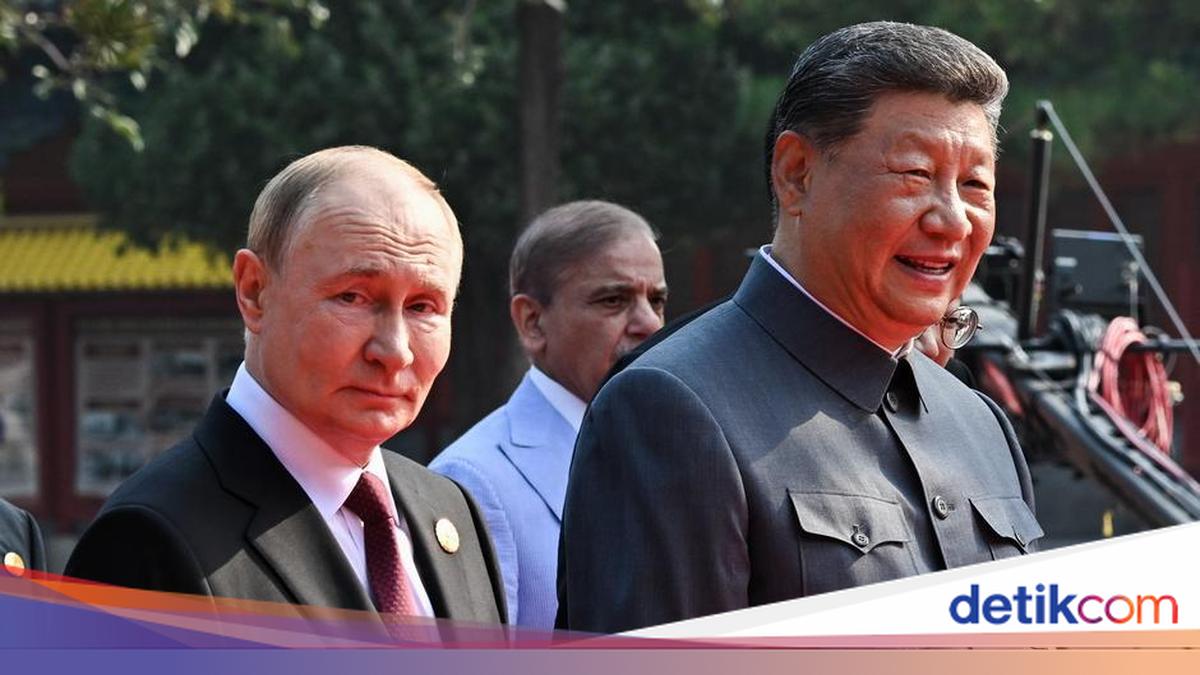
Although bilateral trade between the two countries weakened last year due to the drop in oil prices, Russia’s exports to China were reported to have nearly doubled since February 2022, as Moscow intensified its invasion of Ukraine. In 2024, total Russia’s exports to China reached $129 billion (Rp2,050 trillion). Much of these exports consisted of crude oil, coal, and natural gas sold at much lower prices. The Centre for Energy and Clean Air Research calculates that China has bought more than $372 billion (Rp5,700 trillion) worth of Russian fossil fuels since the conflict began. Those transactions have provided currency stability to fund the war amid Western sanctions. In return, China’s exports to Russia amounted to around $116 billion ( Rp1,840 quadrillion) to Russia in 2024. China’s supply of machinery, electronics, and vehicles has replaced Western suppliers that withdrew from the Russian market. Although Beijing has not directly exported military equipment to Russia, it has supplied dual-use items worth billions of dollars. These goods can support civilian as well as military needs. This has also supported Russia’s defence industry. As Putin and Xi prepare to meet in Beijing this week to mark 25 years of bilateral ties, the asymmetry becomes more apparent: Moscow is increasingly vulnerable and must align itself with China’s agenda or priorities.
Why is Russia becoming more dependent on Chinese technology?
Western sanctions, imposed since 2022 and tightened further, have cut Russia off from access to advanced Western technology. The United States, the European Union, the United Kingdom, and their allies ban exports of semiconductors, microelectronics, precision machinery, and other dual-use goods essential for weapons production. The bans have caused severe shortages in Russia. In response, Moscow has turned to China, which, according to Bloomberg, supplied about 90% of sanctioned Russian technology imports in 2025, up from 80% the year before. Obtaining items such as equipment and machinery for assembling missiles and drones is far more difficult and expensive than before the war. To obtain them, Russia has to exploit intricate networks through third-country routes and often pay prices around 90% higher than pre-war levels. Beijing has also supported Russia with earth-observation intelligence, satellite imagery for military use, and unmanned aerial vehicles, according to Bloomberg’s report last year. Chinese technology has enabled Russia to maintain and even expand the production of missiles, drones, and other weapons, ensuring the wartime economy can keep running.
Transacting in Yuan
As the war in Ukraine continues, the United States, the European Union, and their allies have removed major Russian banks from the SWIFT payment system and frozen about $300 billion (around Rp4,950 trillion) of the Russian central bank’s reserves held abroad. A dollar-dominated financial system has become an effective weapon against the Kremlin; transactions in dollars or euros have become risky or even impossible for Russia. The move also threatens foreign banks, individuals, and entities worldwide with secondary sanctions if they continue to work with sanctioned Russian entities. In response, Moscow and Beijing are accelerating dedollarisation, i.e., the shift from the use of the US dollar to their respective national currencies. According to Russian Finance Minister Anton Siluanov, by the end of 2025 they had completed more than 99% of bilateral trade in rubles and yuan.
The trend is reinforced by BRICS, a bloc of developing countries. BRICS promotes settlement of transactions in local currencies among its ten members, and has even proposed a plan to introduce a BRICS single currency.
The phenomenon called