
How Brazil’s President Won the Election Using Leaked Social Media Tactics
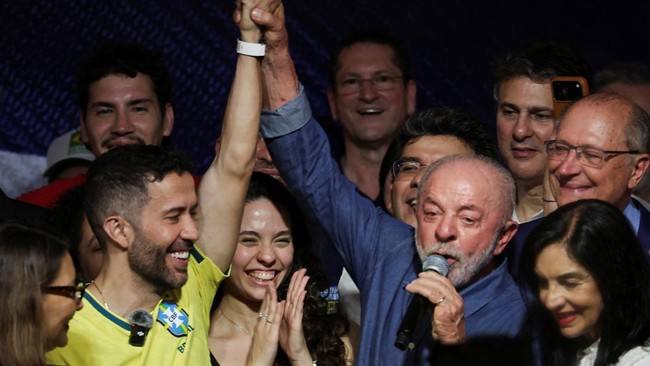
Jakarta, CNBC Indonesia — Luiz Inácio Lula da Silva’s victory in Brazil’s 2026 presidential election did not happen by chance. Behind the result was a new strategy devised by parliamentarian André Janones: a coordinated information-warfare method now known as “Janonism”.
The method changed how supporters operated on social media, flooding online spaces and ultimately counterbalancing the strength of opponents who had long dominated the digital arena, according to a report published on Tuesday (3 November 2026).
The approach emerged after a first-round result that disappointed Lula’s supporters. They realised social media was no longer merely a place to share news, but a primary battleground. Algorithms tend to amplify what is already popular, and right-wing groups had used them very effectively to fuel division and spread narratives that favoured them.
The rapid growth of Lula’s Army between the two rounds of voting drew attention, as it was seen as having helped redress the imbalance of political power in Brazil’s digital sphere.
For years, conservative groups allied with former president Jair Bolsonaro were considered dominant in online political mobilisation, particularly on platforms such as WhatsApp and Telegram.
The emergence of Lula’s Army led many supporters to believe that Brazil’s left had finally found a way to compete in the digital arena.
The shift was significant, given that social media has played an important role in Brazilian politics since Bolsonaro’s 2018 victory, when WhatsApp networks became a defining feature of political campaigning.
Key elements of Janonism
Lula’s Army subsequently circulated a manual on campaigning through social media. Here are some of its main recommendations:
First, strengthen your own side. Supporters should like, share and save every post, and watch it through to the end, using as many accounts as possible. The aim is not simply to show approval, but to signal to the algorithm that the content should be distributed more widely. The more interactions happen at once, the greater the reach.
Second, never respond to the other side. This is the most important rule. Replying to, mocking or even merely reading an opponent’s post feeds their content. Algorithms do not distinguish between praise and insults: any attention increases reach. If you see an opponent’s post, scroll past without engaging. Blocking accounts is not recommended either, because the system treats this as meaning the content is not appearing, rather than being ignored. Ignoring it is the key.
Third, keep monitoring trending topics, spreading hashtags and coverage in the mainstream media.
Fourth, concentrate the message. Use the same hashtags, images and videos simultaneously. Do not spread efforts in too many directions at once. When thousands of people do the same thing at the same time, they create a wave the system cannot ignore.
Fifth, show real faces. Do not hide behind anonymous accounts. Make support public through personal accounts, using photographs, banners and identifying details. Support from people known in their communities carries much more weight than support from accounts whose owners are unknown.
Sixth, make content that can go viral. Music, comedy, sport, popular culture and material that does not look like campaigning are often the easiest ways to reach people who have not yet decided how to vote.
Seventh, make use of artificial intelligence. AI-generated images and videos allow anyone to produce large quantities of material quickly. Create variations so the output does not look uniform, and adapt the style to the preferences of the intended audience.
Source: jawawa.id (https://jawawa.id/newsitem/how-brazils-president-won-the-election-using-leaked-social-media-tactics-1793713878)
Originally published by CNBC Indonesia (https://www.cnbcindonesia.com/tech/20261103122417-37-781850/cara-presiden-brasil-menang-pemilu-pakai-medsos-bocor-ini-resepnya), translated from Indonesian