
How Best to Develop the Red and White Village Cooperatives? (1)
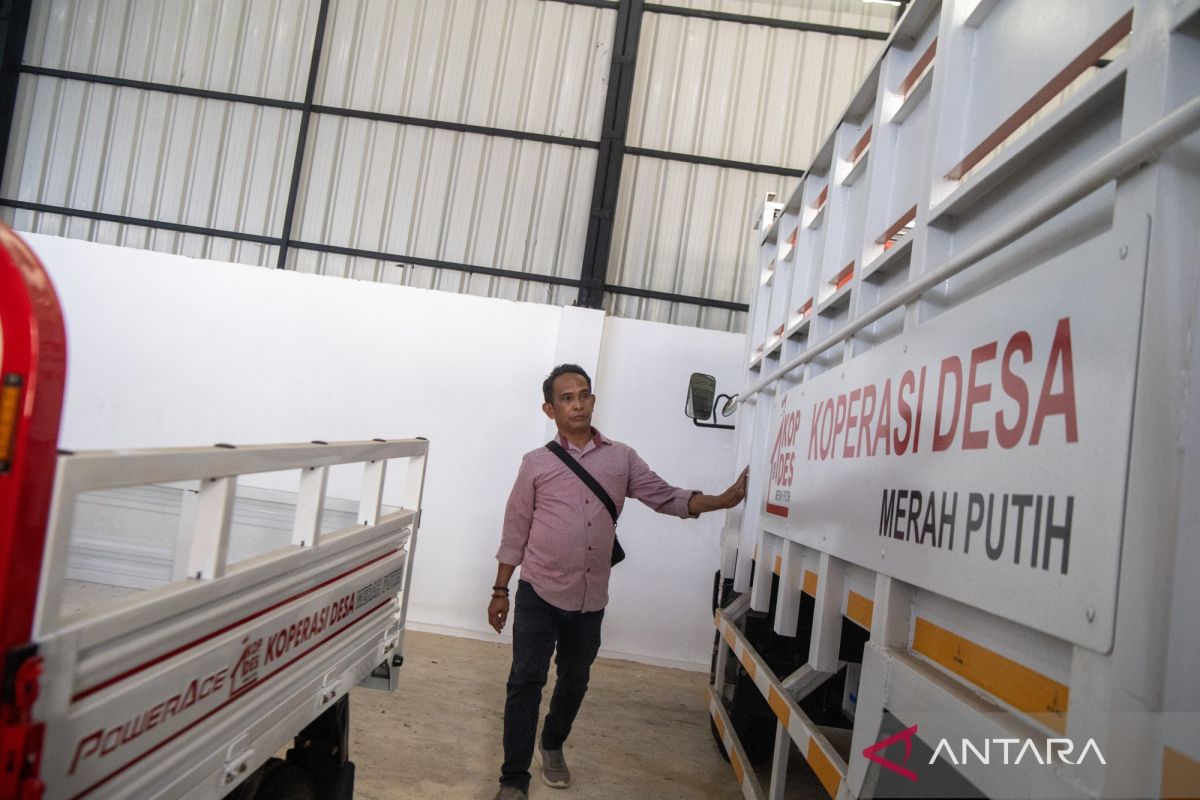
Jakarta (ANTARA) - The Red and White Village Cooperative (KDMP) is a strategic government initiative to strengthen the rural economy through economic institutions that are owned, managed and utilised by village communities themselves.
A cooperative should not be seen merely as a place to borrow money or as an institution carrying out trading activities.
A cooperative must be built as the centre of the village community’s economic activity, capable of connecting production, processing, marketing, financing, distribution, and the provision of basic services to the community.
For this reason, developing KDMPs cannot stop at simply forming a legal entity, providing capital, constructing buildings, and buying vehicles or equipment.
This is especially so given reports that some KDMP buildings are located at the edge of ravines, near cemeteries, or even in the middle of forests (hopefully untrue). What matters far more is building a cooperative business system that is healthy, professional, transparent, and genuinely delivers economic benefits to its members.
KDMPs must be cooperatives that live because of their economic activity, not because of government assistance.
Cooperatives must be built according to the needs of each village. A mistake to avoid is building cooperatives to a uniform pattern for all villages.
Every village has different potential and different problems. Some villages excel in agriculture, plantations, livestock, fisheries, tourism, crafts, trade, or services.
Therefore, the first step in developing a KDMP should be to map the village economy.
What needs to be known includes: what are the village’s main commodities? Who are the producers or business actors? What is the production volume? Who have been the buyers so far? What are the prices at producer level?
Then also: what are the marketing constraints? What needs of the community have so far had to be purchased from outside the village? What is the potential cooperative membership? What is the community’s capital capacity? What business opportunities can be developed sustainably?
In this way, the KDMP would be built on the real potential and real needs of the community, not merely to follow a programme.
Member orientation
KDMPs should be built with an orientation towards the interests of their members. Why so? Because a cooperative differs from an ordinary company.
In a company, the main objective is to deliver profit to the capital owners. A cooperative, by contrast, is built to improve the welfare of its members.
Therefore, the success of a KDMP must not be measured solely by the size of its assets, its turnover, the number of buildings, the number of vehicles, or the amount of government capital.
The more important measures are: have members’ incomes increased? Have members’ business costs become cheaper? Are members’ products easier to market? Does the community obtain goods and services at fair prices? Do business profits return to members in the form of economic benefits and surpluses (SHU)? These are what should be the measures of KDMP success.