
How Bank Indonesia Plans to Curb the Impact of a Rp17,800 Dollar on Import Prices
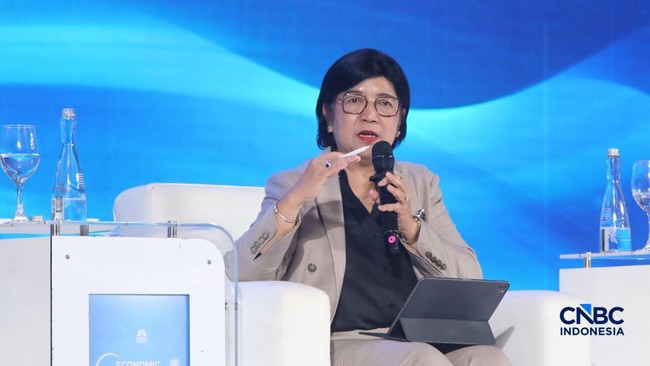
Bank Indonesia (BI) has outlined measures to reduce the impact of the strengthening US dollar and the weakening rupiah on imported goods, known as imported inflation. Senior Deputy Governor Destry Damayanti stated that to mitigate the effects of imported inflation, the central bank has undertaken efforts to stabilise the rupiah so that the rise in import prices is not excessive. “Imported inflation is certainly a consideration for us. Looking ahead, apart from volatile food prices due to climate, we are also monitoring imported inflation,” Destry said during the CNBC Indonesia Economic Update 2026, quoted on Wednesday (24/6/2026). “What can we address? The rupiah. So, how to stabilise the rupiah, how to prevent its depreciation from becoming too deep,” she stressed. Besides imported inflation, the central bank is also closely watching volatile food inflation, which has pushed some food prices above reference levels. “Regarding food, there was a time when the price of chillies could exceed the price of meat. Common sense asks, how can chillies cost more than meat? Is there no stock? Or what?” Destry added. To anticipate the phenomenon of high volatile food prices not persisting, BI is playing an active role in helping several regions, particularly those with BI representative offices, minimise the impact of fluctuating food inflation. “Bank Indonesia has a programme involving cooperation between its 46 representative offices across Indonesia, regional governments, and local institutions to address several national issues, one of which is handling inflation, especially food inflation,” she continued. Under this cooperation, BI acts as an advisor, providing input to regional governments regarding the sources of inflation so that local inflation rates can be minimised. “We act as an advisor, giving input to the regional government, and we also look at what the source of inflation is in that area. If it is food, for example, Bank Indonesia, together with others, helps by asking whether farmers want assistance with smart farming, or many other things, such as empowering local MSMEs,” she explained.