
How an Oil Project in the Falklands Is Raising Tensions Between Argentina and Britain
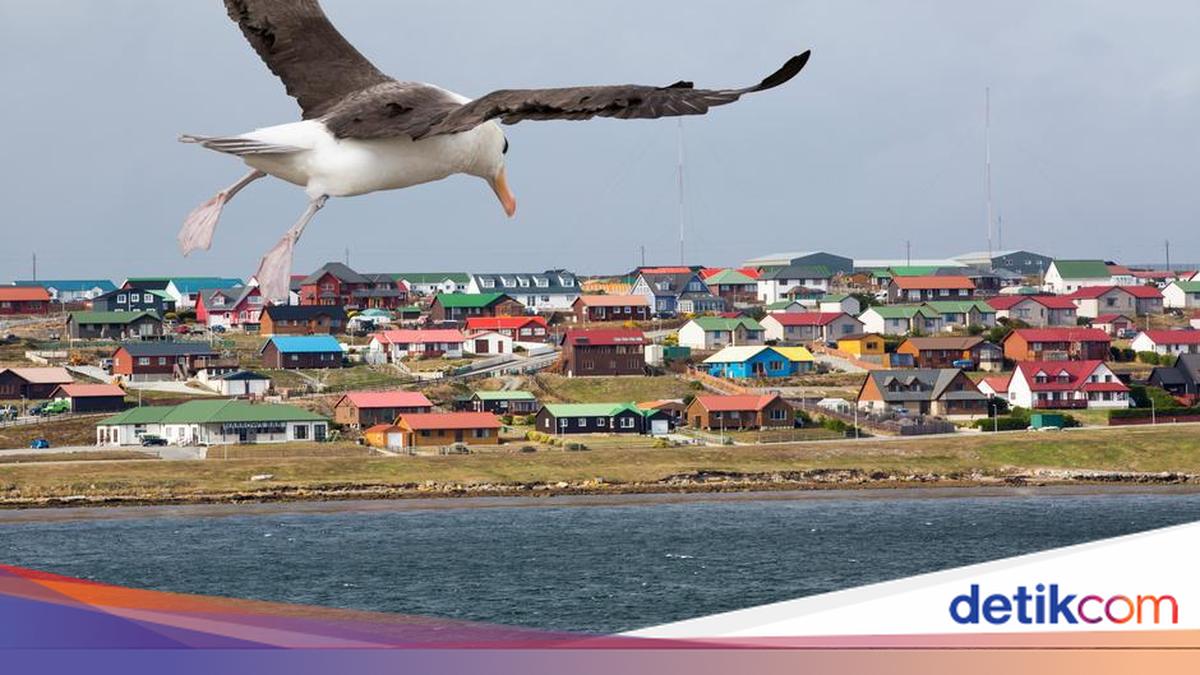
With a population of fewer than 4,000 and located in a quiet corner of the South Atlantic, the Falkland Islands have rarely featured in global business conversations.
But oil is changing that. A British-Israeli oil exploration project in the islands’ waters has reignited the long-standing dispute between the Falklands and Argentina.
The government in Buenos Aires has claimed the islands, which lie about 500 kilometres from Argentina’s coast, for two centuries. In Argentina, they are known as Las Malvinas. The 200-year-old dispute turned into war in 1982, when Argentina invaded the islands, but the unilateral invasion was quickly repelled by the British fleet.
In a 2013 sovereignty referendum, 99.8 per cent of Falkland Islanders voted to remain linked to Britain as a self-governing British Overseas Territory. The Sea Lion oil field project has now brought the issue back to the fore.
Last month, Argentine President Javier Milei threatened to bring an international legal case against Britain if the project was not halted within two weeks.
The oil project is operated by Israel’s Navitas Petroleum and Britain’s Rockhopper Exploration. It has the full backing of the Falkland Islands Legislative Assembly, which has pursued it since 2010. The two companies plan to begin extracting oil from the Sea Lion field in early 2028.
Milei called the project “the illegal plundering of our resources” and said he would take the matter to the International Tribunal for the Law of the Sea, an independent judicial body responsible for applying the United Nations Convention on the Law of the Sea.
Seeking support through nationalist sentiment?
Stacy Bragger, a member of the Falkland Islands’ 12-seat Legislative Assembly, told DW that the dispute was “nothing new” and that Argentina was using the oil project as “a vehicle to pursue its sovereignty claim”.
He said Milei might be stepping up his rhetoric ahead of Argentina’s 2027 elections.
“As the election gets closer, the Falklands are a very convenient tool to use to unite people while distracting them from domestic issues,” he said.
Henry Ziemer, an Americas programme analyst at the Center for Strategic and International Studies in Washington, said the Falklands were “a recurring flashpoint in Argentine politics”. Since the 1980s, successive governments have raised the issue to win support and “stoke the fires of nationalism”.
Ziemer said Milei’s move was worth watching because he had previously been open to improving relations with Britain over the issue. He agreed that the move might be a strategy to “boost support at a time when the government is under strong domestic pressure”.
Could significantly change the Falklands
Even if Milei sees political advantage in the dispute, the prospect of the Sea Lion project succeeding would significantly raise the economic stakes for all sides.
The project has a budget of US$1.8 billion, or around Rp32.3 trillion, and could more than double the Falkland Islands’ revenue. The companies expect the field to produce up to 50,000 barrels a day at peak output and to operate for 35 years.
That would substantially increase the Falklands’ annual gross domestic product, which currently depends almost entirely on the volatile fishing sector and tourism. The Falkland Islands Government is even considering establishing a sovereign wealth fund if the oil project succeeds.
“This is a very important project for us and has huge potential for our future,” Bragger said. “The effort to get to this point has been enormous and, assuming everything goes to plan, we want to retain as much value as possible.”
However, alongside using the dispute for domestic political purposes, Milei may also see an opportunity for Argentina to position itself as an energy player amid the war in Iran and problems in the Strait of Hormuz.
Argentina’s domestic oil sector is expanding, with production surging at Vaca Muerta in Patagonia, one of the world’s largest shale developments. If Milei’s legal effort succeeds, it could bring further potential gains.
“When natural resources overlap with territorial disputes and existing animosities, it tends to amplify a lot of conflicts,” Ziemer said.
Bragger disagreed. He said Milei and Argentina had no legitimate claim either to the Falklands or to the oil wealth that might be extracted in the coming years.
“They do not respect our right to self-determination,” he said. “They do not respect our right to develop our own resources. They just want to colonise us.”
Argentina’s economic pressure intensifies
Milei plans to put pressure on the Falklands by tightening existing economic sanctions. Andrea Clausen, the Falklands’ chief executive since 2025, recently described the campaign as “economic warfare”.
Many international suppliers and shipping companies already refuse to serve the Falklands for fear of angering Argentina. Milei’s government has now imposed sanctions on 60 people involved in the Sea Lion project.
In a televised address last month, Milei also promised to sanction companies involved in the project. The move could cast doubt on its viability; it was previously halted in 2014 and 2020 due to financing problems, weak oil prices and sanctions-related delays.
This week, Navitas confirmed that two contractors had withdrawn from the project over sanctions concerns and that it was seeking replacements. There are also concerns that Milei will seek to rally international support to strengthen his position. US President Donald Trump recently said that American support for the status quo on the islands was “under review”.
Bragger played down those concerns, pointing to recent remarks by US Secretary of State Marco Rubio reaffirming support for the Falklands. Ziemer said it would be “very surprising” if the United States sided with Argentina.
With uncertainty over whether the oil project will ultimately proceed, a return to armed conflict like that of 1982 is considered unlikely.
“That is a long way off, and the situation would have to deteriorate dramatically before we saw the prospect of military conflict,” Ziemer said.
Source: jawawa.id (https://jawawa.id/newsitem/how-an-oil-project-in-the-falklands-is-raising-tensions-between-argentina-and-britain-1791546809)
Originally published by detikcom (https://news.detik.com/dw/d-8699977/bagaimana-proyek-minyak-di-falkland-panaskan-tensi-argentina-inggris), translated from Indonesian