
How an Indonesian Island Changed the Entire World
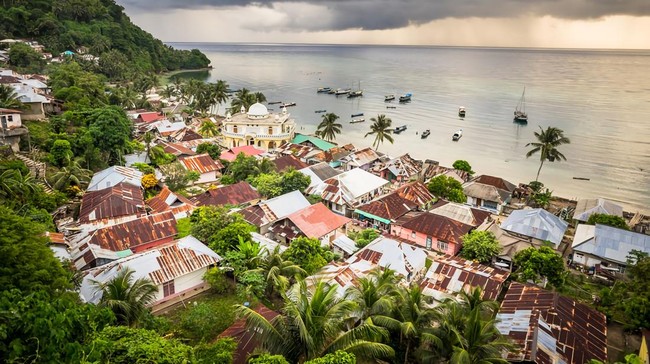
The United States is currently a superpower dominating global politics and economics. However, an important chapter that propelled the nation to this position and fundamentally changed the world began on a small island in Indonesia.
The story began in the 17th century when England and the Netherlands competed for influence and global trade routes. At that time, the Netherlands controlled a colony in North America called Nieuw Amsterdam, a territory now known as New York.
Simultaneously, England controlled Run Island in the Banda Islands, Maluku. Despite its small size, the island held extraordinary economic value as a producer of nutmeg, a commodity that was extremely expensive and highly sought after in European markets.
The competition between the two nations eventually led to a peace agreement through the Treaty of Breda, signed on 31 July 1667. One of the terms of the treaty was a territorial exchange: the Netherlands surrendered Nieuw Amsterdam to England, while England surrendered Run Island to the Netherlands.
At the time, the Dutch decision appeared logical. Controlling Run Island was believed to strengthen the nutmeg trade monopoly, which was a massive source of wealth for Dutch trading companies. Conversely, Nieuw Amsterdam was still a small colony that had not yet shown significant economic potential.
However, history proved otherwise. According to Des Alwi in ‘Sejarah Maluku’ (2005), once Run Island was fully in Dutch hands, its economic value began to decline. The English had previously spread nutmeg seeds to various other parts of their colonies, causing the spice monopoly the Dutch hoped for to gradually weaken.
Meanwhile, Nieuw Amsterdam, which had been renamed New York, flourished under English rule. Its strategic location made the city an important trading hub in North America. Development accelerated when New York was connected to various trade routes via the Hudson River and later the Erie Canal. This infrastructure provided access between the East Coast and the developing American hinterland.
Trade flows, investment, and migration continued to rise. Populations arrived, economic activity grew, and New York slowly transformed into a primary business hub in America. According to Victor Perlo in ‘New York as the Financial Center’ (1955), New York has developed as a global economic centre since the 17th century. Its position strengthened further after the establishment of the New York Stock and Exchange Board (NYSE) in 1817, which subsequently became one of the largest stock exchanges in the world.
Over time, New York evolved into the heart of international finance. The city became home to various major financial institutions, global trading hubs, and multinational corporations that control global capital flows. The economic power centred in New York became one of the primary foundations for the rise of the United States. Supported by industrialisation, technological innovation, and centuries of economic expansion, the US eventually grew into the nation with the greatest economic and political influence in the world.
On this basis, the journey of the United States towards its status as a global superpower has a unique connection to Indonesia. It all began with the territorial exchange decision in 1667, when the Netherlands chose Run Island in Maluku over retaining Nieuw Amsterdam, which would later develop into New York, the most influential financial centre in the world.