
How an Agrarian Community in Wonogiri Rose to Tackle Drought
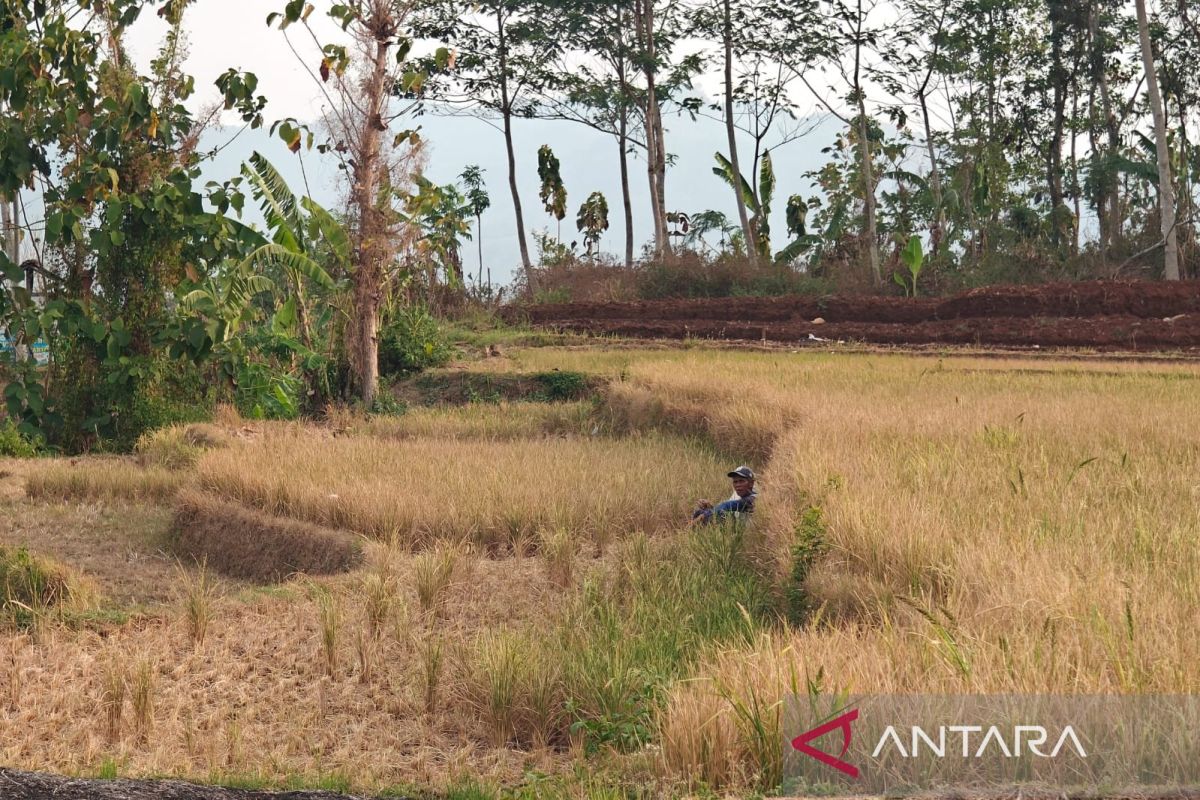
Jakarta (ANTARA) — When the dry season arrives, fertile hill country becomes barren. Even a light shower cannot dampen the surface as the earth grows hotter.
This is the situation faced by residents of Doho village, Girimarto district, Wonogiri regency, Central Java.
Most of Doho’s agricultural land is rain-fed and depends entirely on rainfall in the Keduang watershed. Once the rainy season ends and the river dries into a stretch of hot river stones, irrigation channels abruptly fall dormant.
Dozens of hectares of rice fields and plantations have had to lie fallow, left without crops because of water shortages. With no water, farmers lose their source of income. Most can only wait, uncertainly, for the next planting season.
Technology intervention eventually became essential to the survival of this agrarian community during drought.
Conditions that had remained difficult for generations began to change when the Doho reservoir was built in 2017 through a multi-party collaboration involving the government, farmers’ organisations and funding support from the Coca-Cola Foundation, a philanthropic organisation.
The reservoir occupies 1.5 hectares of hillside. This rainwater reservoir, four metres deep and with a capacity of 15,872 cubic metres, was designed to capture excess rainwater during the wet season and store it as a strategic reserve for the dry months.
Its base is lined with a special geomembrane designed to last 30 years, while allowing moss to grow and help maintain water quality for the surrounding agricultural ecosystem.
The 21-hectare expanse of farmland has been transformed. Fields that once lay dormant during the dry season now remain green, thanks to a shift in planting patterns towards water-efficient secondary crops and upland rice.
More than 300 farmers belonging to the Ngudi Rukun Farmers’ Group Association (Gapoktan) in Doho now have a reliable water supply to protect their crops from the threat of harvest failure. Fields once left parched can now produce harvests throughout the year.
Doho village head Agus Suwatono, met in the village on Friday (7 October), said the reservoir had proved a lifeline during critical seasonal transitions, particularly around March and April. During that period, water is released into the village irrigation network to supply rice plants at the booting stage, just before the grains form.
With water supplies maintained, farmers’ harvest productivity has risen by as much as 30 per cent. Despite current climate uncertainty, yields that previously stood at around 15 sacks have increased to 20–30 sacks, or up to 1.8 tonnes of dry-harvested paddy, with each sack weighing 60 kilograms.
In addition to higher productivity, water availability has made it possible to increase planting from the usual two cycles a year to as many as three.
Of the seven farmer groups spread across seven hamlets, about 60 farming households directly benefit from the reservoir. Local residents can also meet their household water needs from its supply.
Regular water supplies are vital given the sloping contours of farmland on Doho’s hillsides. Water quickly seeps away unless carefully channelled, including to secondary crops grown by residents such as maize, peanuts and tubers.
Equitable water management
The key to the successful distribution of water from the Doho reservoir lies in the steadfast local wisdom practised by Legiman, a subak, or water-distribution manager, trusted by the villagers.
Source: jawawa.id (https://jawawa.id/newsitem/how-an-agrarian-community-in-wonogiri-rose-to-tackle-drought-1791881828)
Originally published by Antara (Indonesian) (https://www.antaranews.com/berita/5783470/saat-masyarakat-agraris-di-wonogiri-bangkit-atasi-kekeringan), translated from Indonesian