
How Accurate Are Heart Rate Readings on Smartwatches?
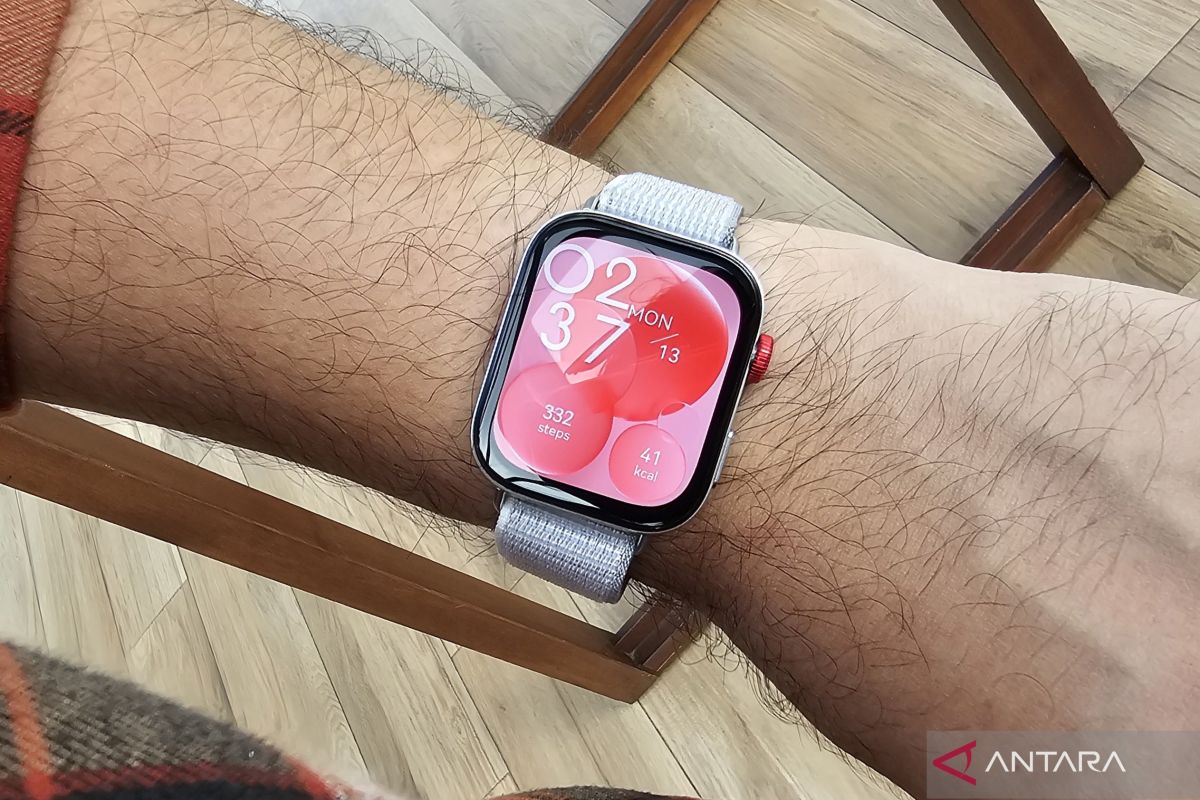
Jakarta (ANTARA) - Smartwatches are now used not only to check the time and receive notifications, but also come with a range of health features, including heart-rate monitors that track the pulse in real time.
The feature can be useful, particularly for people who exercise regularly and want to know the intensity of their workouts. But are the heart-rate figures displayed by smartwatches really accurate?
The answer is that they are reasonably accurate for everyday monitoring under certain conditions, but the results do not always match measurements taken with medical equipment.
How do smartwatches measure heart rate?
Most smartwatches use photoplethysmography (PPG), an optical technology that uses light to detect changes in blood flow beneath the skin.
The sensor usually shines green light onto the wrist. As the heart beats, the volume of blood in the blood vessels changes, altering the amount of light absorbed and reflected by the skin.
The sensor reads these changes and processes them into a heart-rate figure, measured in beats per minute (bpm).
This technology allows smartwatches to monitor the heartbeat without requiring equipment to be attached directly to the chest.
How accurate are the readings?
Several studies suggest that smartwatches can measure heart rate reasonably well when someone is resting or doing light to moderate activity.
However, their accuracy can decline when the body is moving more vigorously or the activity involves a lot of arm movement.
A 2017 study published in the journal Medicine & Science in Sports & Exercise found that the accuracy of wrist-based heart-rate monitors varied according to the type of exercise and the device brand.
The study also found that readings on a treadmill tended to be more accurate than those taken while using an elliptical machine, which involves arm movement.
Another study, published in the Journal of Medical Internet Research in 2022, likewise found that the accuracy of wearable devices varied between activities and brands.
This means the figures shown on a smartwatch should be treated as estimates, rather than as consistently precise medical measurements.
Several factors can make heart-rate readings less accurate, including:
Arm movement: Repetitive movements when running, cycling or doing weight training can interfere with the optical sensor.
Watch position: A watch that is too loose or shifts while being worn can make it harder for the sensor to detect changes in blood flow.
Skin conditions: Sweat, tattoos, hair and certain skin characteristics can affect sensor readings.
Environmental temperature: Cold temperatures can reduce blood flow to the wrist, making it harder for the sensor to detect the pulse.
Type of activity: Movement involving frequent changes in wrist position can produce less consistent readings.
How to improve heart-rate measurement accuracy
For more consistent results, make sure the smartwatch is worn in the correct position.
Place it just above the wrist bone and ensure the strap is snug enough to keep the sensor against the skin, but not so tight that it restricts blood circulation.
Also clean the sensor regularly and make sure the device does not shift easily during exercise.
For more precise heart-rate monitoring during workouts, a chest-strap monitor may be an alternative. These devices generally use electrical sensors to detect heart activity and correspond more closely with an electrocardiogram (ECG).
Source: jawawa.id (https://jawawa.id/newsitem/how-accurate-are-heart-rate-readings-on-smartwatches-1794473762)
Originally published by Antara (Indonesian) (https://www.antaranews.com/berita/5849091/seberapa-akurat-pengukuran-detak-jantung-di-smartwatch), translated from Indonesian