
How a Semarang Sugar Tycoon’s Business Empire Collapsed After a Clash with the Government
Maintaining a business across generations is a priority for heirs. In the business world, continuity must be preserved from one generation to the next, so many founders train their descendants or trusted associates to safeguard their enterprises.
There are many examples of businesses successfully sustained across generations, including the Salim Group, Sampoerna and Bakrie Group. But some businesses have collapsed after their founders died. One such case was Oei Tiong Ham Concern, the Semarang sugar company that dominated the sugar market in Asia and around the world.
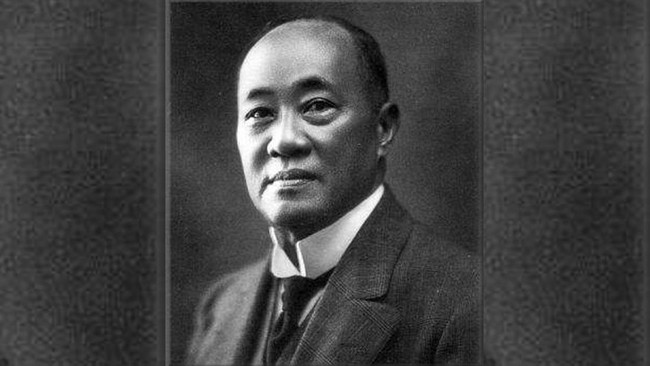
Oei Tiong Ham Concern (OTHC) was a conglomerate founded in 1893 by Oei Tiong Ham, a Chinese businessman born in Semarang. OTHC had four sugar-sector subsidiaries located in India, Singapore and London.
According to Onghokham’s Konglomerat Oei Tiong Ham (1992), the scale of its operations enabled OTHC to export 200,000 tonnes of sugar, surpassing Western companies in 1911–1912. At the same time, OTHC successfully controlled 60% of the sugar market in the Dutch East Indies.
Given the size of his business, it is little wonder that Oei Tiong Ham amassed a fortune of 200 million guilders. For context, one guilder in 1925 could buy 20kg of rice. At a rice price of Rp10,850 per kg, his fortune would be worth an estimated Rp43.4 trillion.
But after Oei Tiong Ham died on 6 July 1942, the company was beset by a series of problems and was forced to collapse almost overnight.
The story began when OTHC’s heirs filed a claim in a Dutch court against Bank Indonesia’s Amsterdam branch. They sought the return of millions of guilders in deposits held with De Javasche Bank, the predecessor of Bank Indonesia, before the Second World War, in 1942.
The Indonesian Government wanted to use the money to build a sugar factory. The heirs argued that the government had no right to use the company’s inherited funds.
The heirs ultimately won the case, and the Dutch court ordered the government to return the deposits. The government complied, but the family considered this the beginning of the OTHC business empire’s downfall.
“This return, according to Oei Tjong Tay [Oei Tiong Ham’s son], prompted the government to look for reasons to seize all of OTHC’s assets in Indonesia,” Benny G. Setiono wrote in Tionghoa dalam Pusaran Politik (2003).
Not long after the claim, in 1961, a Semarang court suddenly summoned the shareholders of Kian Gwan, the main engine of the OTHC conglomerate. They were to stand trial on economic charges for allegedly violating foreign-exchange regulations.
As all the heirs lived overseas and no defence was presented, the Semarang court found OTHC guilty. On 10 July 1961, evidence connected to the case was confiscated and seized by the state.
The seizure, carried out in a single day, also included Oei Tiong Ham’s inheritance. In other words, all the assets of OTHC and the Oei family were confiscated. The proceeds from the seizure became capital for the establishment in 1964 of the state-owned sugar company PT Rajawali Nusantara Indonesia (RNI).
Following the state takeover, the trail of OTHC, a major conglomerate whose business had flourished for decades during the colonial era, disappeared. The descendants of Oei Tiong Ham also faded from public view, becoming little more than a part of history.
Source: jawawa.id (https://jawawa.id/newsitem/how-a-semarang-sugar-tycoons-business-empire-collapsed-after-a-clash-with-the-government-1793508695)
Originally published by CNBC Indonesia (https://www.cnbcindonesia.com/market/20261101103838-17-781231/bisnis-raja-gula-dari-semarang-hancur-usai-ribut-dengan-pemerintah), translated from Indonesian