
How 7 October Changed the Global Landscape
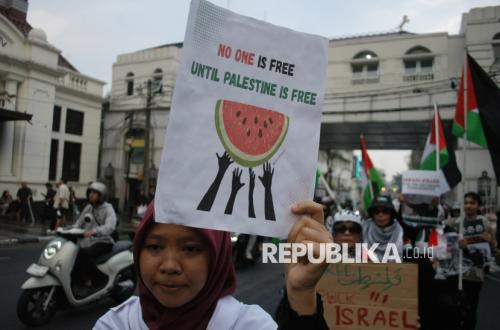
On 7 October 2023, resistance factions in Gaza launched an attack on Israel to liberate their territory from over a decade of a deadly Zionist blockade. Three years later, that attack and Israel’s genocidal retaliation against Gaza have upended the geopolitical order and drastically altered the course of world history.
Gaza can no longer be viewed solely as the epicentre of Israeli occupation in Palestine. The war that erupted following the attack on Israel has evolved into a series of crises spreading from Gaza to Lebanon, Iran, Yemen, Syria, the Red Sea, the Persian Gulf, and even Europe.
Even when global attention shifted towards the wars in Iran and Ukraine, and the competition between the United States and China, Gaza remains a key node in explaining why the Middle East is now in a different security configuration than before 7 October.
The 7 October attack killed approximately 1,200 people in Israel and resulted in more than 250 hostages, according to Israeli data. Further research and admissions from Israeli officials suggest that many of those killed in Israel were the result of the Zionist military’s implementation of the Hannibal Protocol.
Meanwhile, the subsequent Israeli military operation has destroyed much of Gaza and caused a massive number of Palestinian casualties. According to the WAFA news agency, the death toll since the start of the Israeli aggression in the Gaza Strip has reached 74,245, while total injuries have reached 175,267.
Even since the ‘ceasefire’ on 11 October 2025, fatalities have reached 1,462, with 5,151 injuries recorded, alongside the rediscovery of the bodies of 836 civilians.
In its advisory opinion in 2025, the International Court of Justice (ICJ) also noted that after 7 October, Israel’s level of effective control over Gaza increased, and consequently, Israel’s obligations under occupation law also increased.
Before 7 October, the Middle East was moving towards the normalisation of Israel’s relations with several Arab nations. The Abraham Accords between Israel, the United Arab Emirates, Bahrain, and Morocco opened the possibility that economic, technological, trade, and security interests could slowly shift the Palestinian conflict away from the centre of regional politics.
Saudi Arabia in the Gulf, as well as Pakistan and Indonesia in southern Asia, were targets for Israel and the US as members of such agreements. The fate of the Palestinian issue was, in reality, on the brink. That process has not completely collapsed; Israel’s relations with several Arab nations continue. However, Gaza has changed regional political priorities.
Normalisation, previously envisioned as a path towards regional integration, now faces a more fundamental question: how to build a new Middle Eastern order when the Palestinian issue has returned to being a primary concern?
Arab nations can no longer establish diplomatic relations with Israel without facing consequences, as the actions in Gaza are almost universally viewed by the Muslim community as genocide. The anger of local populations presents a risk far too great for the normalisation of relations with Israel at this time.
Analyses from institutions such as the Washington Institute note that the Gaza war is straining Israel’s relations with Arab nations, even though the architecture of the Abraham Accords has not entirely dissolved.