
Houthi Threat in Bab al-Mandab Strait: Key Oil Routes in Peril
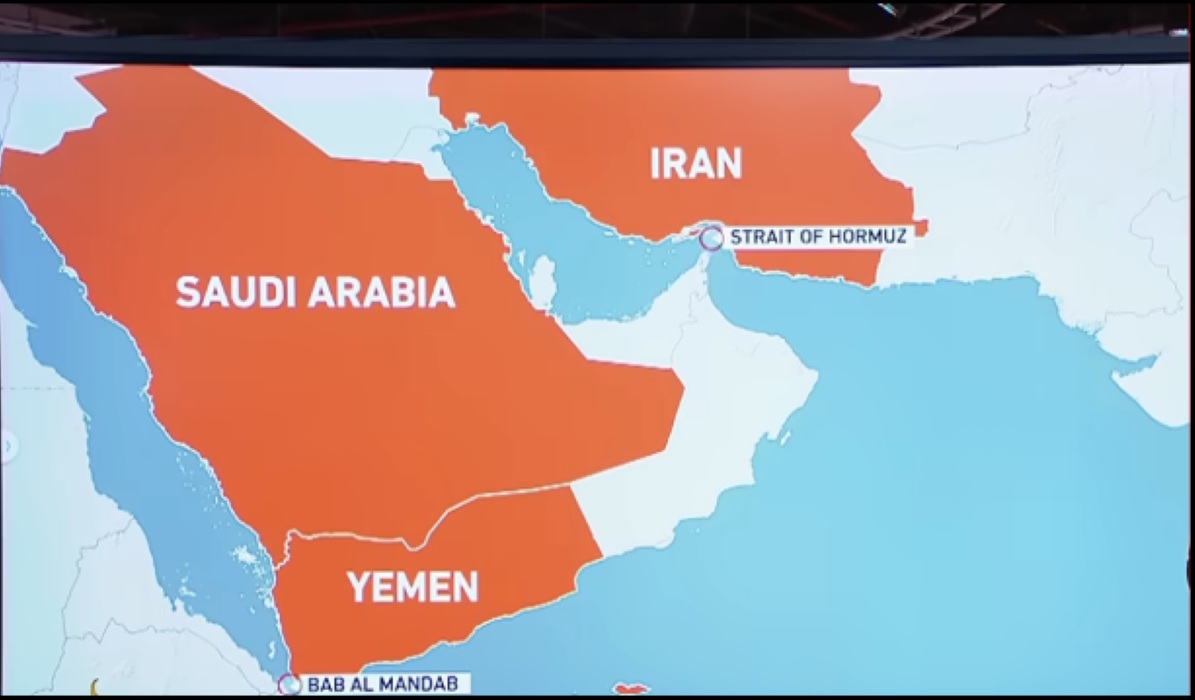
The Iran-backed Houthi group in Yemen has launched large-scale ground attacks around the Bab al-Mandab Strait. This narrow chokepoint in the Red Sea has become a vital route for Saudi Arabian oil exports amidst the ongoing Middle East war.
The fighting has resulted in hundreds of casualties, triggering retaliatory strikes between the Houthis and Saudi Arabia. This waterway, typically one of the world’s busiest shipping routes, is now under high-alert status.
Known as the ‘Gate of Tears’ in Arabic due to its history of maritime accidents, the strait is located at the southern end of the Red Sea, connecting it to the Gulf of Aden in the Indian Ocean. Measuring approximately 100 kilometres in length and only 30 kilometres wide at its narrowest point, the strait separates Yemen on the Arabian Peninsula from Djibouti and Eritrea on the Horn of Africa.
As a maritime trade link between Europe and Asia, the strait is crucial. Oil tankers and cargo ships use it to reach the Mediterranean via the Suez Canal, cutting thousands of kilometres off the distance between Asia, Europe, and North America.
IMF PortWatch data analysed by AFP reveals the destructive impact of this conflict. Suez Canal traffic has plummeted since Houthi attacks began in 2024. Total vessel transits dropped from 26,895 in 2023 (an average of 73.7 per day) to just 14,498 in 2024, continuing to 14,070 in 2025.
For the period of January–August 2026, the average daily transit reached only 40.8 vessels, far below pre-crisis levels. The Houthis, who claim to act in solidarity with Palestine, are targeting vessels perceived to have links to Israel.
While not controlling the entire coastline of Bab al-Mandab, the Houthis seized the strategic port city of Mocha on Monday (7/9). Since declaring a maritime blockade against Saudi Arabia last July, the militants have repeatedly attacked Saudi vessels.
Before the war broke out, Bab al-Mandab accounted for 12 per cent of global oil shipments in 2023, according to EIA data. However, with the closure of the Strait of Hormuz by Iran, Bab al-Mandab has become a vital alternative route for Saudi Arabia.
Saudi crude oil shipments from the port of Yanbu in the Red Sea briefly surged to 3.8 million barrels per day between March and July—five times the pre-war level. However, this figure plummeted to 1.5 million barrels per day in August after the Houthis intensified their attacks.
Preliminary Kpler data shows exports stood at 2.44 million barrels per day in early September 2026, though figures remain volatile. Andreas Krieg, a security expert from King’s College London, warned that the greatest danger is not the physical closure of the strait, but the persistent uncertainty.
These tensions are rooted in the outbreak of the Middle East war on 28 February 2026, which triggered cross-regional retaliations. The 2022 ceasefire in Yemen finally collapsed after the Houthis allowed Iranian aircraft to land outside Saudi airspace control last July.
With the Houthi position moving closer to Bab al-Mandab, Iran and its proxies now possess greater capacity to choke Gulf oil exports. Control over this coastline would grant the Houthis immense strategic leverage in global maritime diplomacy.
Source: jawawa.id (https://jawawa.id/newsitem/houthi-threat-in-bab-al-mandab-strait-key-oil-routes-in-peril-1789052431)
Originally published by Media Indonesia (https://mediaindonesia.com/internasional/932095/ancaman-houthi-di-selat-bab-al-mandab-jalur-minyak-utama-dalam-bahaya), translated from Indonesian