
Houthi Now Have Their Own War Machine, Raising Global Concerns
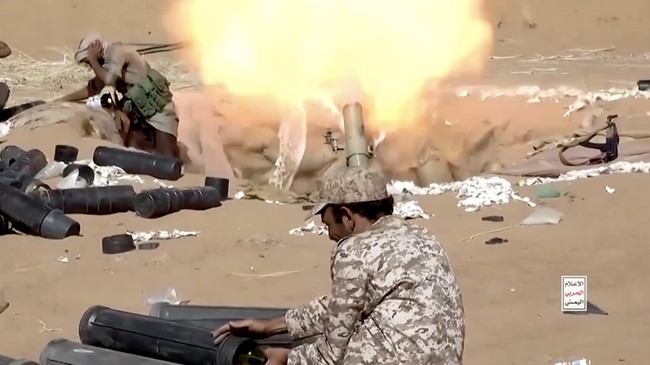
Jakarta — Once underestimated, the Houthi movement has grown into one of the most formidable armed forces in the Middle East. The Yemeni rebel group can launch missile and drone attacks and is beginning to manufacture its own weapons.
The Economist reported that this marks a major shift for the Houthis, who previously relied heavily on weapons supplied by Iran.
The development poses a serious threat to countries in the Middle East, particularly Saudi Arabia, which has recently again come under Houthi attack.
Saudi efforts to persuade Iran to rein in the group may not succeed, as the Houthis are increasingly able to build their military strength without continued reliance on Tehran.
From captured weapons to Iranian support
To understand the Houthis’ development, it is necessary to go back to 2014.
That year, the Houthis captured Sana’a, Yemen’s capital. The victory gave them control of strategically important territory and opened the way to much more powerful weaponry.
Through a temporary alliance with former Yemeni president Ali Abdullah Saleh and some military personnel who remained loyal to him, the Houthis gained access to military stockpiles, including Soviet-era Scud and Tochka missiles.
Their capabilities grew more rapidly after Saudi Arabia led a military intervention in Yemen in 2015.
Iran, which has close ties with the Houthis, subsequently increased its support, supplying ballistic missiles and drones and providing training.
Members of Lebanon’s Hezbollah have also reportedly helped Houthi fighters improve their ability to use these weapons.
For years, this relationship led the Houthis to be seen as one of the armed groups within Iran’s sphere of influence in the Middle East.
Over time, however, the relationship began to change.
The Houthis no longer sought only to obtain ready-made weapons from abroad. They began developing the ability to manufacture and assemble arms inside Yemen.
From buying weapons to making their own
This shift has made the Houthis increasingly difficult to stop.
Previously, the group depended heavily on deliveries of finished weapons, such as missiles and drones, from abroad. It is now increasingly seeking components that can be used to produce its own arms.
Those components are then used in manufacturing and assembly in areas under Houthi control.
On 21 September 2026, Houthi leader Abdul-Malik al-Houthi claimed that the group could now make weapons from scratch without being wholly dependent on supplies from other countries.
The claim has not been fully verified. However, researchers have found growing evidence that the Houthis have developed weapons-production capabilities in Yemen.
Fabian Hinz, a researcher at Conflict Armament Research (CAR), said the speed and scale of the Houthis’ military-production ambitions had surprised many observers.
Much of their weaponry is still based on Iranian designs. However, some medium-range drones are thought to be made largely with components that do not come from Iran.
The shift is also documented in research by Century International, part of the US-based Century Foundation think-tank.
In a report published in February 2026, researchers examined hundreds of items seized from shipments believed to have been destined for the Houthis between 2013 and 2025.
The findings show a significant change.
In the early years of the conflict, many of the seized items were complete weapons ready for use. In recent years, however, seizures have increasingly consisted of components and materials for making weapons.
More than 80% of the items seized in 2024–25 were materials or components for weapons production, rather than complete weapons systems.
The Houthis have begun relying on international supply networks to build their own military-production capabilities.
This change has also made efforts to stop the flow of weapons supplies much more complicated.
Weapons supply networks extend to China
The change in how the Houthis obtain weapons has been accompanied by a shift in the countries from which their supplies originate.
Iran was once one of the group’s main sources of weaponry. In recent years, however, an increasing number of goods and components originating in China have been found.
According to Century International’s research, about 35% of the items recorded in seizures between 2021 and 2025 came from China, compared with about 21% from Iran.
This does not necessarily mean the Chinese government is supplying weapons directly to the Houthis. Many of the items found are industrial products that also have civilian uses.
The problem is that goods commonly used in industry can also be put to work in weapons production.
In trade, such goods are known as dual-use products: they have civilian applications but can also potentially be used for military purposes.
One example cited by The Economist is Ali al-Wazir, a Yemeni businessman who conducts business in Guangzhou, China.
The man, known as Prince, was sanctioned by the US Treasury Department in June 2024 over allegations that he was involved in procuring goods that helped the Houthis manufacture weapons in Yemen.
The case shows that the Houthis’ support networks involve more than armed groups or military actors.
Businesspeople, trading companies and supplier networks in various countries are also suspected of forming part of procurement channels for the Houthi military industry.
In October 2026, CAR research uncovered further evidence of the issue.
Specialised components found in a shipment seized at the Port of Aden were suspected of being linked to Houthi efforts to produce ballistic missiles based on Iranian designs.
Why is the Houthi network difficult to stop?
The breadth of the trade networks used by the Houthis is one reason the group has continued developing its military capabilities despite sanctions and military strikes.
For more than a decade, the Houthis have been subject to a United Nations arms embargo.
The US has also repeatedly imposed sanctions on individuals and companies suspected of helping the group procure weapons.
These measures, however, have not succeeded in stopping all goods from reaching Houthi-controlled territory.
One problem is the sheer breadth of the supply network.
Goods used by the Houthis do not come from a single country or pass through one trade route. The network spans parts of the Middle East, Africa and Asia.
Meanwhile, Yemen’s fragmented security landscape, shaped by civil war, makes oversight difficult.
Yemen’s internationally recognised government must contend with coordination problems among groups and security agencies in the areas it controls.
As a result, efforts to stop smuggling are often ineffective.
Even when one network is dismantled, other goods may still enter through different trade channels.
The issue is further complicated by the fact that not all goods entering Yemen are weapons or prohibited items. Many are ordinary commercial products that become problematic only when used to support military activity.
Greater Houthi autonomy may also benefit Iran
The development of the Houthi military industry is also changing the group’s relationship with Iran.
Tehran has long been regarded as the group’s main backer. Iranian weapons, training and intelligence have played a major role in building Houthi strength.
But the ability to produce weapons independently makes the Houthis more resilient when supplies from Iran are disrupted.
This situation may also benefit Iran. Its defence strategy has long sought to build capabilities that do not depend on a single command centre or supply route.
A similar approach can be seen in its relationships with allied armed groups across the Middle East.
With more independent production capabilities, groups such as the Houthis can continue military operations even when Iran itself is under pressure.
However, this development could also make the Houthis harder for Tehran to control.
The greater their military capabilities, the more room they have to make decisions in pursuit of their own interests.
The Houthis no longer see themselves merely as a group backed by Iran. They want to become a leading force shaping Yemen’s future.
That ambition is reflected in efforts to expand ties with Russia and several armed groups in Africa.
Source: jawawa.id (https://jawawa.id/newsitem/houthi-now-have-their-own-war-machine-raising-global-concerns-1793634687)
Originally published by CNBC Indonesia (https://www.cnbcindonesia.com/research/20261102110456-128-781467/dunia-dibuat-waswas-houthi-kini-punya-sumber-mesin-perang-sendiri), translated from Indonesian