
Houthi Claim Attacks on Saudi Arabia, Emerging as Iran's Most Feared Ally
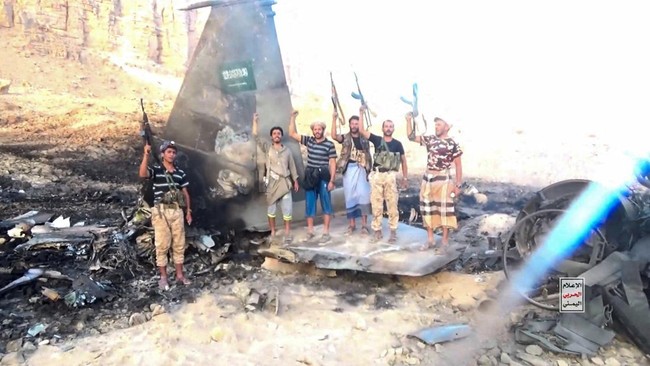
The Middle East has heated up again after the Houthi group in Yemen claimed to have launched missile and drone attacks on several locations identified as “sensitive areas” in the Saudi Arabian capital, Riyadh, on Saturday (19/09/2026).
According to Reuters and CNA, the attacks occurred several hours after flames and thick black smoke were visible near Riyadh’s main airport. Saudi Arabia subsequently confirmed that the Houthis attempted to attack Riyadh using ballistic missiles. This marks the first attack targeting the Saudi capital since the escalation of the conflict with the Iran-backed Houthi group increased last July.
The Saudi-led military coalition stated that the missiles were intercepted and destroyed by air defence systems before reaching their targets. There were no reports of casualties or damage resulting from the attack, although several residents reported hearing explosions and seeing plumes of smoke around the airport area. Video footage and photos from Reuters showed massive columns of black smoke rising high from the area near King Khalid International Airport in Riyadh. In one recording, flames were seen emerging from an area believed to be a fuel storage tank.
The Houthis did not specify the exact targets in Riyadh. However, the group claimed they also attacked facilities belonging to the Saudi energy giant Saudi Aramco in the city of Yanbu, one of Saudi Arabia’s major oil export hubs on the Red Sea coast. The Houthis stated the operation was carried out in retaliation for attacks on the Yemeni capital, Sanaa.
In addition to Riyadh, Saudi Arabia claimed to have thwarted other attacks targeting the regions of Bish, Farasan, Taif, and Yanbu. The Saudi government had previously issued emergency warnings to residents of Riyadh and Al-Kharj regarding potential aerial threats before eventually issuing an all-clear on Saturday morning local time.
This latest escalation increases concerns regarding the stability of the global energy supply. Since July, the Houthis have launched a series of attacks against Saudi cities, energy infrastructure, and shipping lanes after announcing a naval blockade against Saudi Arabia. These attacks increase the risk to Gulf oil exports through the Red Sea, while traffic in the Strait of Hormuz remains disrupted due to regional conflict.
Since mid-July, almost no Saudi tankers have passed through the Bab al-Mandab Strait. On land, the Houthi position is far from weak. The group controls northwestern Yemen, including the capital Sanaa and much of the western coast. Approximately 70% of the Yemeni population lives in territories under their control.
The combination of territorial control, military capability, and geographical position makes the Houthis more than just a local armed group. On 15 August, Houthi missiles struck the Port of Mocha, located near the Bab al-Mandab Strait. The attack caused approximately US$16 million in damage and forced the port to close. Mocha also serves as a base for the National Resistance Forces, a group supported by the Yemeni government. By attacking the port, the Houthis can pressure their land-based opponents while expanding their influence in the coastal region.
Attacking ships serves other interests. The Houthis aim to pressure Saudi Arabia to pay the salaries of Yemeni civil servants and to ease flight and shipping restrictions. However, Houthi capabilities are not limited to maritime pressure. Initially, the group relied heavily on finished weapons supplied by Iran. Now, their supply network is increasingly decentralised. Small components are smuggled through Oman and the United Arab Emirates (UAE) or brought via dhow ships from the Horn of Africa. Some Houthi drones can now be manufactured almost entirely without Iranian components.
This network ensures that attacks on their weaponry do not automatically halt their military capabilities. Peter Salisbury of Columbia University noted that the Houthis are able to restore damaged or destroyed capabilities much faster than many parties expect. Their technological capabilities are also evolving; the Houthis are reported to possess fibre-optic-based drones that are harder to disrupt via jamming. When the United States attacked them in 2025, the Houthis claimed to have shot down seven American Reaper drones and nearly hit several fighter jets. Last month, the group also claimed to have downed Turkish-made Bayraktar drones operated by Saudi Arabia.
The highland regions controlled by the Houthis are relatively easy to defend. The group also took over Yemeni military cave and bunker systems when they seized territory in 2014. Satellite evidence shows that several of these underground facilities continue to be expanded.
The Houthis also have experience facing larger military campaigns. In the summer of 2025, Israeli attacks killed much of the group’s civilian administration, including its prime minister. However, the Houthis rebuilt their organisational structure. Even if their leader, Abdul-Malik al-Houthi, were killed, the group would not necessarily be immediately paralysed; he himself rose to leadership after his brother, Husayn, died in battle in 2004. This resilience is one of the key differentiators between the Houthis and other Iranian-aligned groups.
The Yemeni government is now attempting to rebuild its strength to face the Houthis. Groups that previously fought one another are beginning to show greater coordination, while drone capabilities are also increasing. While Saudi Arabia and the United States possess far greater military resources, the Houthis have demonstrated that such superiority is not automatic.
Source: jawawa.id (https://jawawa.id/newsitem/houthi-claim-attacks-on-saudi-arabia-emerging-as-irans-most-feared-ally-1789883505)
Originally published by CNBC Indonesia (https://www.cnbcindonesia.com/research/20260920095716-128-769294/houthi-klaim-serang-arab-saudi-ternyata-sekutu-iran-paling-ditakuti), translated from Indonesian