
Housing in Bali No Longer Just About Buildings
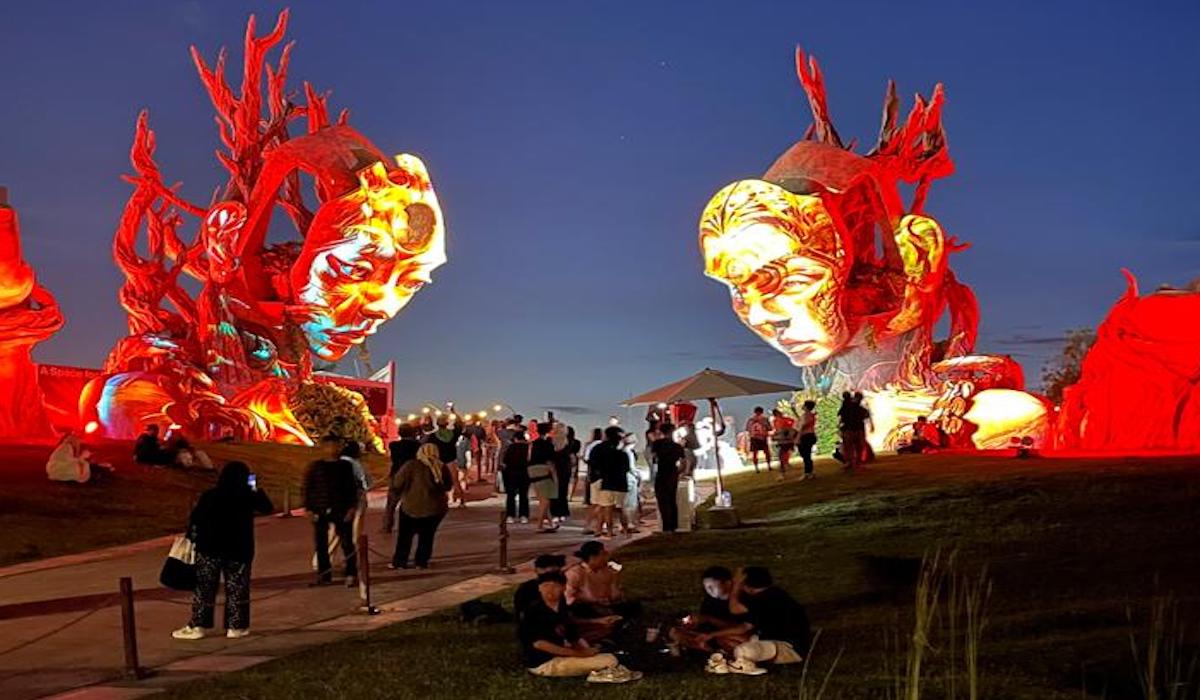
Residential development across Bali is moving towards a far broader approach than simple property construction. A number of projects now combine housing with lifestyle ecosystems, creative communities, and educational and tourism facilities within unified developments.
This approach reflects a shift in the property industry’s trends, where a residence’s value is no longer determined solely by building design or basic amenities, but also by the social environment, community activities, and lifestyle experiences available within the development.
Nuanu Creative City CEO Lev Kroll stated that the current residential concept is evolving towards a more comprehensive life ecosystem.
“The concept of the best place to live goes beyond the walls of the dwelling itself. The question is not simply what the house looks like, but what can be done there and who the community around it is,” he said in Jakarta recently.
Lev said one development undertaken with this approach is located on Bali’s southwestern coast, covering approximately 44 hectares. The area is designed as an integrated environment enabling residents to live, work, learn, and interact within a single zone.
In its development, he noted, only around 30 per cent of the land is used for construction, whilst the remainder is retained as open green space and natural landscape.
The housing layers within the development are being created through various residential projects designed to grow alongside lifestyle facilities, community spaces, and creative activities taking place within it.
Nuanu Real Estate Head of Corporate Communications Reyni Wullur said that decisions about choosing a home are increasingly influenced by environmental quality and surrounding community.
“Nowadays people no longer choose a place to live simply because of the building. The biggest factor is the surrounding environment and the community that will become part of daily life,” she said.
According to her, as the development progresses, the developer targets handover of more than 400 residential and hospitality units by 2027.
Beyond residential units, development of the area also encompasses the hospitality sector, art spaces, and international events involving the global community.
Additionally, lifestyle facilities such as a culinary district and social spaces are being developed to support residents’ daily activities. The area also incorporates education through collaboration with international educational institutions to deliver technology-based learning platforms.
According to Reyni, integration between housing, community, creative activities, and public facilities is an important factor in building a sustainable development.
This approach is regarded as reflecting a shift in property development direction across Bali, from merely an investment or tourism destination towards a residential area with a more complete life ecosystem.
Currently, Nuanu Real Estate is running 12 residential projects and one hotel investment with ownership rights and leasehold schemes. Several projects show significant progress, including The Collection Vol. 1 and Ecoverse targeted for completion in the first quarter of 2026, whilst OXO The Pavilions and Flower Estates have entered the construction phase.
Flower Estates features 28 villa units with architectural design blending European orangery inspiration and Bali’s tropical landscape, priced from 8.4 billion rupiah with private gardens as a primary housing element.
There is also the Black Sands Oasis project featuring villas and studios with desert modernism architecture, and The Sense, community-based housing targeting creators and professionals. Meanwhile, X Hotel, the first hotel investment project, is targeted to enter the architectural phase in April with handover scheduled for the first quarter of 2027.
Aligned with residential development, the area is also building the Sutala culinary and lifestyle district, designed as a walkable public space combining restaurants, culture, and community activities.
Sutala Director Conrad said culinary industry trends now focus not only on food but also on social experience and atmosphere.
The district will be developed on approximately 17,000 square metres of land with more than 60 restaurant and lifestyle brand tenants, with a soft launch planned for late 2026.
Beyond lifestyle, the education sector also forms part of area development. ProEd Global School is currently operating within the area.
The developer is also collaborating with Genius Group Limited to bring Genius City, an educational platform focused on technology learning, entrepreneurship, and future skills development.
The initial programme phase will introduce AI-based learning with Cambridge curriculum, before being developed into an education hub encompassing corporate training programmes, secondary student education, and lifelong learning initiatives.