
Housekeeper Uses Salary to Buy Shares, Unexpectedly...
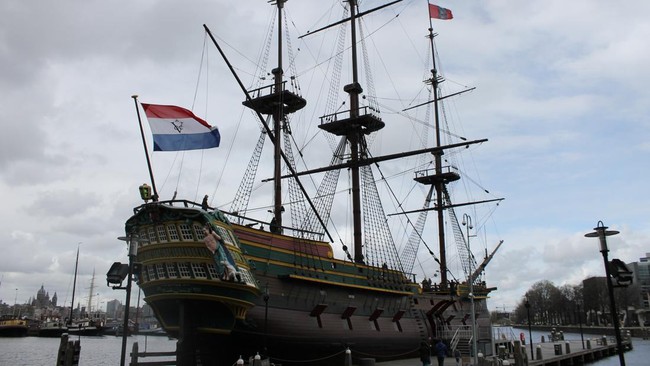
Five months after its establishment, on August 16, 1602, the Dutch East India Company (Vereenigde Oost-Indische Compagnie, VOC) decided to sell shares to the public, marking the earliest known example of an initial public offering (IPO).
It was not difficult for a company like the VOC to attract investors. As a company selling the most sought-after commodity in Europe, namely spices, many people predicted that the VOC would be very successful and generate large profits.
Based on this, when the decision to launch the IPO was made, people flocked to the Amsterdam Stock Exchange. Moreover, the VOC was also the first company in the world to conduct an IPO.
“In total, there were 1,143 investors who invested in the VOC’s initial capital in Amsterdam,” wrote Lodewijk Petram in The World’s First Stock Exchange (2011).
According to the rules, each investor had the right to decide how much money to invest. There was no minimum or maximum limit. The same applied to the origin of the investors. Anyone could invest in the VOC.
As a result, not only officials, nobles, and wealthy people became investors. A housekeeper named Neeltgen Cornelis also did so.
Neeltgen’s interest in investing in the VOC began with her employer, Dirck van Os, who happened to be a director of the VOC. During the IPO period, many people came and went to Van Os’s house for investment matters.
At that time, stock trading was not like it is today. Everything was done manually and recorded on paper. Therefore, it was natural that Dirck van Os’s house was crowded with investors. Amidst the crowd, Neeltgen’s curiosity was piqued.
Deep down, she wanted to invest in the VOC. She believed that the VOC would generate large profits. However, on the other hand, she was also confused: where would she get the money?
As a housekeeper, her salary was less than fifty cents a day. That amount was only enough to meet her daily needs. As a result, she hesitated to invest from day to day.
Finally, at the end of August, when the initial offering of VOC shares was about to close, she changed her mind.
“She thought she would always regret it if she didn’t invest now. As a result, she took a deep breath and took out her savings,” wrote Petram.
From her hard-earned savings as a housekeeper, she set aside 100 guilders to buy VOC shares. She then handed the money to her employer.
Neeltgen Cornelis’s name was recorded as a shareholder of the VOC, although it was very small compared to others. At that time, the VOC’s bosses invested large sums of money. Some invested 85,000 guilders, 65,000, or 45,000 guilders.
Did Neeltgen profit from her purchase of VOC shares?
According to Petram, yes, but only for a short time because Neeltgen sold her VOC shares in October 1603, or a year after making the purchase. She sold all of her shares to Jacques de Pourcq.
In fact, if she had held on to them, the 100 guilders could have turned into thousands of guilders. Or at least, Petram said, VOC shareholders could have received spices from time to time as a form of dividend.
Given that the VOC became the largest company in the world in the following years after the IPO, thanks to its success in selling and controlling spices from Indonesia.