
Household Consumption Remains Strong, but 86 Million Citizens Still in Vulnerable Zone
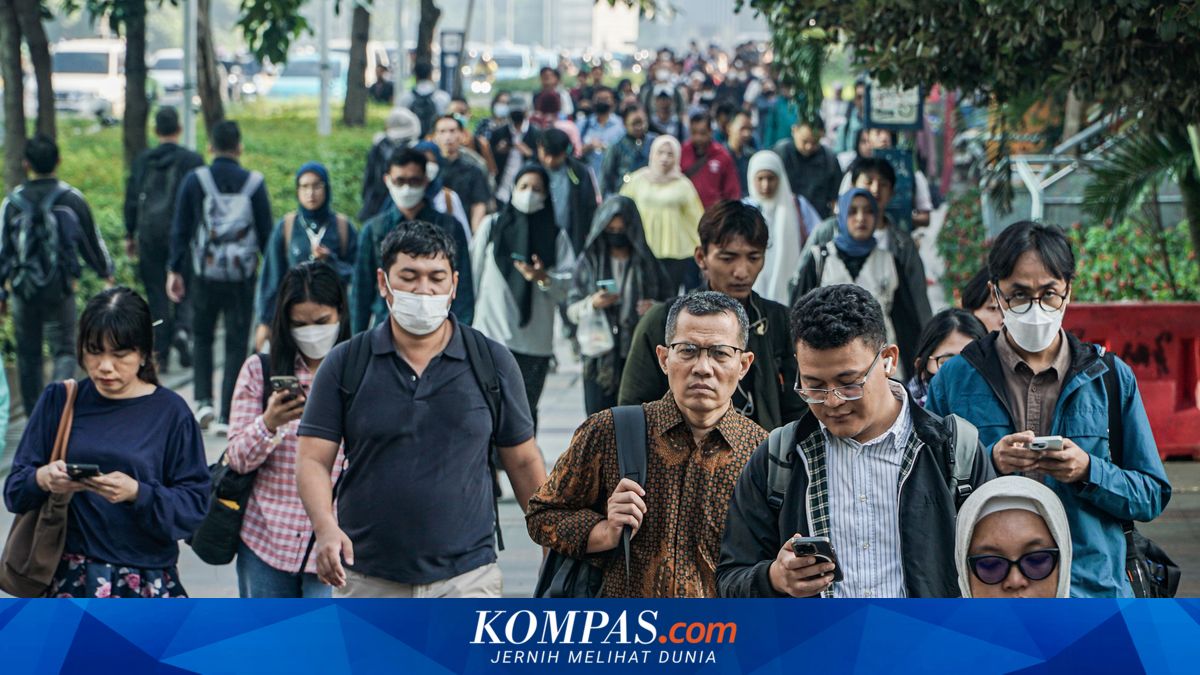
Indonesia’s economic resilience remains intact amid global pressures. Household consumption serves as the main pillar, contributing around 54% to gross domestic product.
Mandiri Institute assesses that this consumption acts as a cushion during external shocks. However, its strength depends on maintaining people’s purchasing power.
The current economic structure is undergoing a shift. As many as 86 million people, or about one-third of the population, fall into the transitional middle class group.
This group consists of those moving towards the middle class and the lower middle class. Its character is dynamic but vulnerable to economic pressures.
Bank Mandiri’s Chief Economist, Andry Asmoro, describes this group as a crucial point in the economic structure.
“The next challenge is to ensure that people in the transition zone have sufficient drive to continue rising to a more stable economic level sustainably,” said Asmo on Sunday (12/4/2026).
The main difference is evident in job quality. More than 50% of the transition group already works in the formal sector, but they still lag by about 28 percentage points compared to the established middle class.
This condition limits the ability to save and accumulate assets. Risks increase during economic pressures.
The expenditure structure also shows limitations. Most income is used for basic needs. Spending on mobility reaches 20%, housing 13%, and routine bills 10%.
Allocation for health and education is around 15%. The remainder for secondary consumption such as lifestyle and durable goods is only about 18%.
These limitations impact the ownership of reserve assets. Only 21% of households in the aspiring middle class group possess liquid assets like gold. This figure is far below the upper middle class group, which reaches 69%.
These steps need to be supported by improvements in the investment climate and ease of doing business. Fiscal stimuli are also required to encourage expansion in the real sector.
Estimates indicate that more than 2 million people from the transition group are ready to move up. They have more stable jobs, stronger purchasing power, and better reserve assets.
“However, the expansion of employment must be balanced with efforts to increase worker productivity, which is the main key to raising real and sustainable income,” concluded Asmo.