
House urges Creative Economy Ministry to optimise financing schemes for creative players
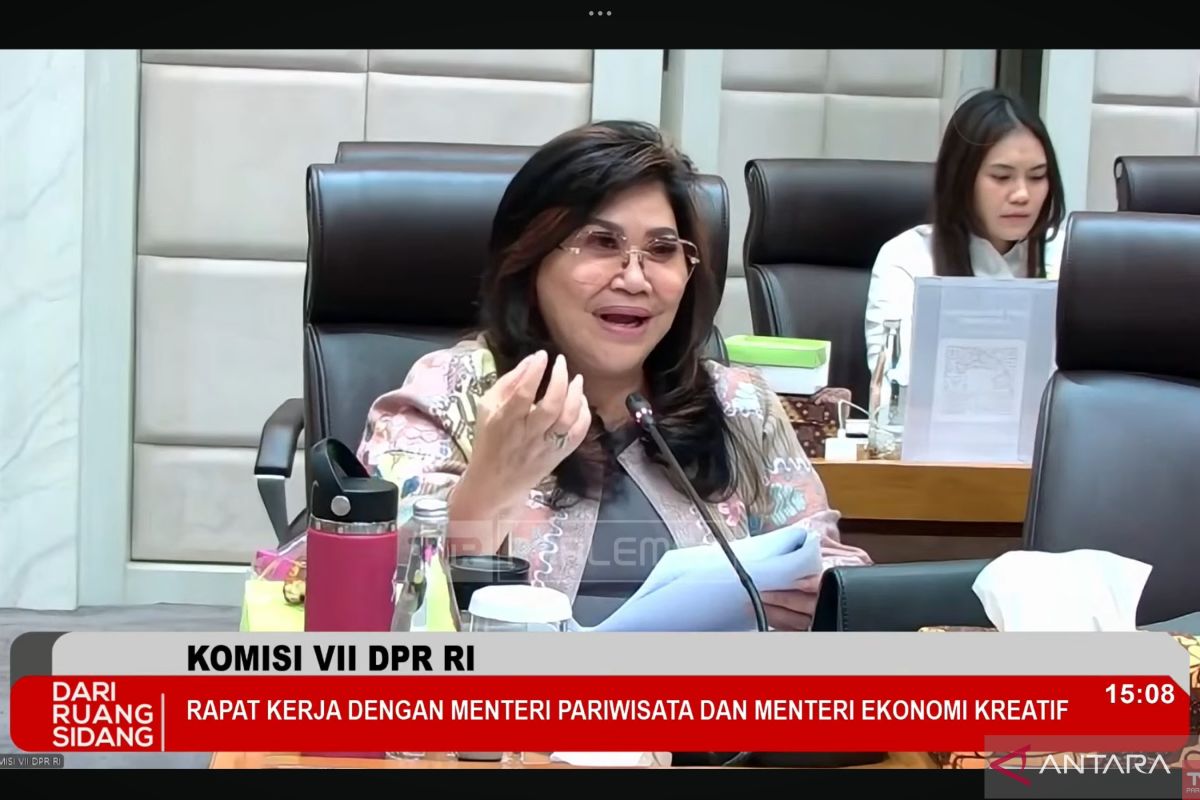
Jakarta (ANTARA) - Deputy Chair of House Commission VII Evita Nursanty has urged the Creative Economy Ministry to optimise financing schemes for creative sector businesses, which are still facing obstacles, particularly regarding intellectual property-based financing in the banking sector.
“So this remains the main issue, namely the banks, Mr Minister, that is collateral. This is still a problem when we go into the field. So intellectual property can actually be used as collateral at banks,” Evita said during a working meeting of Commission VII with the Creative Economy Ministry and the Ministry of Tourism, which was followed online in Jakarta on Wednesday.
Evita said that to date, creative economy business players still complain about the difficulty of obtaining financing from banks because most of their assets are intangible, such as games, animation, music, films, and other creative works.
She also highlighted the still limited number of appraisal firms capable of conducting intellectual property valuations. Currently, there are only nine appraisal companies with this capacity, which is deemed insufficient to support the development of Indonesia’s growing creative economy industry.
Responding to this, Creative Economy Minister Teuku Riefky Harsya acknowledged that budget constraints remain a challenge in implementing various creative economy development programmes. To overcome this, the ministry is prioritising a strategy of collaboration with various stakeholders.
“So far, we have been trying to collaborate, in accordance with the direction from the leadership and members of Commission VII to continue collaborating. Because the government’s function can be threefold: we can act through the budget with all its limitations, but policy and presence also enable our collaboration with various parties, including associations,” Riefky said.
This approach has become one of the main strategies to accelerate the development of the creative economy ecosystem amidst budget constraints.
Riefky also stated that he continues to expand cooperation with various industry associations, which number around 120 organisations, as well as establishing various memoranda of understanding (MoUs) with strategic partners.
According to him, such cooperation must not stop at the signing of MoUs, but must produce tangible programmes (quick wins) whose benefits can be directly felt by creative economy players.
The Creative Economy Ministry is also coordinating with Bank Indonesia to improve the recording system for digital service exports. This effort includes revenue from Indonesian films shown through digital platforms such as Netflix, digital music services like Spotify, as well as design services, application development, animation, and various other creative services paid for by consumers abroad.
Source: jawawa.id (https://jawawa.id/newsitem/house-urges-creative-economy-ministry-to-optimise-financing-schemes-for-creative-players-1784127350)
Originally published by Antara (Indonesian) (https://www.antaranews.com/berita/5651112/dpr-minta-kemenekraf-optimalkan-skema-pembiayaan-pelaku-ekraf), translated from Indonesian