
House Reveals 2 Solutions to Resolve Nickel Export Dispute Amid Rare Earth Metal Impasse
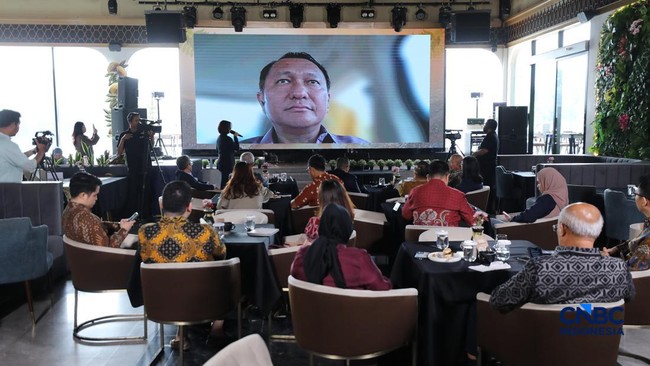
Jakarta, CNBC Indonesia - Chairman of Commission XII of the Indonesian House of Representatives (DPR RI), Bambang Patijaya, has revealed that the government is preparing two main steps to resolve the export disruption of nickel products. Specifically, the issue concerns exports halted due to the presence of rare earth metals (LTJ).
Bambang stated that he had communicated directly with the Director General of Minerals and Coal at the Ministry of Energy and Mineral Resources (ESDM), Tri Winarno. According to him, the ministry is currently focusing on resolving the issue in the short term while simultaneously improving governance for the long term.
“I just spoke on the phone with the Director General of Minerals and Coal, Tri Winarno. First, there are two things to be achieved. First, in the short term, we are asking for an update on the current situation. What is the solution, because exports are not just stopping,” Bambang said during the CNBC Indonesia Coffee Morning event on Thursday (30/7/2026).
In addition to seeking a short-term solution to resume export activities, Bambang mentioned that the Ministry of Energy and Mineral Resources is also preparing regulatory improvements to prevent similar issues from recurring. “That will be drafted soon so that other regulations become clearer. Hopefully, this situation can be resolved and will not cause new turmoil,” he added.
Previously, Presidential Chief of Staff (KSP) Dudung Abdurachman addressed the disruption of mineral exports containing rare earth metals. He noted that the export bottleneck was triggered by the absence of definitive regulations governing the maximum limit of rare earth metal content as a by-product.
Dudung explained that he had received reports from several business actors regarding the hampered export activities. The regulatory vacuum has led to differing interpretations among business players and law enforcement officials, causing the current standstill. He stressed that until a regulation on LTJ content is established, law enforcement should not create their own interpretations that ultimately disrupt export activities.