
House of Representatives Urges Social Affairs Ministry to Review PBI-JK Funding Model
Cianjur (ANTARA) – Indonesia’s House of Representatives has asked the Ministry of Social Affairs to refine and review its proposed simulation for sharing the cost of contributions for recipients of the Health Insurance Contribution Assistance scheme (PBI-JK).
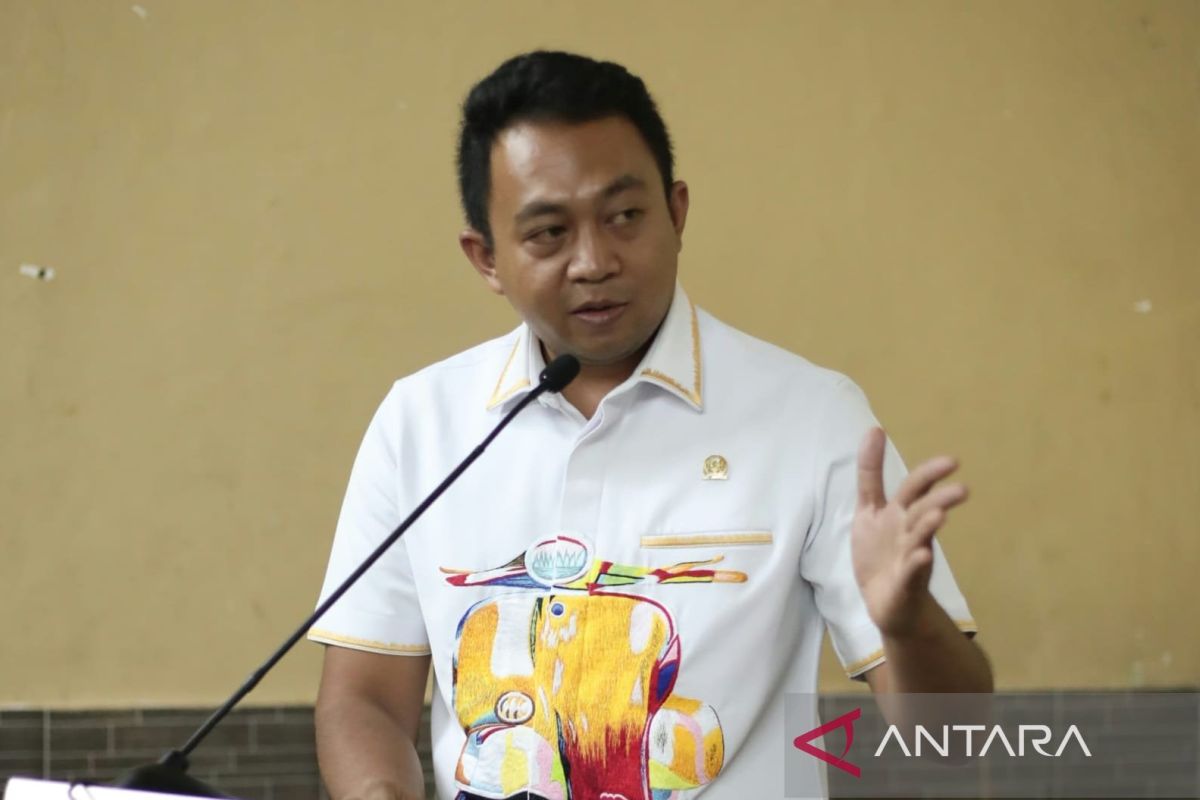
Isfhan Taufik Munggaran, a member of Commission VIII of the House, said in Cianjur on Tuesday that the scheme is based on decile groups 1–8, which rank households using the National Socio-Economic Single Data (DTSEN).
Under the proposed arrangement, regencies and municipalities would bear the smallest share, provincial governments a mid-level share, and the central government the largest share. The approach, he said, is based on principles of fairness in governance and the respective budget capacities of each level of government.
“We support President Prabowo Subianto’s direction on this matter, but the scheme needs to be reviewed and refined by the Social Affairs Ministry,” he said.
Regarding the tiered allocation of contribution funding according to decile, he recommended that regency and municipal governments receive a smaller portion of the burden, provincial governments an intermediate portion, and the central government the largest share.
“Presenting the data by decile makes it easier for the government to identify its target groups, and enables us as people’s representatives to share the intervention,” Isfhan said.
The Social Affairs Ministry is currently finalising a simulation for sharing PBI-JK funding costs according to decile groups 1–8, or household rankings based on the National Socio-Economic Single Data (DTSEN).
Social Affairs Minister Saifullah Yusuf said the mapping is based on consolidating data centrally through the Digital Social Protection system, which uses DTSEN.
“Each household’s data is linked to various institutions, including Statistics Indonesia (BPS), the Home Affairs Ministry’s Population and Civil Registration Directorate General (Dukcapil), the regional vehicle administration offices (Samsat), the Agrarian Affairs and Spatial Planning Ministry/National Land Agency (ATR/BPN), the electricity network of state-owned PLN, and BPJS Health and Employment,” he said.
He said the simulation, discussed with the Health Ministry, BPJS Health and the Finance Ministry, divides contribution funding into tiers according to decile.
Contributions for deciles 1–4, covering approximately the poorest 40 per cent of the population, or an estimated 140 million people, would be subsidised through the state budget (APBN) under the PBI scheme.
Funding for deciles 5 and 6 is planned to be provided by regency and municipal governments, while provincial governments would cover deciles 7 and 8.